
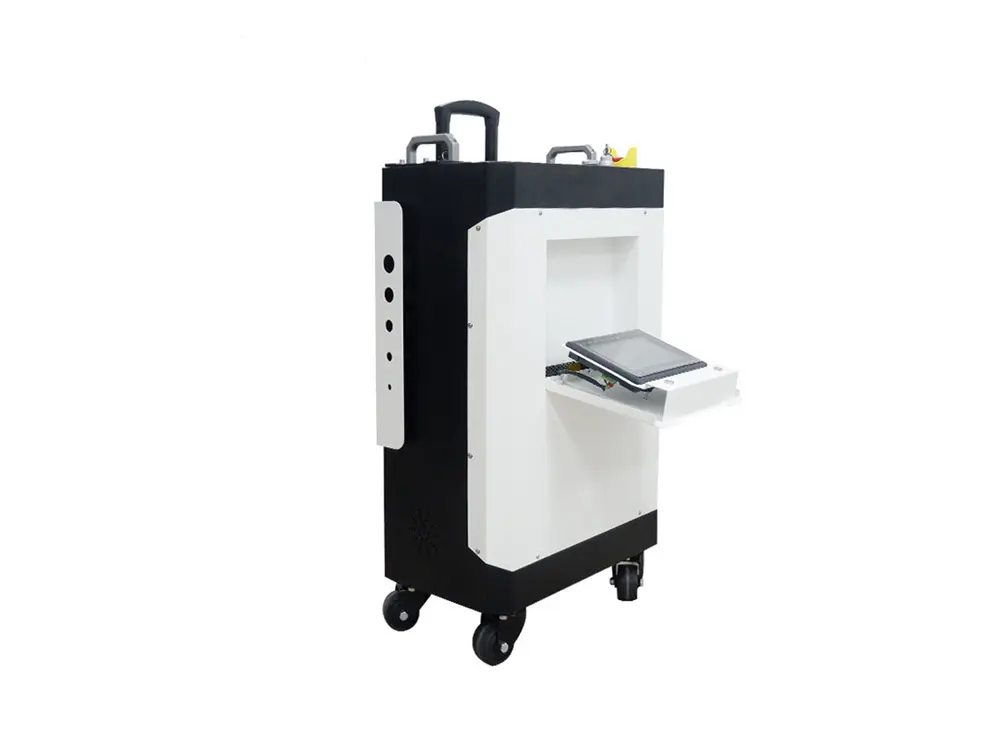
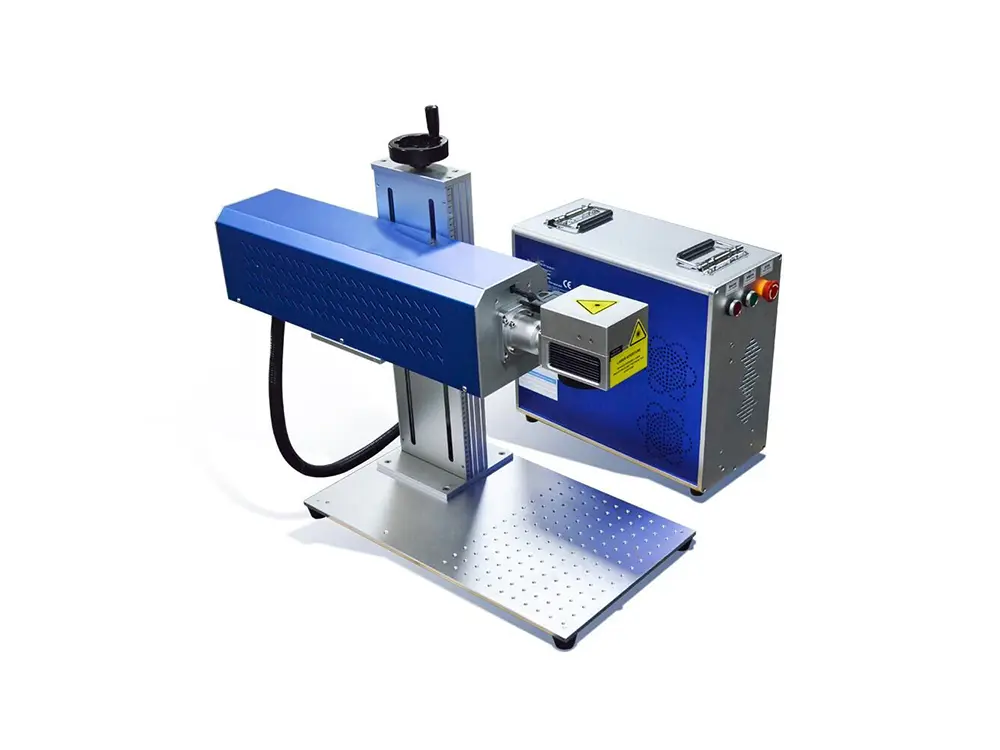











Tube laser cutting has become an essential manufacturing process for industries that work with round tubes, square tubes, rectangular tubes, and other structural profiles. Compared with conventional sawing, drilling, and manual fabrication, a tube laser cutting machine can integrate cutting, hole making, slotting, notching, and other processes into a single automated operation.
When choosing a tube laser cutting machine, manufacturers may come across two common configurations: 2D tube laser cutting and 3D tube laser cutting.
The main difference between 2D and 3D tube laser cutting lies in the movement of the cutting head. A 2D tube laser cutting system is mainly designed for standard cuts, holes, slots, and contours, while a 3D system adds angular movement for bevels, angled cuts, and more complex tube geometries.
But does that mean 3D tube laser cutting is always better? Not necessarily. The right choice depends on the part geometry, required cutting operations, production volume, and overall processing costs.
What Is 2D Tube Laser Cutting?
2D tube laser cutting generally refers to a tube cutting process in which the cutting head maintains a fixed cutting orientation, while the tube is positioned and rotated during processing.
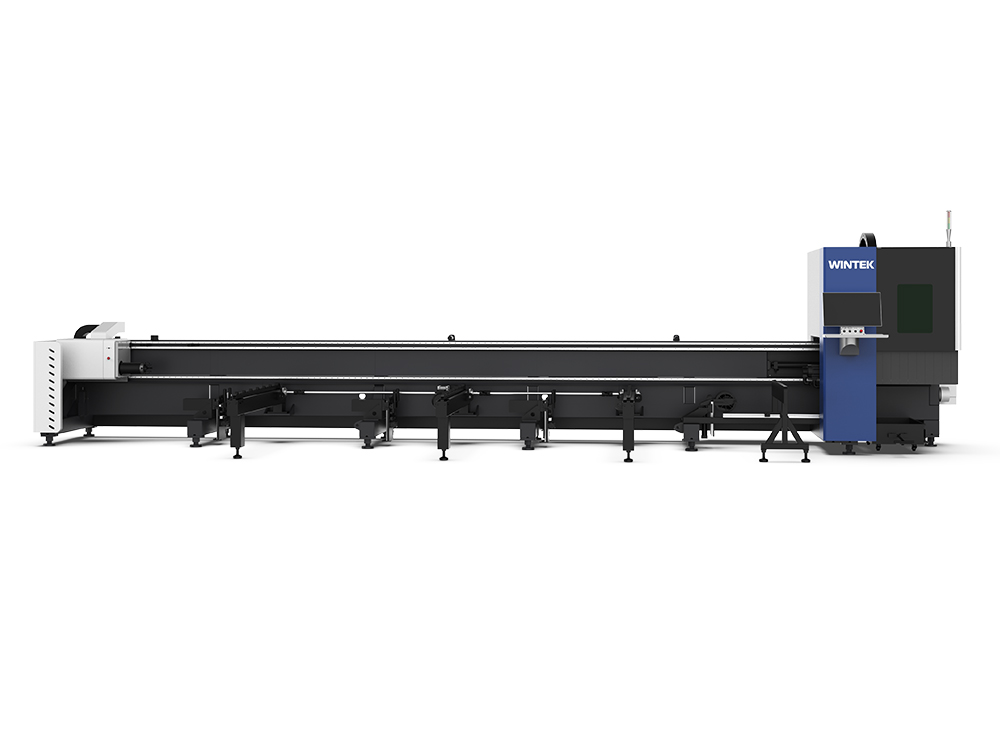
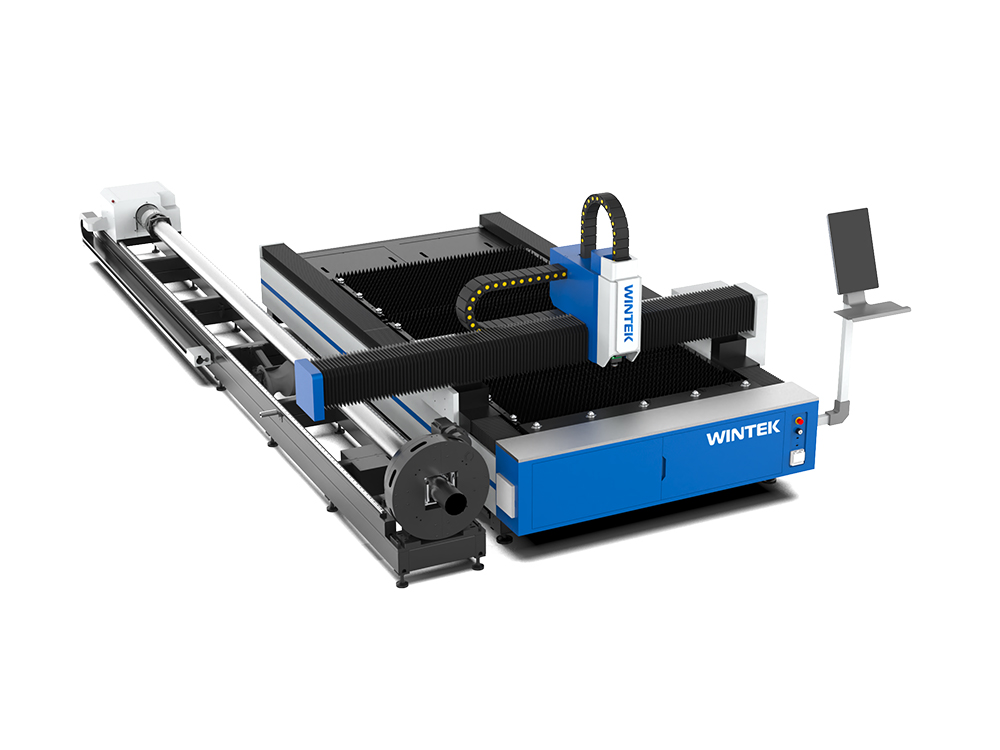
A typical tube laser cutting machine combines several controlled movements. The tube can move longitudinally and rotate around its axis, while the laser head follows the programmed cutting path to process the required features.
This configuration can handle many common tube-processing operations, including:
- Straight tube cutting
- Round holes
- Square holes
- Slots
- Notches
- Openings
- End cuts
- Contours and cutouts
Importantly, “2D” does not mean that the machine can only process flat or two-dimensional parts. The workpiece itself is still a three-dimensional tube, but the cutting head has more limited angular movement during processing.
For many standard tube fabrication applications, a 2D system provides sufficient cutting capability without the added complexity of multi-axis angular cutting.
For example, manufacturers producing furniture frames, shelving systems, fitness equipment, lighting structures, railings, and general metal frames often require accurate holes, slots, and contours rather than complex bevels or angled cuts.
In these applications, a conventional 2D tube laser cutting system can provide an effective balance of cutting performance, machine investment, production efficiency, and ease of operation.
What Is 3D Tube Laser Cutting?
A 3D tube laser cutting machine adds controlled angular movement to the cutting head, allowing it to tilt during the cutting process. This gives the laser head greater freedom to approach the tube from different angles.
This additional movement can enable bevel cutting, angled end cuts, and other complex geometries, depending on the machine’s cutting-head design, axis configuration, and software capabilities.
One of the most important applications of 3D tube laser cutting is bevel cutting.
A 3D cutting head can create controlled angled edges on tubes and structural profiles. Depending on the machine configuration, this can include angled end cuts, beveled openings, and other contours designed for assembly or welding.
For example, when two tube components need to be joined at a specific angle, a 3D cutting system can produce the required geometry directly during the laser cutting process. This can reduce the need for secondary operations such as grinding or manual beveling.
Advanced 3D tube laser systems coordinate tube positioning, rotation, and cutting-head tilting to process more complex tube components with precise programmed cutting paths.
In simple terms, the main advantage of 3D tube laser cutting is greater angular flexibility. This allows manufacturers to produce bevels, angled cuts, and more complex tube geometries directly during the cutting process.
2D vs 3D Tube Laser Cutting: Key Differences

The easiest way to understand the difference between 2D and 3D tube laser cutting is to compare their cutting-head movement, processing capabilities, machine complexity, and typical applications.
| Característica | 2D Tube Laser Cutting | 3D Tube Laser Cutting |
|---|---|---|
| Cutting head movement | Fixed orientation | Multi-axis angular movement |
| Tube rotation | Sí | Sí |
| Standard holes | Sí | Sí |
| Slots & notches | Sí | Sí |
| Bevel cutting | Limitado | Sí |
| Angled end cuts | Limitado | Sí |
| Complex geometries | Standard | Advanced |
| Secondary processing | May be required | Can be reduced |
| Machine complexity | Baja | Más alto |
| Typical applications | Standard tube fabrication | Complex structural components |
The actual capabilities depend on the machine design, cutting head, CNC system, software, and overall configuration. Buyers should therefore check the specific specifications of each machine rather than assuming that every system marketed as “3D” offers the same cutting capabilities.
1. Cutting Head Movement
The most important technical difference between 2D and 3D tube laser cutting is the movement of the cutting head. In a typical 2D system, the cutting head maintains a relatively fixed orientation while the machine controls the tube’s longitudinal position and rotation. This allows the system to produce standard holes, slots, notches, contours, and other common tube features.
A 3D tube laser cutting machine adds controlled angular movement to the cutting head. The head can tilt during processing, allowing the laser beam to approach the tube surface from different directions. This provides greater flexibility for angled edges, bevels, and complex tube intersections.
Both systems process three-dimensional tube components. The key difference is that a 3D system provides additional angular freedom to the cutting head during the cutting process.
2. Bevel and Angled Cutting
Bevel and angled cutting are important applications of 3D tube laser cutting. A bevel is an angled cut made along an edge or surface of a component and can be useful for welding preparation, angled joints, and specific assembly requirements.
With a suitable 3D cutting head, the cutting angle can be programmed according to the component design. This allows certain bevels and angled features to be produced directly during laser cutting, potentially reducing secondary operations such as manual grinding or edge preparation.
For example, structural frames may require tubes to meet at specific angles. A suitable 3D tube laser system can produce the required geometry directly from the tube, helping simplify downstream assembly and welding. The available bevel angle and cutting capability depend on the specific machine and cutting head, so manufacturers should confirm these specifications before selecting a system.
3. Tube Cutting Applications
The choice between 2D and 3D tube laser cutting largely depends on the geometry and production requirements of the parts being manufactured.
2D tube laser cutting is suitable for many standard applications, including metal furniture, shelving systems, fitness equipment, lighting structures, agricultural equipment, railings, gates, machine frames, and general structural components. If most parts require straight cuts, holes, slots, notches, and simple contours, a 2D system can provide sufficient processing capability while offering a simpler configuration and generally lower initial investment.
3D tube laser cutting becomes more valuable when components require beveled edges, angled end cuts, complex tube intersections, weld preparation, or other features that require different cutting orientations. Applications in automotive manufacturing, structural fabrication, industrial equipment, and complex metal assemblies may benefit from the additional flexibility of 3D processing.
The key consideration is not whether 3D technology is inherently better than 2D technology, but whether its additional cutting capability provides a practical benefit for the manufacturer’s specific products and production processes.
Does 3D Tube Laser Cutting Mean Better Cutting Quality?
Not necessarily. A 3D tube laser cutting machine provides greater processing capability and flexibility, but this does not automatically mean better cutting quality for every application.
For standard straight cuts, holes, slots, and simple contours, a well-configured 2D tube laser cutting machine can already deliver high cutting accuracy and consistent production results. If the parts do not require bevels or angled cuts, the additional capabilities of a 3D system may not provide a significant advantage.
In some high-volume production applications, a simpler 2D configuration can also be a practical choice because it focuses on the cutting operations that are actually required. This can help manufacturers balance cutting performance, production efficiency, and equipment investment.
The main advantage of 3D tube laser cutting is not necessarily higher cutting quality. Instead, it is the ability to produce bevels, angled cuts, and complex tube geometries that a conventional 2D system may not be able to process in the same way.
Manufacturers should select a tube laser cutting machine based on the geometry of their parts, required cutting operations, production volume, and future processing needs rather than choosing a 3D system simply because it offers more advanced technology.
Is a 3D Tube Laser Cutting Machine More Expensive?
Generally, yes. A 3D tube laser cutting machine typically requires a more advanced cutting-head configuration, additional controlled movement, and more sophisticated CNC and software capabilities than a standard 2D system. As a result, the initial equipment investment is generally higher.
A 3D system can also involve greater programming requirements, more complex machine operation, and additional operator training. The exact cost difference depends on the machine configuration, laser power, cutting-head technology, tube-processing range, and other specifications.
However, a higher initial investment does not necessarily mean a higher overall production cost. If a 3D tube laser cutting machine can combine cutting, beveling, angled cutting, and weld preparation in fewer operations, it may reduce secondary processing, manual labor, and workpiece handling.
For example, a manufacturer may currently use a tube laser for standard cutting and then perform separate beveling or manual weld preparation. If these operations can be integrated into the 3D laser cutting process, the manufacturer may reduce processing time and improve production consistency.
When evaluating a 3D tube laser cutting machine, manufacturers should therefore consider the total production cost rather than the initial purchase price alone. Equipment investment, labor, secondary processing, material handling, and production time should all be taken into account. If the additional capabilities of a 3D system can reduce downstream processing and improve overall efficiency, the higher initial investment may be justified.
2D vs 3D Tube Laser Cutting: Which One Should You Choose?
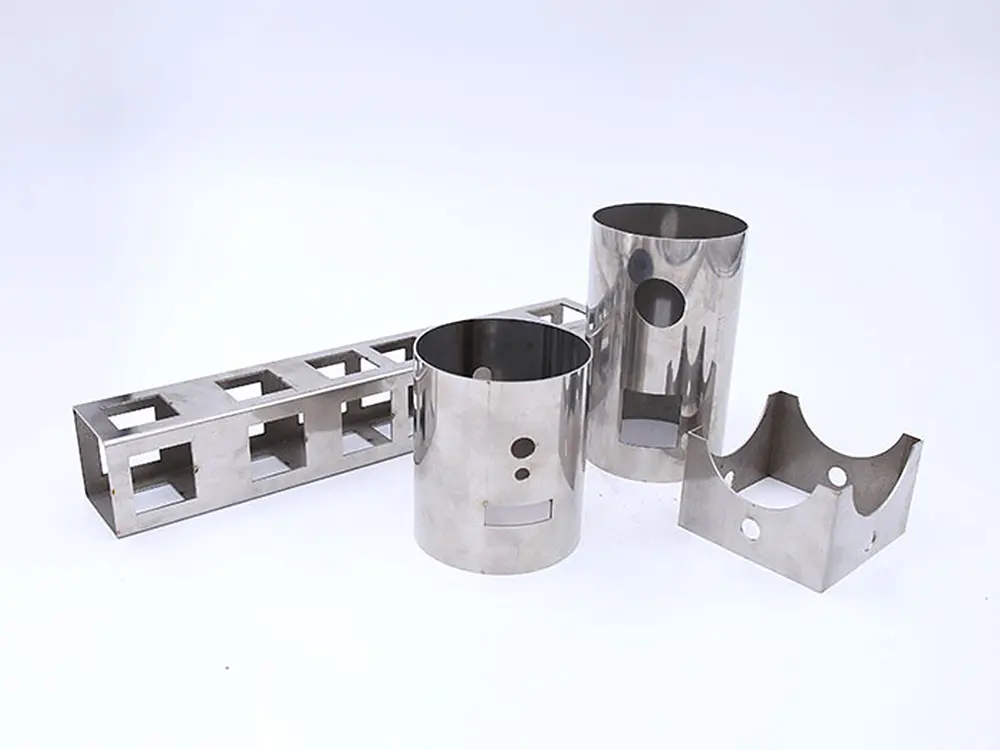
The right choice depends mainly on your tube geometry, required cutting operations, production volume, and whether your parts require angled or beveled cuts.
Choose 2D tube laser cutting if you mainly need:
- Straight tube cutting
- Round or square holes
- Slots and notches
- Simple contours and openings
- High-volume standard tube processing
A 2D tube laser cutting machine is usually sufficient for standard tube fabrication and offers a practical balance of cutting performance, production efficiency, and equipment investment.
Choose 3D tube laser cutting if your parts require:
- Bevel cutting
- Angled end cuts
- Complex tube intersections
- Weld preparation
- More advanced cutting geometries
A 3D tube laser cutting machine provides greater cutting-head flexibility, allowing these features to be produced directly during the laser cutting process. This can help reduce secondary operations and simplify downstream assembly or welding.
In simple terms, 2D tube laser cutting is a practical choice for standard tube processing, while 3D tube laser cutting is better suited to parts requiring angled, beveled, or more complex cuts.
The best choice is not necessarily the more advanced machine. Manufacturers should select a system based on the actual geometry of their parts, required cutting operations, production volume, and long-term processing needs.
Conclusión
2D and 3D tube laser cutting machines are designed for different production requirements. 2D tube laser cutting is a practical solution for standard tube processing, while 3D tube laser cutting is better suited for bevels, angled cuts, and more complex tube geometries.
When choosing a tube laser cutting machine, manufacturers should consider part design, cutting requirements, production volume, material types, and overall processing costs. The right machine configuration can help improve cutting efficiency, reduce secondary processing, and achieve consistent results.
With 10+ years of laser manufacturing expertise, WINTEK Laser provides tube laser cutting solutions for different production requirements, from standard tube processing to more advanced cutting applications. By matching machine configuration with actual part geometry and production needs, manufacturers can choose a solution that balances cutting capability, efficiency, and overall cost.
If you are comparing 2D and 3D tube laser cutting machines, contact WINTEK Laser to discuss your tube materials, dimensions, cutting requirements, and production needs.