
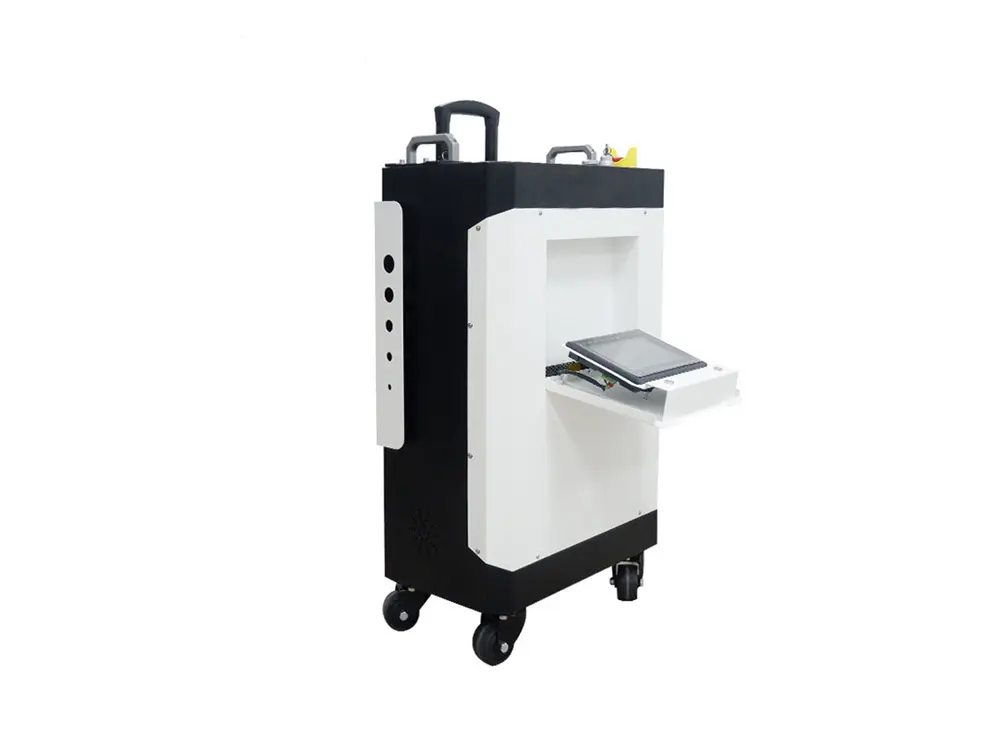











Stainless steel cabinets are widely used in commercial kitchens, food processing facilities, hospitals, laboratories, and industrial workshops. Their corrosion resistance, durability, and clean appearance make them suitable for a wide range of applications. However, cabinet fabrication often involves thin stainless steel sheets, folded panels, narrow corners, and visible seams. These features make heat input, joint fit-up, and surface finish important considerations during welding.
A handheld laser welding machine for stainless steel offers an efficient option for cabinet fabrication. It can join cabinet panels, frames, doors, and corner sections with concentrated heat input, helping reduce thermal distortion and produce consistent weld seams when the machine configuration and welding parameters are properly matched to the material. Understanding the welding process also helps manufacturers improve production efficiency, reduce rework, and maintain consistent product quality.
Why Is Laser Welding Suitable for Stainless Steel Cabinets?
Stainless steel cabinets often consist of thin sheets, folded panels, frames, hinges, and reinforcing components. These parts require consistent joints without excessive deformation or visible surface defects.
Laser welding concentrates energy in a small area, making it suitable for many stainless steel cabinet fabrication tasks. With appropriate power, travel speed, and joint preparation, manufacturers can control heat input, reduce the risk of panel distortion, and produce narrow, consistent weld seams. On visible cabinet surfaces, a well-controlled process may also reduce the amount of grinding and polishing required after welding. Actual results depend on material thickness, joint design, surface finish, and operator technique.
A laser welding machine for stainless steel is particularly useful when cabinet manufacturers need to balance joint quality, production speed, and appearance. It is suitable for evaluating applications such as corner joints, panel connections, door frames, and selected structural joints.
However, the final result depends on material thickness, joint preparation, welding speed, laser power, shielding gas, and operator technique. Laser welding does not eliminate the need for proper fixture design or quality inspection.
Key Challenges When Welding Thin Stainless Steel Cabinets
Thin stainless steel panels can be sensitive to excessive heat input. If the laser power is too high, the travel speed is too low, or the joint gap is excessive, the material may burn through or develop uneven welds. Heat accumulation along long seams can also cause panels and cabinet frames to warp.
Visible cabinet corners present another challenge. Uneven joint alignment or inconsistent torch movement can produce irregular seams that require additional finishing. Before production, manufacturers should test the welding parameters on material of the same grade and thickness, secure the parts with suitable fixtures, and verify the weld appearance and dimensional accuracy.
How to Prepare Stainless Steel Cabinets for Laser Welding
Proper preparation helps prevent weld defects before the laser is switched on. Before welding, confirm the stainless steel grade and thickness, remove contaminants from the joint area, and check that all cabinet panels and frames fit together correctly. These steps are particularly important when welding thin sheets, where small gaps or alignment errors can affect weld formation.
1. Select the Appropriate Stainless Steel Material
Stainless steel grades 304 and 316 are common choices for cabinet fabrication. Grade 304 is widely used in general-purpose enclosures and commercial kitchen equipment. Grade 316 may be preferred in environments exposed to certain corrosive chemicals or chloride-containing conditions. Confirm the material grade before welding, and use compatible filler wire when the joint design or welding procedure requires it.
2. Clean the Welding Surfaces
Remove oil, grease, moisture, dust, and other contaminants from the joint area before welding. Use a cleaning method compatible with stainless steel and avoid introducing carbon steel particles or other foreign materials onto the prepared surface. Contamination can contribute to porosity, inconsistent weld formation, and surface discoloration. Keep the cleaned parts free from oil and handling residue until welding begins.
3. Check Joint Fit-Up and Alignment
Cabinet panels should be aligned and held securely before welding. Check edge gaps, corner angles, and panel flatness, then use suitable clamps or fixtures to maintain the intended joint position. Excessive gaps can make it difficult to achieve consistent penetration and may cause uneven seams or burn-through on thin sheets. Establish an acceptable fit-up tolerance for each cabinet design and verify it before production welding.
How to Weld Stainless Steel Cabinets Step by Step

Step 1: Choose the Right Handheld Laser Welding Machine
Select the equipment according to the cabinet material, sheet thickness, joint configuration, production volume, and required weld appearance.
A handheld laser welding machine for stainless steel should provide suitable power adjustment, stable process control, and a welding head compatible with the intended application. The wire feeding configuration should also match the joint gap and filler material requirements.
Higher laser power does not automatically produce better results. For thin cabinet panels, excessive heat input may cause burn-through or distortion. The best configuration is the one that meets the welding requirements consistently.
Step 2: Set the Welding Parameters
Before welding the finished cabinet, conduct test welds on sample pieces made from the same material and thickness.
Adjust laser power, welding speed, beam oscillation settings where available, and shielding gas according to the equipment manufacturer’s guidance. Evaluate penetration, seam width, surface appearance, and deformation.
There is no single parameter setting that works for every stainless steel cabinet. A setup suitable for a thicker frame may be unsuitable for a thin door panel.
Step 3: Select the Appropriate Welding Joint
Different cabinet components require different joint designs.
Butt joints are used when two edges meet in the same plane. Lap joints are suitable for overlapping panels, while corner joints are common in cabinet frames and enclosures.
The joint design should provide adequate strength and fit the cabinet’s structural and appearance requirements. For visible corners, use fixtures to maintain consistent alignment and test the welding sequence before production.
Step 4: Weld with Consistent Torch Movement
Maintain a stable torch angle, an appropriate working distance, and a consistent travel speed. Avoid sudden changes in movement that may cause uneven weld width or inconsistent penetration.
For long panel seams, plan the welding sequence to control heat accumulation. Depending on the cabinet design, alternating between sections may help distribute heat and reduce distortion.
Operators should follow the machine manufacturer’s instructions and complete suitable training before production welding.
Step 5: Inspect and Finish the Welds
After welding, inspect the seams for cracks, pores, undercut, incomplete fusion, burn-through, and excessive discoloration. Check the cabinet’s dimensions and alignment before proceeding to final assembly.
Some visible welds may require grinding, polishing, or surface restoration to match the surrounding stainless steel finish. The amount of finishing depends on the joint design, welding quality, and appearance requirements.
For food processing or other regulated applications, verify that the finished surfaces meet the relevant hygiene, corrosion resistance, and product requirements.
How to Choose a Laser Welding Machine for Cabinet Manufacturing
When choosing a laser welding machine for stainless steel cabinet manufacturing, consider more than the rated laser power. The machine configuration should match the material thickness, joint design, production volume, required weld appearance, and operator experience. Welding samples can help confirm whether the selected setup meets your quality and productivity requirements.
Important factors include the following:
1. Laser power and process range: Confirm that the machine can handle the intended sheet thickness and joint types. Request sample welding tests for your actual cabinet materials.
2. Cooling configuration: Air-cooled and water-cooled machines have different thermal management requirements. Choose according to the equipment’s rated output, duty cycle, workshop conditions, and manufacturer’s specifications.
3. Wire feeding: Filler wire may be needed when the joint design, material thickness, or fit-up requires additional material to form the weld. Confirm the compatible wire diameter, feeding stability, and feeder configuration. Wire feeding can help with suitable joint gaps, but it should not be used to compensate for poor fit-up or excessive gaps.
4. Welding head and consumables: Check the available nozzle types, protective lens specifications, replacement frequency, and ease of maintenance. Ensure that essential consumables and replacement parts are readily available to minimize downtime and maintain consistent welding performance.
5. Technical support: Ask about operator training, troubleshooting guidance, warranty coverage, and the availability of replacement components. These factors can affect long-term production reliability.
A practical comparison should focus on whether the equipment can repeatedly produce acceptable cabinet welds under your actual working conditions.
What Affects the Stainless Steel Laser Welding Machine Price?
The stainless steel laser welding machine price depends on laser power, laser source, cooling configuration, welding head, wire feeder, and included accessories. For cabinet manufacturers, the required sheet thickness, joint design, daily operating hours, and weld appearance standards also influence equipment selection. Comparing machines with similar configurations and testing them on actual workpieces can provide a more reliable basis for purchasing decisions.
WINTEK Stainless Steel Laser Welding Machine Price
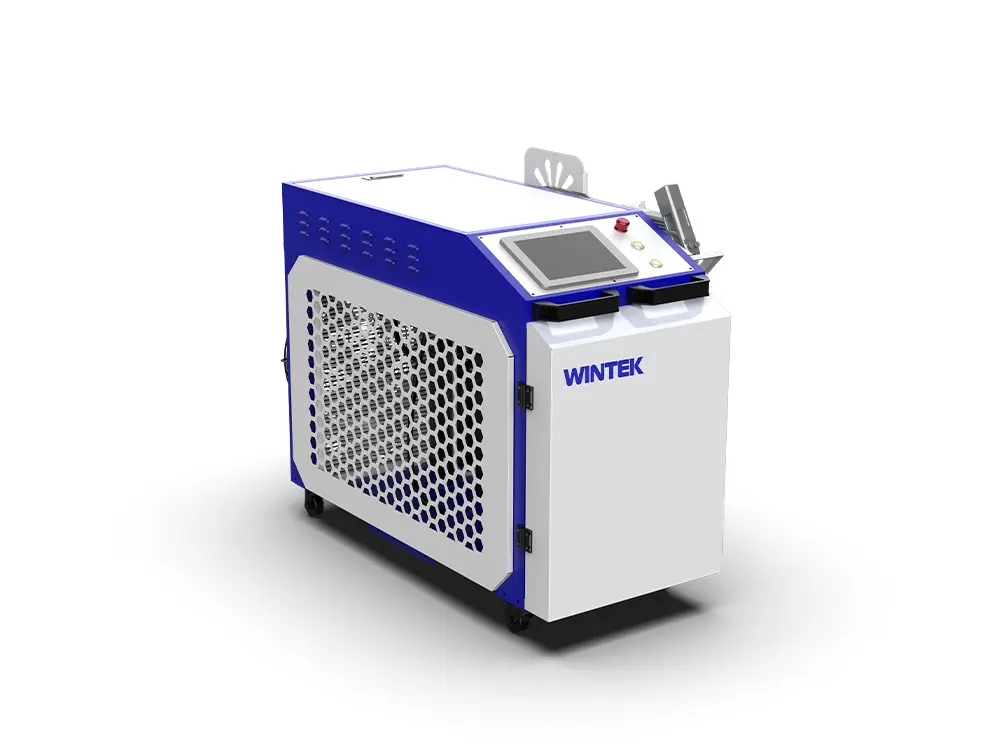
WINTEK offers water-cooled handheld laser welding machines in 1500W, 2000W, and 3000W configurations. The following reference prices help buyers compare common power options for stainless steel cabinet fabrication and other metalworking applications.
| WINTEK Laser Welding Machine | Reference Price (USD) | Метод охлаждения |
|---|---|---|
| 1500W портативный лазерный сварочный аппарат | $2,000–$2,500 | Water-cooled |
| 2000W портативный лазерный сварочный аппарат | $3,350–$3,800 | Water-cooled |
| 3000W портативный лазерный сварочный аппарат | $4,700–$5,000 | Water-cooled |
These prices are for reference only. The final quotation depends on the selected machine configuration, included accessories, wire feeding system, and order requirements. Buyers should confirm the complete equipment specification and included components before comparing quotations from different suppliers.
When choosing a laser welding machine for stainless steel, consider more than the initial purchase price. Material thickness, required weld appearance, wire feeding needs, and production volume all affect equipment selection. For stainless steel cabinet manufacturers, testing the machine on actual workpieces is a practical way to evaluate weld quality before purchasing.
Common Problems When Laser Welding Stainless Steel Cabinets
Burn-through: Thin stainless steel panels may burn through when heat input is excessive, travel speed is too low, or the joint gap is too large. Check the panel thickness and fit-up, then adjust the welding parameters through controlled sample tests. Avoid increasing power without evaluating the effect on the material.
Porosity: Pores can result from contaminated surfaces, inadequate shielding, gas delivery problems, or other process conditions. Clean the joint area, inspect the gas supply and connections, and verify the shielding setup before changing the welding parameters.
Uneven weld seams: Variations in torch angle, working distance, travel speed, or joint alignment can cause inconsistent seam width and penetration. Secure the workpieces with suitable fixtures and check the wire feeder if filler wire is being used. Practice on sample pieces before welding visible cabinet surfaces.
Distortion: Uneven heat distribution can cause cabinet panels, doors, and frames to warp. Improve fixture support, review the welding sequence, and avoid concentrating heat in one area for too long. Check panel flatness and dimensions after trial welding to determine whether the process needs further adjustment.
Excessive discoloration: Weld discoloration can be affected by heat input, shielding gas coverage, surface contamination, and the stainless steel finish. Review the process conditions and gas coverage, then assess whether an appropriate cleaning or finishing procedure is required to restore the desired appearance.
Заключение
Handheld laser welding is a practical solution for many stainless steel cabinet manufacturing applications. Consistent results depend on proper joint fit-up, suitable welding parameters, stable fixturing, and thorough weld inspection. Trial welding helps manufacturers evaluate penetration, distortion, and surface finish before production. When choosing a handheld laser welding machine for stainless steel, consider your material thickness, joint types, production requirements, and required weld appearance. It is also important to evaluate the complete package, including wire feeding, consumables, operator training, warranty, and technical support.
WINTEK offers handheld laser welding machines in 1500W, 2000W, and 3000W configurations to meet different metal fabrication needs. Looking for a suitable laser welding machine for stainless steel cabinets? Contact WINTEK for a tailored quotation based on your materials, welding requirements, and production needs.