



















Industrial cleaning plays an important role in modern manufacturing by improving product quality, extending equipment lifespan, and ensuring reliable surface preparation. As industries focus on cleaner and more efficient production, advanced cleaning technologies are becoming increasingly important for sustainable manufacturing.
Among these solutions, laser cleaning and ultrasonic cleaning are two widely used technologies for removing contaminants from industrial components. Although both methods achieve effective cleaning results, they rely on completely different principles and are designed for different applications.
Laser cleaning uses a focused laser beam to remove rust, coatings, oil, and other unwanted materials from surfaces without physical contact. In contrast, ultrasonic cleaning uses high-frequency sound waves and liquid cavitation to clean parts that are fully immersed in a cleaning solution.
When comparing Pulizia al laser vs pulizia ad ultrasuoni, the best choice depends on factors such as material type, workpiece size, contamination level, precision requirements, and production conditions. This article will explore their key differences, advantages, limitations, applications, and operating costs to help you select the right cleaning solution.
Che cos'è la pulizia laser?
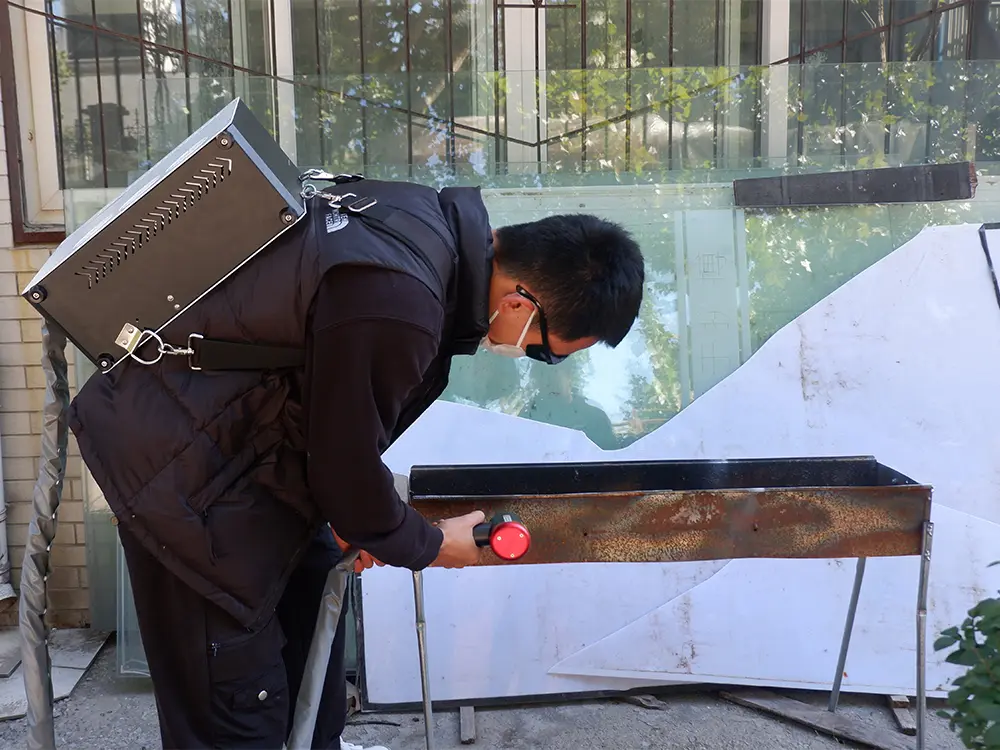
Laser cleaning is a non-contact surface treatment technology that uses a focused laser beam to remove rust, paint, oil, oxide layers, coatings, and other contaminants from metal surfaces and industrial components.
During the cleaning process, contaminants absorb the laser energy and are removed through vaporization, thermal expansion, or separation from the base material. By precisely controlling laser power, scanning speed, and cleaning parameters, laser cleaning can effectively remove unwanted layers while protecting the original surface. Unlike traditional cleaning methods, it does not require grinding tools, chemical agents, or abrasive materials, making it a cleaner and more environmentally friendly solution.
Modern laser cleaning machines usually use fiber laser technology because of its high efficiency, long service life, and stable performance. The laser beam generated by the fiber laser source is focused onto the contaminated area through the cleaning head, allowing precise surface treatment. Today, laser cleaning is widely adopted in industries where traditional cleaning methods are difficult to apply, including automotive manufacturing, metal fabrication, mold maintenance, and equipment refurbishment.
What Is Ultrasonic Cleaning?
Ultrasonic cleaning is a cleaning technology that uses high-frequency sound waves and liquid cavitation to remove dirt, oil, grease, and other contaminants from industrial components.
During the cleaning process, parts are placed into a tank filled with water or cleaning solution. Ultrasonic transducers generate high-frequency vibrations that create millions of microscopic bubbles in the liquid. When these bubbles collapse, they produce small shock waves that remove contaminants from the surface, including areas that are difficult to reach with traditional cleaning methods.
This makes ultrasonic cleaning especially suitable for industries that process large quantities of small components in batches. It is widely used for cleaning small and precision components, such as electronic parts, medical instruments, bearings, precision tools, and laboratory equipment. Due to its ability to clean complex shapes and multiple parts simultaneously, ultrasonic cleaning remains a popular solution for batch cleaning applications.
Laser Cleaning vs Ultrasonic Cleaning: Key Differences
Both laser cleaning and ultrasonic cleaning are advanced industrial cleaning technologies, but they work in different ways and are designed for different applications. Understanding their differences in cleaning principle, applications, precision, environmental impact, operating cost, and efficiency can help manufacturers choose the right cleaning solution.
1. Cleaning Principle
The main difference between laser cleaning and ultrasonic cleaning lies in their cleaning mechanisms.
Laser cleaning uses a focused laser beam to remove unwanted materials from the surface through controlled laser energy. Since it is a non-contact process, the cleaning area and parameters can be precisely adjusted according to different materials and contamination conditions.
Ultrasonic cleaning relies on high-frequency sound waves and liquid cavitation. The workpiece is placed in a cleaning tank, where microscopic bubbles generated in the liquid create shock waves to remove contaminants. Unlike laser cleaning, ultrasonic cleaning requires direct contact between the cleaning solution and the workpiece.
2. Cleaning Applications
Laser cleaning and ultrasonic cleaning are designed for different types of cleaning tasks based on workpiece size, material, and production requirements.
Laser cleaning is mainly used for large metal surfaces, precision components, and applications where surface protection is important. It is commonly applied in rust removal, paint stripping, welding preparation, mold cleaning, automotive parts maintenance, ship repair, and industrial equipment cleaning. Because it does not require liquid immersion or physical contact, laser cleaning is suitable for parts that are difficult to move or cannot be placed into a cleaning tank.
Ultrasonic cleaning is better suited for small and complex components that can be fully immersed in liquid. It is widely used for electronic parts, medical instruments, bearings, precision tools, and laboratory equipment. Its ability to clean multiple parts simultaneously makes it an effective solution for batch cleaning processes.
3. Cleaning Precision and Surface Protection
When surface protection and cleaning accuracy are important, laser cleaning provides greater control compared with ultrasonic cleaning.
Laser cleaning machines allow operators to adjust parameters such as laser power, scanning speed, and cleaning area according to different materials and contamination conditions. This makes it possible to remove unwanted layers from specific areas while preserving the original surface, which is especially valuable for precision components and high-value industrial parts.
Ultrasonic cleaning removes contaminants through liquid cavitation across the entire immersed workpiece. While it can effectively clean complex shapes and hard-to-reach areas, it provides less control over specific cleaning locations. In some cases, the cleaning solution must also be carefully selected to avoid corrosion or surface damage on sensitive materials.
4. Environmental Impact
Environmental requirements are becoming increasingly important in modern manufacturing, and cleaning methods with lower waste generation are gaining more attention.
Laser cleaning provides a more sustainable solution because it does not require chemical solvents, cleaning liquids, or abrasive materials. The process produces minimal waste and does not generate wastewater, helping manufacturers reduce environmental impact and improve workplace safety.
Ultrasonic cleaning usually requires water-based solutions or detergents to remove contaminants. After cleaning, the used liquid may need replacement, filtration, or wastewater treatment, which can increase resource consumption and operating requirements.
For companies focusing on cleaner production and environmental compliance, laser cleaning offers advantages in reducing consumables and simplifying waste management.
5. Operating Cost Comparison
The total cost of a cleaning solution includes equipment investment, consumables, maintenance, energy consumption, and labor requirements.
Laser cleaning machines generally require a higher initial investment compared with ultrasonic cleaning systems. However, they can provide lower long-term operating costs because the process does not rely on chemical cleaners, abrasive materials, or frequent replacement of cleaning solutions. In addition, the non-contact cleaning process can help reduce labor and maintenance requirements.
Ultrasonic cleaning equipment usually has a lower purchase cost and is effective for batch processing. However, ongoing expenses may include cleaning solutions, water consumption, liquid replacement, wastewater treatment, and tank maintenance.
For manufacturers evaluating long-term value, laser cleaning can be a more cost-effective solution, especially for continuous industrial applications and large-scale surface cleaning.
6. Cleaning Speed and Efficiency
Cleaning speed and efficiency depend on factors such as workpiece size, contamination type, cleaning method, and production requirements.
Laser cleaning is often more efficient for large surfaces, heavy equipment, and on-site cleaning applications because it does not require the workpiece to be transported or immersed in a cleaning tank. Operators can directly clean the required area, which helps simplify the process and reduce preparation time.
Ultrasonic cleaning can provide high efficiency for small components because multiple parts can be cleaned simultaneously in one tank. However, its performance is limited by tank size and requires the workpieces to be suitable for liquid immersion.
In general, laser cleaning is a better choice for large-scale industrial surface treatment and flexible cleaning operations, while ultrasonic cleaning is more suitable for batch processing of small precision parts.
Laser Cleaning vs Ultrasonic Cleaning: Pros and Cons
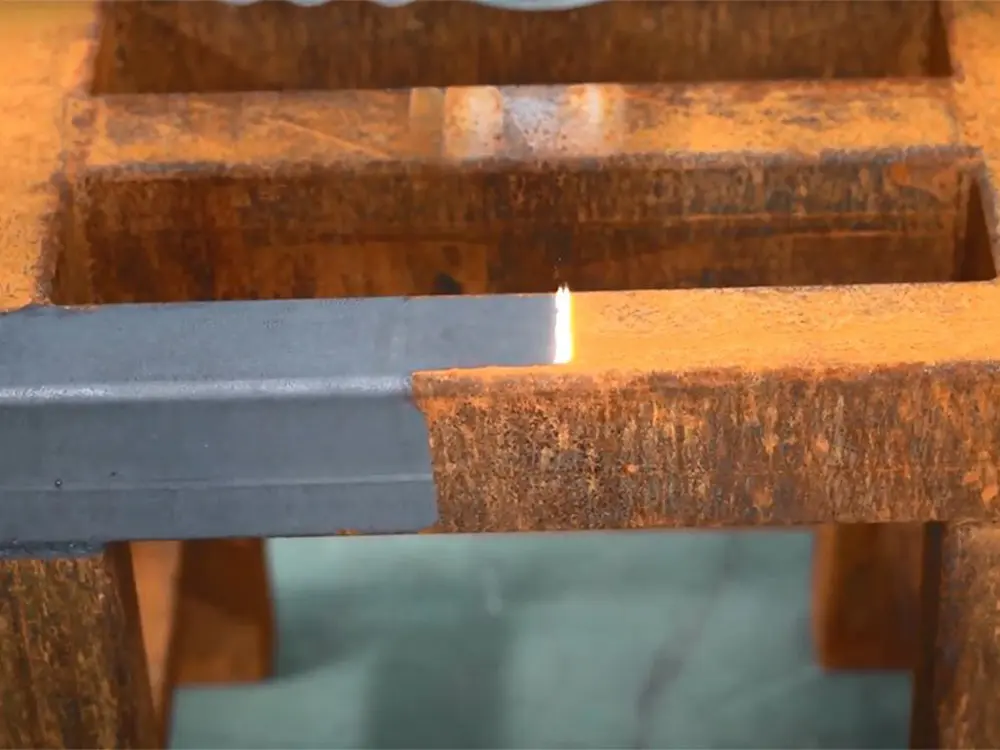
Both laser cleaning and ultrasonic cleaning have their own advantages and limitations. The best cleaning method depends on factors such as the material type, contamination level, production requirements, and operating environment.
1. Advantages of Laser Cleaning
Laser cleaning offers precise and flexible surface treatment for industrial applications. It can remove rust, paint, coatings, and contaminants without physical contact, making it suitable for large components, precision parts, and surface-sensitive applications.
In addition, laser cleaning requires fewer consumables and provides a cleaner working environment, making it a practical solution for manufacturers looking to improve efficiency and reduce long-term operating costs.
2. Limitations of Laser Cleaning
The main limitation of laser cleaning is the higher initial equipment investment compared with traditional cleaning solutions. In addition, operators need proper training to select suitable laser parameters for different materials and contamination conditions.
For extremely large areas with heavy contamination, cleaning speed may depend on laser power, scanning efficiency, and surface conditions.
3. Advantages of Ultrasonic Cleaning
Ultrasonic cleaning is a reliable solution for small components and batch cleaning applications. It can process multiple parts simultaneously and effectively clean complex structures or hard-to-reach areas that are difficult to access manually.
Because of its mature technology and relatively lower initial cost, ultrasonic cleaning remains widely used in industries requiring liquid-based cleaning processes.
4. Limitations of Ultrasonic Cleaning
Ultrasonic cleaning requires water, detergents, or other cleaning solutions, which can increase operating requirements related to liquid replacement and wastewater treatment.
The process is also limited by tank size and immersion requirements, making it less suitable for large structures, oversized components, or parts that cannot be placed into a cleaning tank.
Which Cleaning Method Is Better for Industrial Applications?
The best cleaning method depends on your production needs, including workpiece size, material, contamination level, precision, and operating environment.
Laser cleaning is ideal for industrial applications requiring precision, flexibility, and surface protection. It removes rust, paint, coatings, and contaminants from large surfaces, equipment, molds, automotive parts, and other components. Its non-contact process supports efficient and sustainable surface treatment without liquid immersion.
Ultrasonic cleaning is a practical solution for small precision parts and batch cleaning applications. It is widely used for electronic components, medical instruments, laboratory equipment, and other parts requiring simultaneous cleaning.
Overall, laser cleaning is better suited for large-scale cleaning, surface preparation, and high-precision applications. Ultrasonic cleaning remains effective for small components and liquid-based batch processing. The right choice depends on your cleaning goals and long-term operating requirements.
Why Choose WINTEK Laser Cleaning Machines?

WINTEK Laser provides reliable fiber laser cleaning solutions designed for different industrial surface treatment requirements. With pulse and continuous laser cleaning options, our machines can meet various applications, including rust removal, paint stripping, welding preparation, mold cleaning, and industrial equipment maintenance.
WINTEK offers pulse laser cleaning machines from 50W to 500W and continuous laser cleaning machines from 1000W to 3000W, covering precision cleaning and heavy-duty industrial applications.
WINTEK laser cleaning machines feature advanced fiber laser technology, stable performance, and easy operation. The pulse laser cleaning series is suitable for precision cleaning applications where surface protection is critical, while continuous laser cleaning machines provide efficient solutions for larger surfaces and heavy-duty industrial cleaning tasks.
Designed with a focus on efficiency and long-term value, WINTEK laser cleaning machines require no chemical consumables, reduce maintenance requirements, and help manufacturers improve cleaning productivity. Our solutions support various metal materials, including carbon steel, stainless steel, aluminum, and copper.
With 10+ years of laser equipment manufacturing experience and exports to over 120 countries and regions, WINTEK Laser provides reliable cleaning solutions and professional technical support worldwide.
Conclusione
Laser cleaning and ultrasonic cleaning are both effective technologies for industrial cleaning, but they are suitable for different applications. Ultrasonic cleaning is a practical choice for small components and batch processing, while laser cleaning offers greater flexibility for large surfaces, precision cleaning, and surface-sensitive applications.
Choosing the right cleaning method depends on factors such as workpiece size, contamination type, production requirements, and long-term operating costs. By understanding the differences between these two technologies, manufacturers can select a solution that better matches their cleaning needs.
WINTEK Laser provides advanced pulse and continuous fiber laser cleaning machines for a range of industrial applications. With reliable performance, low consumable requirements, and flexible cleaning solutions, WINTEK helps manufacturers improve efficiency and achieve cleaner production. Contact WINTEK Laser to find the right laser cleaning solution for your business.
