



















Grease and oil are common contaminants on mechanical components used in industrial machinery, automotive equipment, and manufacturing systems. If these residues are not properly removed, they can interfere with inspection, assembly, coating, welding, repair, and other downstream processes.
Traditional cleaning methods such as solvents, detergents, abrasive blasting, pressure washing, and manual scrubbing can remove grease and oil effectively. However, depending on the application, these methods may require chemicals, abrasive media, wastewater treatment, or significant manual labor.
Laser cleaning grease removal provides a non-contact alternative for treating grease, oil, lubricant residue, rust, oxides, and other surface contaminants on suitable metal components. By applying controlled laser energy to the contaminated surface, a laser cleaning machine can remove unwanted residues without physical contact with the workpiece.
The suitability of laser cleaning depends on factors such as contamination type and thickness, substrate material, component geometry, required cleaning speed, and desired surface condition.
This guide explains how laser cleaning removes grease, which mechanical components can be treated, how pulsed and continuous laser systems compare, and how to select the right cleaning process.
Lazerle Temizleme, Mekanik Bileşenlerdeki Yağları Giderir mi?
Yes. Laser cleaning grease removal can be used to remove many types of surface grease, oil, lubricant residue, and other contaminants from suitable metal mechanical components.
During the process, a focused laser beam is directed at the contaminated surface. The laser energy interacts primarily with the surface contamination, allowing grease and oil residues to be removed when suitable process parameters are used.
The actual cleaning result depends on the type and thickness of the grease, the substrate material, and the selected laser parameters. Thin or moderately adhered surface contamination is generally easier to process than thick, hardened, or heavily accumulated grease.
Laser cleaning can be considered for removing:
- Industrial grease
- Machine oil
- Cutting oil
- Mechanical lubricant
- Hydraulic oil residue
- Gear grease
- Automotive grease
- Manufacturing residue
- Oily dust
- Karbon birikintileri
- Oxides
- Rust mixed with oil or grease
- Other surface contaminants
However, laser cleaning is not a universal solution for every contamination type or component. Cleaning performance depends on the grease condition, substrate material, contamination thickness, laser power, pulse parameters, scanning speed, focal position, beam size, and other process settings.
For demanding applications, testing representative workpieces before production is recommended to confirm cleaning efficiency and surface quality.
How Does Laser Cleaning Remove Grease?

Laser cleaning removes grease by delivering controlled laser energy to the contamination on the component surface.
When the laser beam interacts with grease or oil, the contaminant absorbs laser energy and is rapidly heated. Depending on the contaminant, substrate, and process parameters, the grease may vaporize, decompose, detach, or separate from the underlying surface.
Unlike mechanical scrubbing or abrasive blasting, the laser cleaning head does not need to physically contact the workpiece. This allows operators to treat suitable surfaces without introducing abrasive media or mechanical friction.
A simplified laser cleaning process includes:
1. The laser beam is directed toward the contaminated surface.
2. The grease, oil, or other residue absorbs part of the laser energy.
3. The contamination is rapidly heated and removed from the surface.
4. Fumes and airborne particles are captured with suitable extraction equipment.
5. The cleaned surface is prepared for inspection, maintenance, coating, welding, or further processing.
The result of laser cleaning grease removal depends on the relationship between laser energy and the properties of both the contamination and the substrate. Increasing laser power alone does not necessarily improve the cleaning result. Proper control of scanning speed, beam size, pulse parameters, focal position, and cleaning passes is equally important.
What Types of Grease Can Laser Cleaning Remove?
Laser cleaning can be used for many forms of surface grease, oil, and lubricant contamination, particularly when the contamination is exposed on a suitable metal surface and is within a manageable thickness range.
Common examples include:
- Industrial grease
- Mechanical lubricant
- Cutting oil
- Machine oil
- Hydraulic oil residue
- Gear grease
- Automotive grease
- Manufacturing residue
- Oily dust
- Grease mixed with dirt
- Grease mixed with carbon deposits
The physical condition of the contamination is also important. A thin layer of fresh grease is generally easier to process than a thick, hardened, or heavily accumulated layer. When grease is excessively thick or heavily built up, preliminary removal of the bulk contamination may improve laser cleaning efficiency.
In some applications, grease may be combined with rust, carbon, dirt, paint, or other materials. The cleaning strategy may then need to be adjusted to address different contamination layers and avoid unnecessary effects on the substrate.
For laser cleaning grease removal, the contamination should therefore be evaluated based on its type, thickness, adhesion, and condition rather than simply identifying it as “grease.”
Which Mechanical Components Can Be Cleaned with a Laser?
Laser cleaning can be considered for a wide range of metal mechanical components where precise, non-contact surface treatment is beneficial.
1. Gears
Gears can accumulate grease, oil, dust, and wear particles during operation, making gear cleaning an important part of maintenance and inspection. Laser cleaning can treat suitable exposed metal surfaces for maintenance, inspection, refurbishment, and surface preparation without abrasive contact.
2. Shafts
Industrial shafts may collect grease, oil, rust, and other residues during operation or storage, making laser cleaning a potential option for shaft surface preparation. Laser cleaning can help prepare exposed shaft surfaces for inspection, maintenance, coating, repair, or further processing.
3. Bearings and Bearing Housings
Suitable external metal surfaces of bearing assemblies and housings can be treated to remove oil, grease, dirt, and surface residues. Because bearings may contain sensitive components, seals, or internal lubricants, application testing is recommended before production use.
4. Hydraulic Components
Hydraulic components can accumulate oil residue, grease, rust, and dirt during service. Laser cleaning can be considered for suitable metal surfaces during repair, maintenance, and surface preparation.
5. Engine and Automotive Components
Selected metal engine and automotive components may require the removal of oil, grease, carbon deposits, rust, or manufacturing residue. Laser cleaning can provide localized treatment without abrasive contact.
6. Industrial Machine Parts
Machine frames, housings, metal assemblies, and other industrial components can be cleaned in areas where grease, oil, rust, or oxides have accumulated.
7. Tools, Jigs, and Fixtures
Manufacturing tools, molds, jigs, and fixtures can collect grease, oil, dirt, and production residues. Laser cleaning can help restore suitable metal surfaces for reuse and maintenance.
The suitability of laser cleaning depends on the actual component design, material, contamination, and required surface condition. Components with coatings, plastics, seals, electronics, or heat-sensitive materials may require additional evaluation.
Can Laser Cleaning Remove Grease Without Damaging Metal?
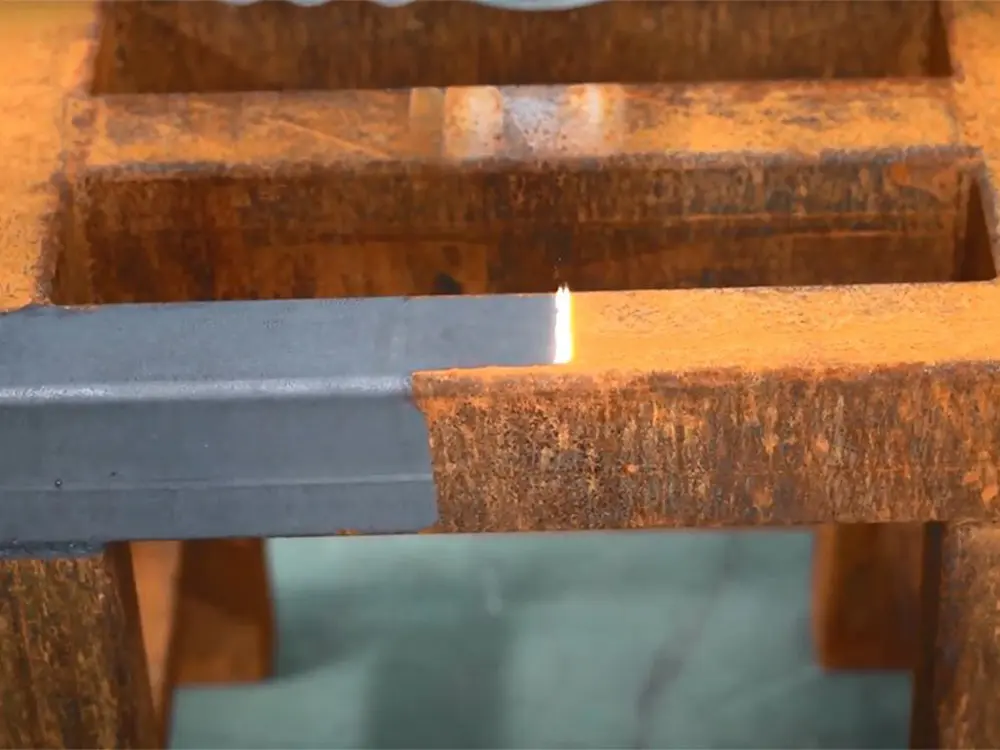
A properly configured laser cleaning process can remove surface contamination while minimizing unnecessary thermal effects on the underlying metal.
However, laser cleaning does not guarantee that the substrate will remain completely unaffected under all conditions. Excessive laser energy, unsuitable scanning parameters, or repeated passes can cause discoloration, overheating, surface modification, or other unwanted effects.
Important process variables include:
- Lazer gücü
- Pulse energy
- Pulse frequency
- Tarama hızı
- Beam size
- Focal position
- Working distance
- Scanning pattern
- Number of cleaning passes
For example, applying excessive energy to a small area or using an unnecessarily slow scanning speed can increase heat accumulation. Repeated passes over the same area can also increase the thermal load.
For precision mechanical components, the goal is to use sufficient laser energy to remove the contamination while minimizing unnecessary heat input to the substrate.
Before production, manufacturers should test representative workpieces and inspect the cleaned surface for discoloration, dimensional changes, surface texture, corrosion resistance, or other application-specific requirements.
Pulsed vs Continuous Laser Cleaning for Grease Removal
The choice between pulsed laser cleaning and continuous (CW) laser cleaning depends on the contamination, substrate, component size, required cleaning speed, and production volume.
| Özellik | Pulsed Laser Cleaning | Continuous Laser Cleaning |
|---|---|---|
| Laser output | Short laser pulses | Continuous laser beam |
| Heat input | More controlled | Continuous energy input |
| Typical application | Precision cleaning | Heavy-duty cleaning |
| Suitable components | Detailed or surface-sensitive parts | Large metal components |
| Typical contamination | Thin grease, oil, rust, coatings | Heavier contamination and larger areas |
| Productivity | Suitable for controlled cleaning | Suitable for high-throughput cleaning |
| Main advantage | Precision and controlled energy | Continuous high-energy processing |
These are general application tendencies rather than strict limitations. The actual choice should be based on the substrate, contamination, required cleaning speed, surface condition, and production requirements.
Pulsed Laser Cleaning
Pulsed laser cleaning delivers laser energy in short pulses. This allows operators to control the energy applied to the surface more precisely. Pulsed laser cleaning can be particularly suitable for:
– Precision cleaning
– Surface-sensitive components
– Thin contamination layers
– Detailed mechanical components
– Rust removal
– Oil and grease removal
– Coating removal
– Applications requiring controlled heat input
For mechanical components where minimizing thermal effects is especially important, a pulsed laser cleaning machine can be an attractive option.
Continuous Laser Cleaning
Continuous-wave laser cleaning provides a continuous laser beam and can be suitable for applications requiring sustained energy input, faster processing, or treatment of larger metal surfaces. CW laser cleaning can be considered for:
– Large metal components
– Large cleaning areas
– Heavy-duty industrial cleaning
– Heavier contamination
– High-throughput cleaning applications
The best choice depends on the complete cleaning process rather than laser type alone.
What Laser Power Is Needed for Grease Removal?
There is no single laser power suitable for every grease removal application. The required power depends on the grease type and thickness, substrate material, contamination level, cleaning area, required processing speed, surface finish, and production volume.
Lower-power pulsed laser systems may be suitable for light contamination and precision components, while higher-power systems may provide better productivity for thicker contamination, larger surfaces, or high-throughput applications. However, higher laser power does not automatically mean better cleaning.
Effective laser cleaning grease removal depends on matching laser power and process parameters to the specific contamination and substrate. Factors such as pulse characteristics, scanning speed, beam size, focal position, cleaning head, and number of passes should be considered together.
The best way to select laser power is to test representative workpieces and compare cleaning efficiency, processing speed, surface quality, heat input, number of passes, and overall cycle time. This allows manufacturers to select a machine based on actual application requirements rather than laser wattage alone.
What Are the Benefits of Laser Grease Removal?
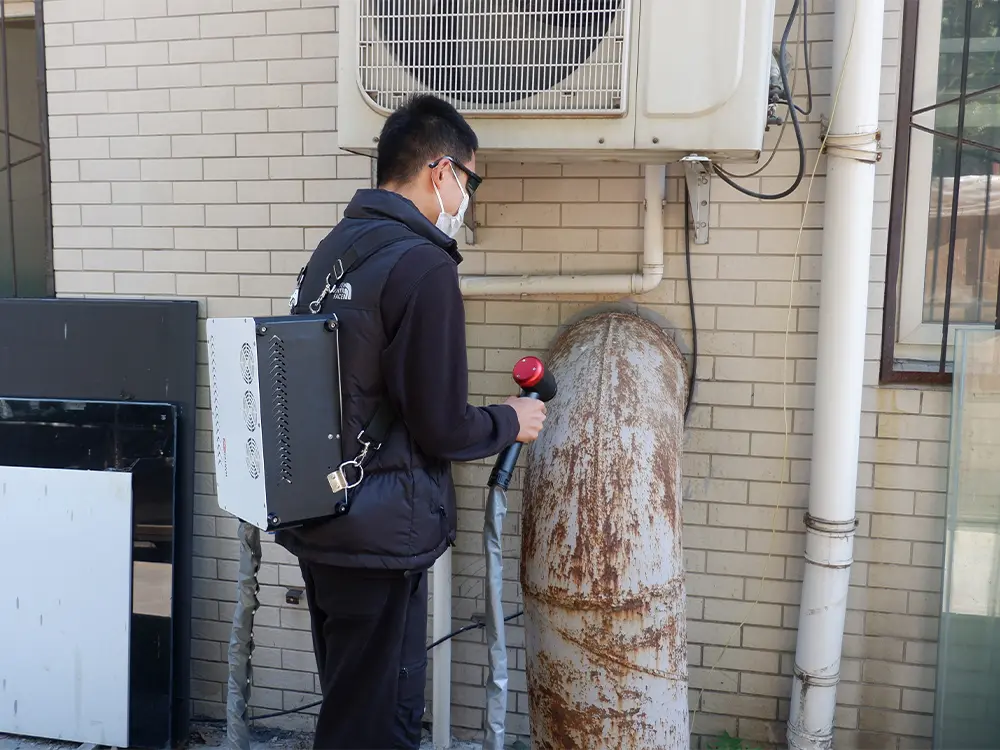
Laser cleaning grease removal offers several potential advantages for industrial mechanical component cleaning, especially when manufacturers need precise, non-contact surface treatment with reduced use of consumables.
Reduced Use of Cleaning Chemicals
Laser cleaning does not require traditional chemical cleaning agents to remove the targeted surface contamination. In suitable applications, this can reduce dependence on solvents and other cleaning chemicals while simplifying chemical handling, storage, and disposal requirements.
Non-Contact Cleaning
Because the laser beam does not physically contact the component, there is no brush, abrasive tool, or other mechanical medium directly rubbing against the surface. This non-contact process can be beneficial for mechanical components where surface contact should be minimized, particularly when cleaning delicate or precision-machined areas.
Precise Surface Cleaning
Laser parameters can be adjusted according to the type of contamination, substrate material, and required cleaning result. By controlling factors such as laser power, scanning speed, frequency, and beam movement, manufacturers can target grease and other surface contaminants while maintaining greater control over the underlying material.
Reduced Consumables
Unlike abrasive blasting or solvent-based cleaning, laser cleaning does not require a continuous supply of abrasive media or cleaning solvents. This can reduce consumable requirements and may help simplify certain industrial cleaning processes, especially in applications where frequent component cleaning is required.
Automation Potential
Laser cleaning systems can be integrated with robotic systems, CNC equipment, automated cleaning stations, conveyor systems, and other production equipment when the machine configuration supports automation.
Flexible Applications
A properly configured laser cleaning machine can be used to remove different types of surface contamination, including grease, oil, rust, oxides, paint, coatings, carbon deposits, and manufacturing residue. However, the machine configuration and cleaning parameters should be adjusted according to the specific contaminant and substrate to achieve the desired cleaning result.
How to Improve Laser Cleaning Efficiency for Grease Removal
To achieve consistent laser cleaning grease removal, operators should optimize the complete cleaning process instead of simply increasing laser power. For excessively thick grease deposits, removing the bulk contamination before laser treatment may also improve processing efficiency.
1. Select the Appropriate Laser Power
Match the laser power to the contamination, substrate, cleaning area, and required processing speed. Avoid selecting excessive power simply to increase cleaning speed, as unnecessary energy input may increase heat accumulation.
2. Optimize Scanning Speed
Scanning speed determines how much laser energy is delivered to a specific area. A slower speed increases energy input, while a faster speed can reduce heat accumulation but may require additional passes. The correct setting should be established through application testing.
3. Adjust Pulse Parameters
For pulsed systems, pulse energy and frequency can significantly affect cleaning efficiency, heat input, and surface quality. These parameters should be optimized for the specific contamination and substrate.
4. Maintain the Correct Working Distance
Following the recommended working distance helps maintain consistent beam characteristics and cleaning performance. Operators should use the working distance specified for the selected laser cleaning head.
5. Optimize the Scanning Pattern
The shape and geometry of the component can influence the ideal scanning pattern. A suitable pattern can improve cleaning uniformity and reduce unnecessary passes.
6. Use Controlled Multiple Passes
For thicker contamination, several controlled passes may be more effective than applying excessive energy in a single pass. The appropriate number of passes should be determined through testing to balance cleaning efficiency, surface quality, and processing time.
Sonuç
Laser cleaning grease removal can be an effective method for removing grease, oil, lubricant residue, rust, oxides, and other surface contaminants from suitable metal mechanical components.
Gears, shafts, bearing housings, hydraulic components, automotive parts, industrial machine parts, tools, jigs, and fixtures can all be potential applications for non-contact laser cleaning.
However, successful cleaning depends on more than laser power alone. Laser type, power, pulse parameters, scanning speed, working distance, beam size, contamination condition, and substrate material all influence the final result.
Before production, application testing is recommended to verify cleaning efficiency, processing speed, surface quality, and thermal effects on the workpiece.
If you are considering a laser cleaning machine for grease or oil removal, contact WINTEK Laser with your workpiece photos, material information, contamination type and thickness, cleaning area, and required cleaning result. Our team can evaluate your application and recommend a suitable laser cleaning configuration based on your cleaning requirements.
