



















Surface preparation is essential for manufacturers who need to remove rust, paint, oil, grease, and oxide layers before welding, painting, or coating. The right cleaning method can affect surface quality, production efficiency, operating costs, and workplace safety.
Traditional methods such as sandblasting, grinding, and chemical cleaning remain widely used in industrial applications. Laser cleaning offers another option, using a focused laser beam to remove selected contaminants without abrasive blasting media or chemical cleaning agents.
So, which method is better for your application? This guide compares laser cleaning with traditional surface preparation methods, covering precision, surface impact, consumables, waste, operating costs, and practical applications.
Τι είναι ο καθαρισμός με λέιζερ;
Laser cleaning uses a focused laser beam to remove contaminants or unwanted surface layers. Depending on the material and process settings, it can be used to remove rust, paint, oxides, oil residues, and selected coatings.
The cleaning result depends on factors such as laser power, pulse characteristics, scanning speed, and the properties of both the contaminant and the substrate. Operators must select suitable parameters and test the process to avoid unwanted surface changes.
Common applications include laser rust removal, paint stripping, oxide removal, mold cleaning, and surface preparation before welding or coating. Unlike abrasive blasting, laser cleaning does not require blasting media, although extracted particles and removed contaminants still need appropriate handling.
What Is Traditional Surface Preparation?
Traditional surface preparation includes a wide range of mechanical and chemical processes. The most common methods include sandblasting, abrasive blasting, grinding, wire brushing, and chemical cleaning.
Each method has advantages and limitations.
Sandblasting uses abrasive media to impact the surface and remove contaminants. It is widely used for large surfaces and heavy contamination. However, it requires abrasive materials and can generate dust and waste.
Grinding and wire brushing use mechanical force to remove rust, paint, scale, and other unwanted materials. These methods are relatively simple and can be useful for localized cleaning. However, they may remove some of the base material if excessive force is applied.
Chemical cleaning uses solvents or other chemical agents to dissolve or remove contaminants. It can be effective for certain applications, but chemical handling, storage, ventilation, and waste disposal must be considered.
These differences have encouraged manufacturers to explore laser surface preparation as an alternative for applications where precision and process cleanliness are important.
Laser Cleaning vs Traditional Surface Preparation
The following table summarizes the main differences between laser cleaning and traditional surface preparation methods.
| Comparison Factor | Καθαρισμός με λέιζερ | Traditional Surface Preparation |
|---|---|---|
| Cleaning method | Uses a focused laser beam | Uses abrasive media, mechanical tools, or chemical agents |
| Ακρίβεια | Suitable for controlled, localized cleaning | Depends on the method, tools, and operator technique |
| Surface impact | Non-contact, with results depending on laser parameters | Abrasion or chemical action may affect the substrate |
| Consumables | Does not require abrasive blasting media | May require abrasive media, replacement tools, or chemicals |
| Secondary waste | Contaminant residues and extraction waste still require handling | May generate abrasive waste, dust, chemical residues, or used tools |
| Large-area cleaning | Productivity depends on laser power, scanning width, and contamination | Abrasive blasting can be practical for extensive surfaces |
| Initial investment | Generally requires a higher equipment investment than basic mechanical tools | Costs vary by method and equipment |
| Best suited for | Controlled cleaning, selected contaminants, and applications requiring reduced abrasive impact | Heavy-duty cleaning, large surfaces, and applications suited to mechanical or chemical treatment |
Neither method is ideal for every application. The best choice depends on the substrate, contaminant, required surface finish, cleaning area, production volume, and total operating cost.
1. Cleaning Precision
Laser cleaning allows operators to control contaminant removal by adjusting laser parameters to suit the workpiece and cleaning target. This can be valuable when treating localized areas, removing selected surface layers, or preparing components for subsequent processing.
By comparison, grinding and abrasive blasting rely on mechanical contact or impact. Their results depend on factors such as abrasive type, operating conditions, and operator technique.
For applications where controlled cleaning is important, laser surface preparation may offer better process control. Test cleaning is recommended when the substrate has strict surface-finish or dimensional requirements.
2. Surface Damage
Surface damage risk varies with the cleaning method, substrate, and process settings. Grinding and abrasive blasting may remove some base material or alter the surface profile if the process is too aggressive.
Laser cleaning is a non-contact process that can remove selected contaminants without direct mechanical abrasion. However, excessive laser energy or unsuitable settings may still cause discoloration, surface changes, or thermal damage.
Before processing valuable or sensitive components, manufacturers should test the selected parameters on a representative workpiece and inspect the resulting surface.
3. Consumables and Waste
Consumables are an important factor in the total cost of surface preparation. Abrasive blasting requires blasting media, while grinding and wire brushing use tools that wear with repeated operation. Chemical cleaning may involve solvents, cleaning agents, and related waste-handling costs.
Laser cleaning does not require abrasive blasting media or chemical cleaning agents. This can reduce recurring consumable expenses in suitable applications. However, the total cost also includes electricity, equipment maintenance, labor, and any required fume extraction or waste collection.
The removed material does not disappear. Rust particles, paint residues, and other contaminants must still be managed according to the material and workplace requirements.
4. Working Environment
Abrasive blasting and mechanical cleaning can generate dust and airborne particles, while chemical cleaning may require careful handling of cleaning agents and chemical waste.
Laser cleaning reduces the need for abrasive media and chemical cleaning agents in suitable applications. However, removing paint, coatings, and other contaminants can still generate fumes or airborne particles.
Manufacturers should assess the materials being processed and provide suitable fume extraction, laser safety controls, protective equipment, and operator training. These measures are essential for safe operation, regardless of the cleaning method selected.
5. Process Flexibility
Laser cleaning systems can handle different surface contaminants by adjusting the laser parameters and scanning settings. Depending on the machine configuration, operators may also select different scanning patterns and cleaning widths for specific applications.
Traditional methods remain adaptable, but changing from one cleaning task to another may require different abrasive media, tools, chemicals, or equipment.
For manufacturers processing different workpieces, laser cleaning can offer useful process flexibility. Each new material or contaminant combination should be tested before production use.
6. Maintenance and Operating Considerations
Maintenance requirements vary by cleaning technology. Abrasive blasting equipment needs inspection of hoses, nozzles, and media delivery components, while grinding tools require regular wear checks and replacement.
For laser cleaning machines, routine tasks may include inspecting the cleaning head, keeping optical components clean according to the manufacturer’s instructions, checking cables and connections, and maintaining the cooling system where applicable.
Before purchasing equipment, manufacturers should also review spare-part availability, warranty terms, technical support, and operator training. These factors affect maintenance planning and long-term operating costs.
Καθαρισμός με λέιζερ έναντι αμμοβολής
Sandblasting is often suitable for large surfaces, heavy rust, and applications that require an abrasive surface profile before coating. It can be an efficient option when the workpiece and production process allow mechanical abrasion.
Laser cleaning is worth considering when controlled contaminant removal, reduced abrasive media use, or lower mechanical impact on the substrate is a priority. It may be particularly useful for localized cleaning, maintenance, and selected surface preparation tasks.
However, laser cleaning is not always faster or more economical for large-scale, heavy-duty jobs. Manufacturers should compare cleaning results, processing time, surface-finish requirements, consumable costs, and waste-handling needs before choosing between the two methods.
Laser Cleaning vs Chemical Cleaning
Chemical cleaning can be effective for removing oil, grease, and certain coatings or residues, depending on the cleaning agent and substrate. It may also suit processes that require immersion or treatment of complex internal surfaces.
Laser cleaning removes selected surface contaminants without relying on chemical cleaning agents. This can help manufacturers reduce chemical use in suitable applications and simplify some aspects of chemical storage and disposal.
The two methods are not interchangeable in every situation. Chemical cleaning may be more appropriate for certain complex geometries or contaminants, while laser cleaning may suit accessible surfaces that require controlled, localized treatment. The final choice should be based on cleaning tests and process requirements.
When Is Laser Cleaning a Good Choice?

Laser cleaning may be a good choice when a manufacturing or maintenance process requires controlled contaminant removal and reduced dependence on abrasive media or chemical agents.
Typical applications include:
- Removing rust and oxide layers from metal components
- Stripping selected paints and coatings
- Preparing metal surfaces before welding or coating
- Cleaning oil and grease residues where laser treatment is suitable
- Cleaning molds, tools, and industrial equipment
- Treating localized areas where mechanical abrasion may be undesirable
Laser cleaning is especially worth evaluating when a company performs the same cleaning task repeatedly and wants to reduce consumable handling or improve process consistency.
Before investing in a machine, manufacturers should test the actual workpiece and contaminant. Cleaning speed, surface finish, substrate condition, and the need for fume extraction should all be assessed under representative operating conditions.
When Are Traditional Methods Still Suitable?
Laser cleaning is not the best solution for every surface preparation task. Traditional methods may remain more practical when the job involves extensive surface coverage, heavy contamination, aggressive material removal, or a process that requires a specific surface profile.
Abrasive blasting can be suitable for large steel structures and coating preparation. Grinding may be preferable for localized mechanical removal, while chemical cleaning can work well for compatible contaminants and complex geometries.
Manufacturers should compare the required cleaning result, throughput, labor, equipment investment, consumables, waste handling, and safety controls before selecting a method. The goal is to find the most suitable process for the actual application, rather than choosing a technology based on novelty alone.
How to Choose a Laser Cleaning Machine
Επιλέγοντας το σωστό μηχανή καθαρισμού λέιζερ requires more than selecting a laser power rating. Manufacturers should evaluate the cleaning task, workpiece, production requirements, and operating environment before purchasing equipment.
1. Identify the Contaminant and Substrate
Determine whether the machine will be used for rust removal, paint stripping, oxide removal, oil residue cleaning, or another application. The substrate material and condition also affect the cleaning parameters and final surface quality.
2. Select the Appropriate Laser Power
Laser power should match the contamination level, required cleaning depth, workpiece size, and target processing speed. Higher power does not automatically produce better results for every application. Test cleaning helps establish suitable operating parameters.
3. Evaluate Cleaning Width and Productivity
Consider the size and shape of the workpieces, the required cleaning area, and the expected daily workload. Scanning width, scanning patterns, and operator handling all influence practical productivity.
4. Compare Cooling Configurations
Air-cooled and water-cooled machines have different configuration and operating requirements. Compare the cooling system, working environment, operating duration, and manufacturer’s recommendations before selecting a model.
5. Review Safety and Extraction Requirements
Confirm the required laser safety controls, protective equipment, and fume extraction arrangements. These requirements depend on the machine configuration and the materials being cleaned.
6. Check Warranty and Technical Support
Review warranty coverage, spare-part availability, operating instructions, training, and after-sales support. These factors matter when the machine will be used regularly in a production or maintenance environment.
Before placing an order, ask the supplier to evaluate your actual cleaning application. Providing workpiece photos, contaminant details, material information, and expected cleaning results can help determine a suitable machine configuration.
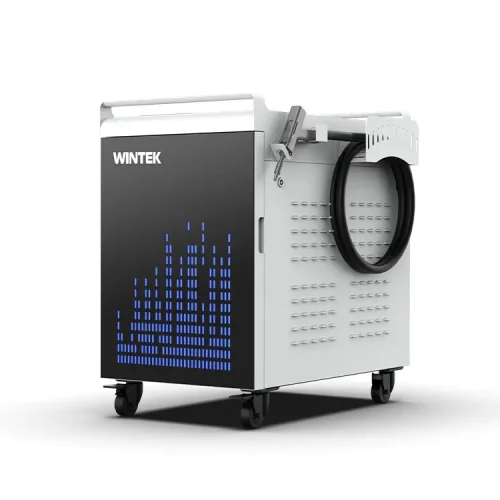
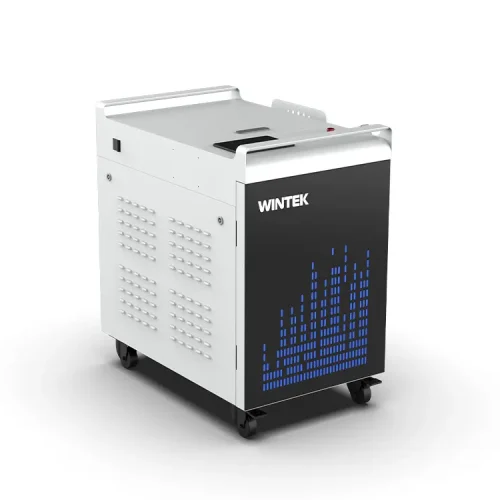
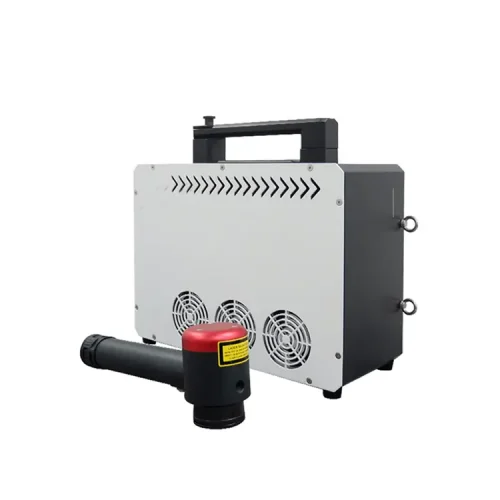
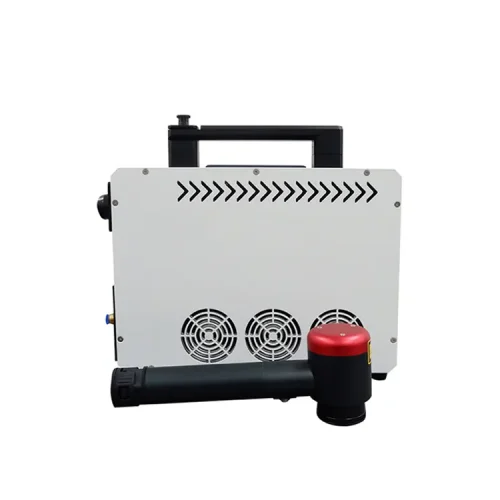


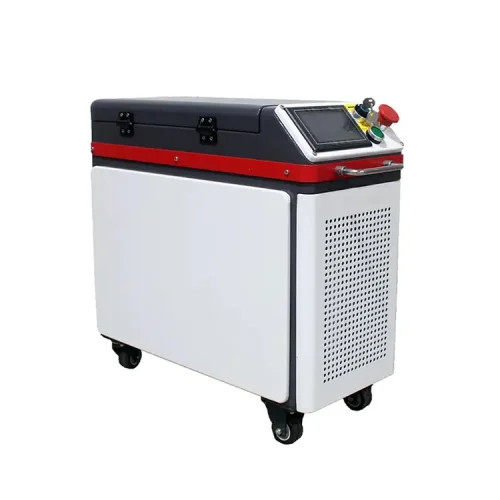
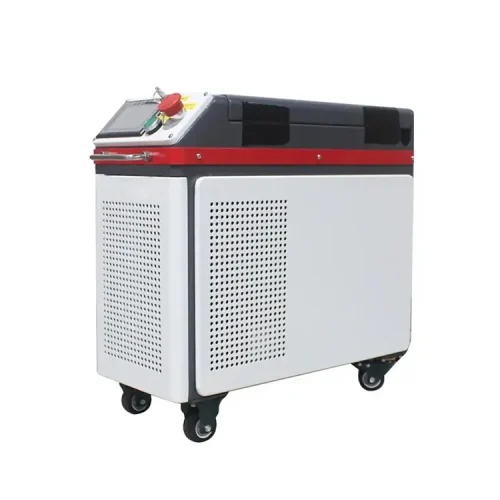
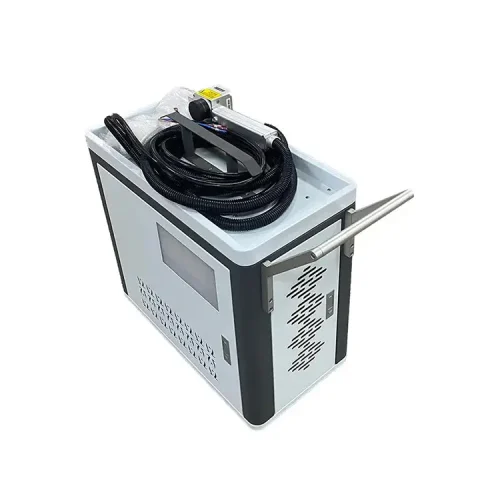
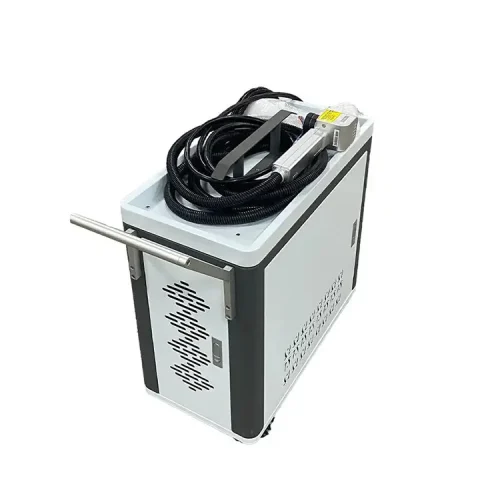
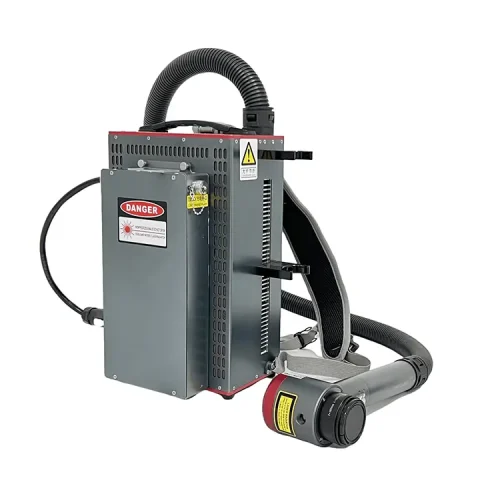

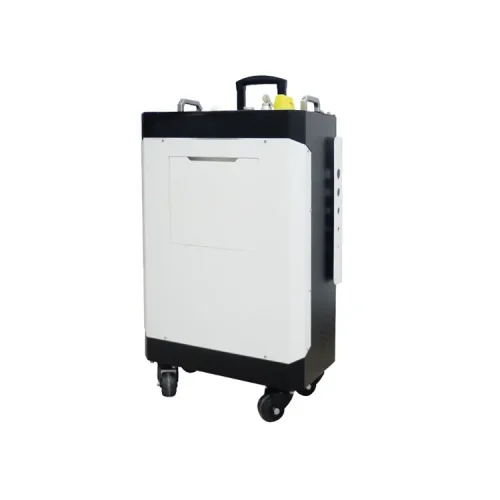
Looking for a laser cleaning solution for your application? Explore WINTEK laser cleaning machines to compare available configurations and discuss your workpiece, cleaning requirements, and expected production volume with our team.
Συχνές ερωτήσεις
1. Is laser cleaning better than sandblasting?
Laser cleaning may be better for controlled contaminant removal, localized cleaning, and applications where reducing abrasive media use is important. Sandblasting may be more practical for large surfaces, heavy contamination, or jobs that require an abrasive surface profile. The best method depends on the workpiece and cleaning requirements.
2. Can laser cleaning remove rust and paint?
Yes. Laser cleaning can remove rust and selected paint or coating layers from suitable surfaces. The results depend on the coating, substrate, laser settings, and required surface finish. Testing is recommended before production use.
3. Is laser cleaning cheaper than traditional surface preparation?
Not in every case. Laser cleaning equipment generally requires a higher initial investment than basic mechanical cleaning tools. However, it can reduce some recurring consumable expenses. A fair comparison should include equipment costs, labor, cleaning speed, maintenance, extraction, and waste disposal.
4. Does laser cleaning damage the base material?
Laser cleaning is a non-contact process, but unsuitable parameters can still alter or damage the substrate. Laser power, pulse characteristics, scanning speed, and material properties should be considered. Test the process on a representative workpiece before regular operation.
5. How do I choose the right laser cleaning machine?
Start with the workpiece material, contaminant type, cleaning area, required result, and daily workload. Then compare laser power, scanning configuration, cooling requirements, safety measures, warranty, and technical support. Application testing can help confirm whether a particular machine is suitable.
Συμπέρασμα
Choosing between laser cleaning and traditional surface preparation depends on your workpiece, cleaning requirements, and production goals. Testing representative samples can help you evaluate cleaning quality, processing time, and operating costs before making an investment. Explore WINTEK laser cleaning machines or contact our team to discuss your application and find a suitable configuration for your production needs.
