











In recent years, handheld laser welding technology has transformed metal fabrication. More workshops and manufacturers are switching from traditional welding to laser solutions. But many buyers still ask the same question before investing: Are handheld laser welders any good?
The short answer is yes. A handheld laser welder for metal offers outstanding welding quality, high efficiency, low distortion, and exceptional flexibility. Compared with MIG, TIG, and manual arc welding, laser welding delivers cleaner seams, faster speeds, and lower long-term operating costs.
In this complete guide, we will explore how handheld laser welders work, their advantages and limitations, real-world applications, cost considerations, and whether they are truly worth the investment for your business.
What Is a Handheld Laser Welder for Metal?
The handheld laser welder for metal is a portable welding system that uses a high-energy fiber laser beam to melt and fuse metal materials. Unlike traditional welding methods that rely on electric arcs or filler rods as the heat source, laser welding concentrates energy into a tiny spot, producing fast, precise, and clean welds.
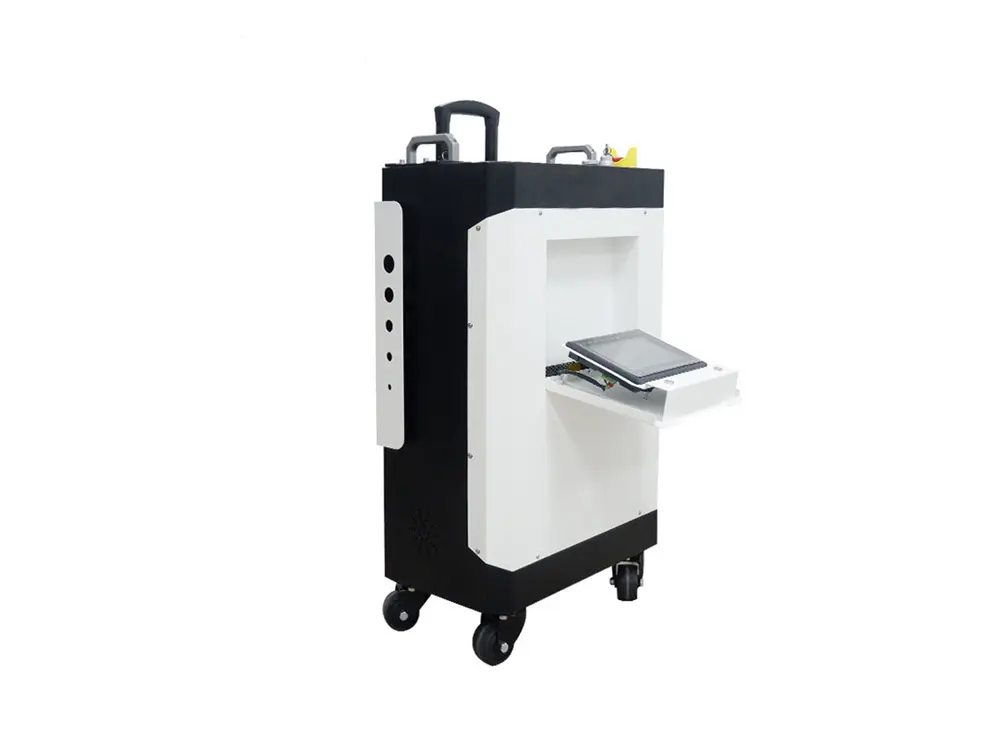
A typical handheld laser welding system includes:
- Fiber laser source (1000W to 3000W)
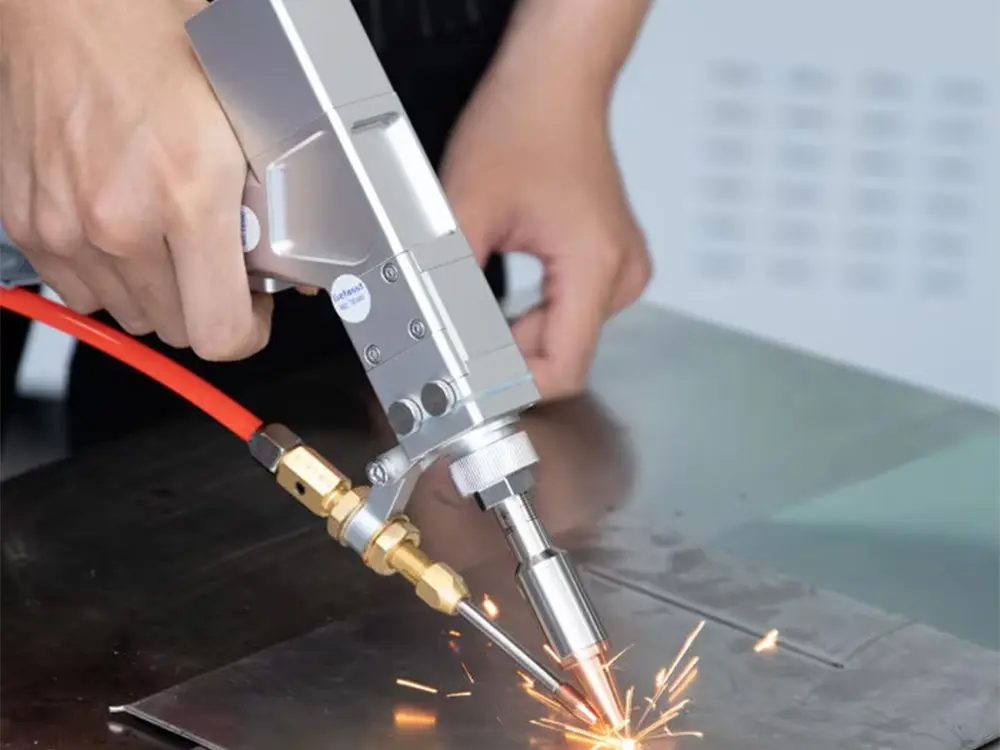
- Handheld laser welding gun
- Water cooling system
- Control system
- Wire feeder
- Protective gas supply
Operators simply hold the welding gun and guide the laser beam along the joint, making it extremely easy to learn and operate.
How Does a Handheld Laser Welder Work?
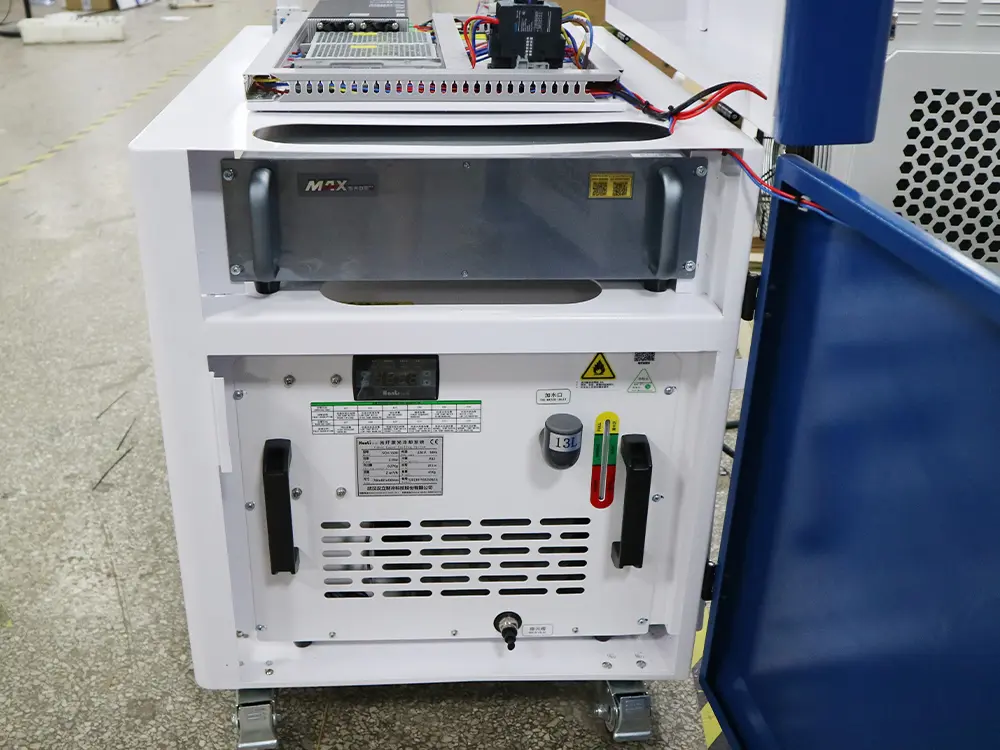
The working principle of a handheld laser welder for metal is based on high-energy laser transmission through optical fiber. When the laser beam reaches the metal surface, it instantly melts the metal at the joint. As the molten pool cools, the metals fuse seamlessly.
Key features of laser welding include:
- Extremely concentrated heat input
- Minimal heat-affected zone
- High penetration depth
- Clean, oxidation-free weld seams
- Very low spatter
This precision is why laser welding is widely used in industries that require high accuracy and visual perfection.
Advantages of Handheld Laser Welder for Metal
1. Extremely Fast Welding Speed
A handheld laser welder for metal operates 3–10 times faster than TIG welding. It completes thin and medium sheets in a single pass. This speed advantage dramatically increases productivity and reduces labor costs.
2. Superior Welding Quality
Laser welding produces:
- Smooth and uniform weld seams
- Minimal porosity
- Little to no deformation
- No excessive grinding or rework
This makes handheld laser welding especially ideal for visible welds in furniture, cabinets, doors, and decorative metal products.
3. Minimal Heat Distortion
Traditional welding causes warping due to heat. A handheld laser welder delivers a very small heat-affected zone. As a result, metals retain their original shape, thin sheets do not warp easily, and post-weld straightening is rarely required.
4. Easy to Learn and Operate
One of the biggest advantages of a handheld laser welder is its simplicity. Even beginners can become productive after just a few days of training.
Compared with TIG welding, which requires years of skill development, laser welding is far more user-friendly and consistent.
5. Strong Versatility for Multiple Metals
A handheld laser welder for metal can weld a wide range of materials, including:
- Stainless steel
- Carbon steel
- Aluminum
- Galvanized steel
- Copper (with proper configuration)
This makes it ideal for workshops that handle multi-material fabrication.
6. Compact Size and High Mobility
A handheld laser welder takes up far less space than traditional welding stations. It also allows operators to weld complex shapes, corners, and hard-to-reach areas with ease.
Are There Any Disadvantages?
Although a handheld laser welder for metal offers many advantages, it is still important to clearly understand its limitations before investing.
1. Higher Initial Investment
Compared with traditional TIG or MIG welding machines, a handheld laser welder for metal requires a higher initial investment. However, this cost is offset by much faster production speed, lower labor needs, reduced consumable use, and a significantly lower rework rate. In most real production environments, the total return on investment is typically achieved within 6 to 18 months.
2. Safety Requirements
Laser welding uses high-energy laser beams, so proper safety protection is essential. Operators must wear professional laser safety goggles, ensure reasonable workspace shielding, and take basic skin protection measures. When operated according to safety standards, a handheld laser welder for metal is extremely safe and stable for daily industrial use.
3. Limited for Ultra-Thick Plates
Most handheld laser welders operate within a power range of 1000W to 3000W and perform best on thin to medium metal plates. Typical welding thickness includes stainless steel up to 0.5–8mm, carbon steel up to 1–8mm, and aluminum up to 1–5mm. For ultra-thick metal plates, robotic laser welding systems or traditional arc welding processes may still be required.
Applications of a Handheld Laser Welder for Metal
The handheld laser welder for metal is widely used across many industries due to its speed, precision, and versatility. It is commonly applied in stainless steel fabrication, carbon steel processing, aluminum welding, and precision metal components manufacturing. Typical industries include sheet metal workshops, automotive parts production, kitchen equipment manufacturing, electrical cabinet fabrication, and metal furniture processing.
In addition, handheld laser welder for metal is ideal for custom fabrication and small-batch production where flexibility is critical. It is frequently used for advertising signage, metal enclosures, hardware accessories, decorative panels, railings, and repair welding. With minimal deformation and high weld quality, it helps manufacturers improve productivity while maintaining excellent surface appearance.
Is a Handheld Laser Welder Worth It?
For most modern metal fabrication businesses, the answer is yes. A handheld laser welder for metal significantly improves welding speed, reduces labor dependence, and delivers cleaner, stronger welds compared to traditional methods. With minimal post-weld finishing and low consumable usage, overall production efficiency increases dramatically.
From a cost perspective, although the initial investment is higher than TIG or MIG equipment, the long-term savings in labor, materials, and rework quickly balance the cost. Many users achieve a full return on investment within one year, especially in high-frequency production environments.
More importantly, a handheld laser welder for metal helps manufacturers stay competitive in today’s market. Faster delivery, higher weld quality, and greater process flexibility directly translate into stronger customer satisfaction and growing business opportunities.
How Much Does a Handheld Laser Welder for Metal Cost?
Prices vary mainly based on the power level, such as 1500W, 2000W, and 3000W. They are also influenced by the laser source brand, cooling system, welding head configuration, wire feeding system, and the manufacturer’s country of origin.
Handheld Laser Welder price range in 2025:
- 1500W: USD 2,500–2,900
- 2000W: USD 3,500–4,800
- 3000W: USD 4,400–5,100
For most workshops, 1500W to 2000W offers the best balance of power and cost.
Is Handheld Laser Welder Suitable for Beginners?
Yes. This is one of the strongest advantages of laser welding.
Unlike TIG welding, which requires precise hand control and experience, handheld laser welder for metal only requires basic training. Even new operators can produce professional welds within days instead of years.
This greatly reduces:
- Training costs.
- Dependence on highly skilled welders.
- Production instability caused by human factors.
Ready to Upgrade Your Welding Efficiency?
If you are upgrading from traditional welding, expanding production capacity, or entering the laser welding market, a reliable handheld laser welder for metal is essential for competitiveness and long-term efficiency. It allows your workshop to handle more projects with consistent quality while reducing labor and rework costs.
Wintek handheld laser welders provide higher productivity, cleaner welds, and stable long-term output. They help metal fabricators grow faster, maintain consistent quality, and gain a stronger edge in today’s competitive market.
Conclusion
In summary, a handheld laser welder for metal offers unmatched precision, efficiency, and versatility for modern metal fabrication. It combines fast welding speeds, minimal heat distortion, and superior weld quality, making it ideal for small-batch production, repairs, and multi-material workshops.
While the initial investment may be higher than traditional welding equipment, the long-term benefits of reduced labor, lower consumable costs, and faster turnaround ensure a rapid return on investment. For beginners and experienced operators alike, it is easy to learn, safe to operate, and capable of handling a wide range of metals.
For any workshop or factory looking to upgrade welding efficiency, improve product quality, and stay competitive in today’s market, choosing a Wintek handheld laser welder for metal guarantees stable output, cleaner welds, and stronger business growth.