











In recent years, sustainability has become a defining goal across global industries. As manufacturing companies strive to reduce their environmental impact, green surface treatment technologies are increasingly taking center stage. Traditional methods such as sandblasting, chemical cleaning, and dry ice blasting have long been used to remove rust, paint, and contaminants from metal surfaces, but these methods cause enormous damage to the environment.
Laser cleaning technology represents a revolutionary step toward eco-friendly manufacturing. By using a focused laser beam to remove unwanted surface layers without chemicals, abrasives, or waste, laser cleaning offers a clean, safe, and energy-efficient alternative for modern metal processing. This article explores how laser cleaning supports the green revolution in industrial surface treatment and why it is becoming the preferred solution for sustainable production worldwide.
The Environmental Challenge of Traditional Cleaning Methods
For decades, traditional surface treatment methods have relied on chemicals, abrasive materials, and high energy consumption. While effective, these techniques often generate toxic residues, dust, and wastewater that are harmful to both workers and the environment.
Chemical Cleaning
Chemical cleaning involves acids, solvents, or alkaline agents to remove coatings and oxides. These substances are not only hazardous to handle but also produce large volumes of contaminated wastewater that require costly treatment and disposal. Prolonged exposure can cause serious health issues for workers, and the release of volatile organic compounds contributes to air pollution.
Sandblasting and Abrasive Cleaning
Sandblasting uses high-pressure abrasive particles to strip off contaminants. This process produces significant amounts of airborne dust, noise, and micro-particles, leading to respiratory problems for operators and environmental contamination. Additionally, the abrasive media must be replaced and disposed of frequently, generating additional solid waste.
Dry Ice Blasting
Although dry ice blasting is often promoted as a cleaner option, it still involves the production and transport of CO₂ pellets, which require considerable energy. The method also has limited precision and may not be suitable for delicate or complex surfaces.
In contrast, laser cleaning offers a fundamentally cleaner, safer, and more sustainable way to prepare and restore metal surfaces without the environmental drawbacks of traditional methods.
How Laser Cleaning Works: A Non-Contact and Non-Polluting Process

Laser cleaning operates on the principle of using high-energy laser beams to remove contaminants, rust, paint, or oxides from metal surfaces without physical contact. Unlike abrasive or chemical methods, this technology relies purely on light energy to achieve precise surface treatment. When the focused laser beam hits the material, it instantly vaporizes unwanted layers such as rust or coatings while leaving the base metal intact.
Because the process is non-contact, there is no mechanical wear, scratching, or deformation of the workpiece. This makes laser cleaning ideal for delicate, high-precision components in industries such as aerospace, electronics, and automotive manufacturing. Since no chemicals or abrasive materials are required, there is no wastewater, dust, or secondary pollution, making the process safer for both operators and the environment.
Laser cleaners offer flexibility and mobility. Operators can easily adjust laser power, scanning speed, and cleaning angle to match different materials and contamination levels. This ensures consistent, high-quality results while allowing on-site cleaning for a variety of metal components. The combination of precision, portability, and eco-friendliness makes laser cleaning an efficient and sustainable solution for modern workshops.
Environmental Benefits of Laser Cleaning
Laser cleaning is not just a technological upgrade, it is a sustainable transformation. The following are the key environmental benefits that make it the leading choice for green manufacturing.
No Chemicals, No Wastewater
Unlike acid baths or solvent cleaning, laser cleaning eliminates the use of chemical solutions. There is no wastewater discharge, no hazardous sludge, and no need for post-treatment. This reduces both environmental pollution and operational costs.
No Abrasive Media
Since laser cleaning relies solely on light energy, there are no consumables like sand or grit. This means no disposal of used abrasive materials, no airborne dust, and no noise pollution. The workplace remains cleaner and safer for operators.
Energy Efficiency
Modern fiber laser systems are designed for high energy efficiency, converting a large portion of electrical energy directly into laser power. Compared to mechanical or chemical processes, the total energy consumption is significantly lower, reducing the carbon footprint.
Improved Worker Safety
The process produces no toxic fumes or splashes, and the cleaning area can be fully enclosed with laser safety protection. Operators are not exposed to harmful chemicals or high levels of dust, improving workplace safety and compliance with occupational health standards.
Extended Equipment Lifespan
Because laser cleaning is contact-free, there is no tool wear, mechanical friction, or abrasive erosion. This minimizes maintenance needs, extends equipment service life, and further supports sustainable production through long-term efficiency.
Reduced Carbon Emissions
When viewed across the full lifecycle, laser cleaning contributes to a lower carbon footprint. It eliminates the need for consumables, reduces waste transport, and minimizes environmental remediation efforts, which are key factors for companies pursuing ESG goals and carbon neutrality.
Green Applications Across Industries
Laser cleaning has proven its environmental and economic advantages across multiple industrial sectors. Its versatility allows it to replace traditional methods in various applications:
Automotive Industry
Automotive manufacturers use laser cleaning to remove oxides and coatings from metal components before welding or painting. This not only improves adhesion and surface quality but also eliminates chemical degreasing, reducing hazardous waste.
Aerospace
In aerospace maintenance, precision and cleanliness are critical. Laser cleaning effectively removes oxidation, coatings, and contaminants from turbine blades, aluminum panels, and molds without causing abrasive wear or leaving chemical residues.
Mold and Tool Maintenance
Rubber and plastic molds often accumulate residues that affect product quality. Laser cleaning enables in-place, non-contact mold cleaning, avoiding the need for disassembly and eliminating chemical solvents.
Cultural Heritage Restoration
For conservation projects, laser cleaning is used to safely remove pollutants, corrosion, or old varnish from sculptures, monuments, and artworks without damaging the original surface, representing a major breakthrough in eco-friendly restoration.
Electronics and Precision Engineering
Laser cleaning offers micron-level precision for removing oxides and thin films from delicate parts. It ensures clean, residue-free surfaces essential for high-tech manufacturing.
These examples highlight how laser cleaning supports industrial modernization while meeting global environmental standards such as ISO 14001 and REACH regulations.
Laser Cleaning and the Future of Sustainable Manufacturing
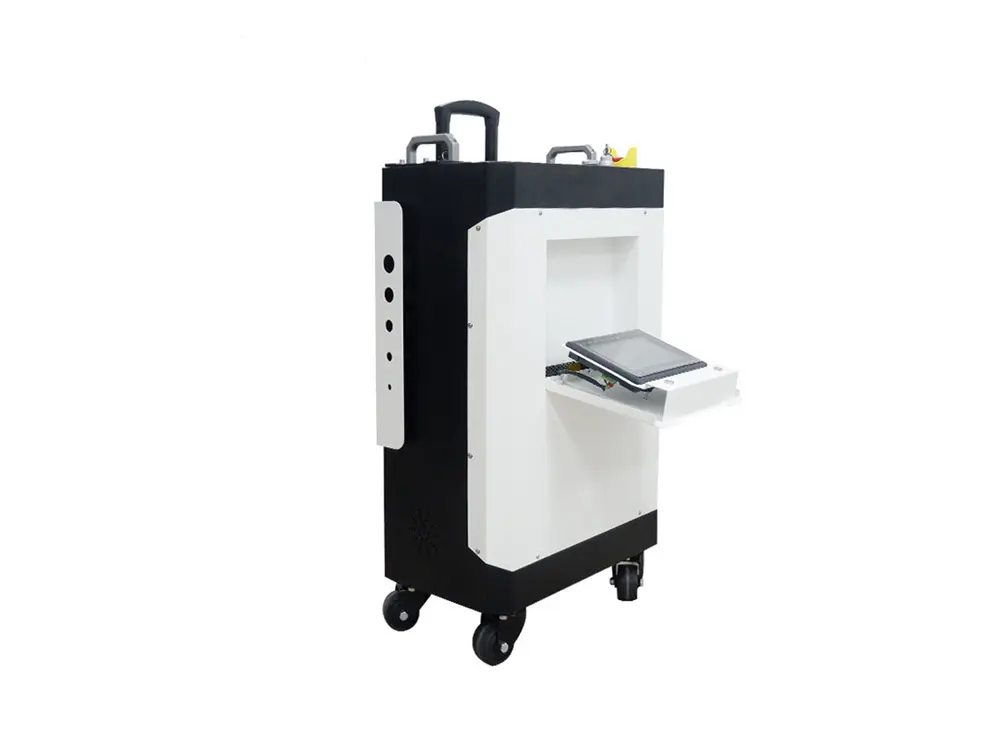
As industries increasingly focus on sustainability, wintek handheld laser cleaning machines are playing a vital role in green manufacturing. These portable devices allow operators to clean metal surfaces directly on-site without the need for large, stationary equipment. Their flexibility makes them ideal for workshops, maintenance teams, and field operations where mobility and precision are essential.
Our handheld laser cleaners efficiently remove rust, paint, and other contaminants without chemicals or abrasives, producing minimal waste and no secondary pollution. Operators can easily adjust laser power, cleaning speed, and angle to suit different materials and levels of contamination, ensuring consistent, high-quality results.
The use of wintek handheld laser cleaning machines supports environmental goals by reducing chemical use, minimizing energy consumption, and eliminating hazardous waste. As sustainability becomes a priority in industries worldwide, these portable, eco-friendly devices provide a practical solution for companies aiming to reduce their carbon footprint while maintaining industrial efficiency.
Conclusion
Fiber laser rust removal and cleaning technology represents a significant advancement in sustainable surface treatment. By eliminating the need for chemicals and abrasives, reducing energy consumption, and minimizing waste, laser cleaning machines provide an environmentally responsible solution for modern manufacturing.
Wintek laser cleaners deliver precise, high-quality results while protecting the underlying metal surfaces, making them ideal for a wide range of industrial applications. As companies strive to achieve eco-friendly production and reduce their carbon footprint, fiber laser rust removal offers an efficient, safe, and sustainable method to maintain and restore metal surfaces.
Investing in wintek laser cleaning technology is not only a step toward operational efficiency but also a commitment to green manufacturing and long-term sustainability.