
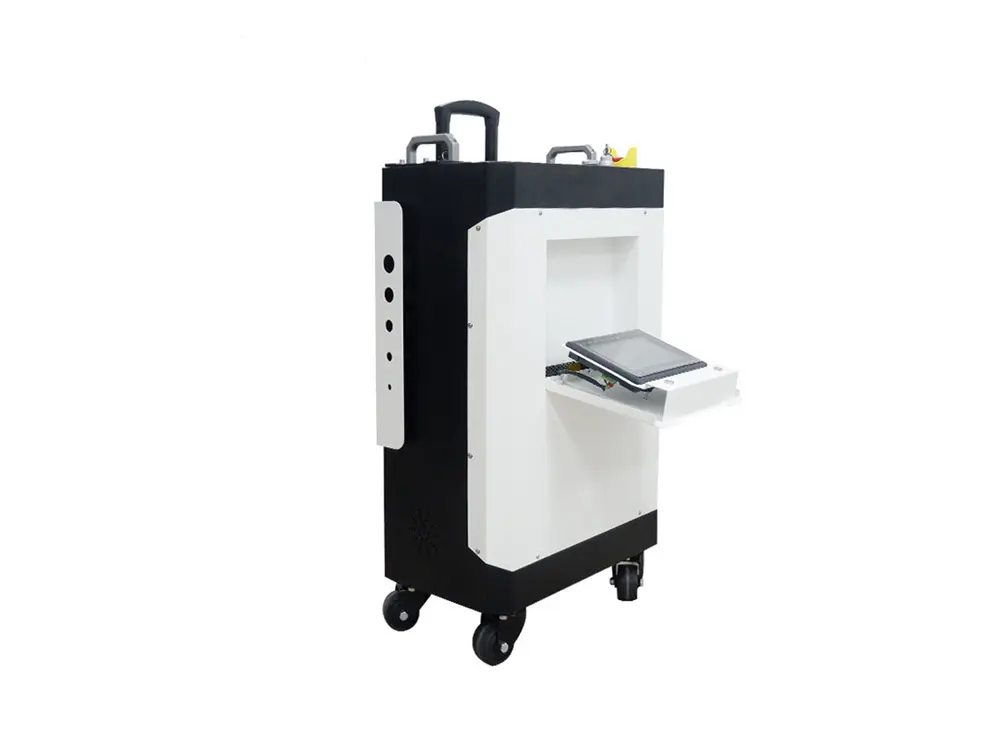
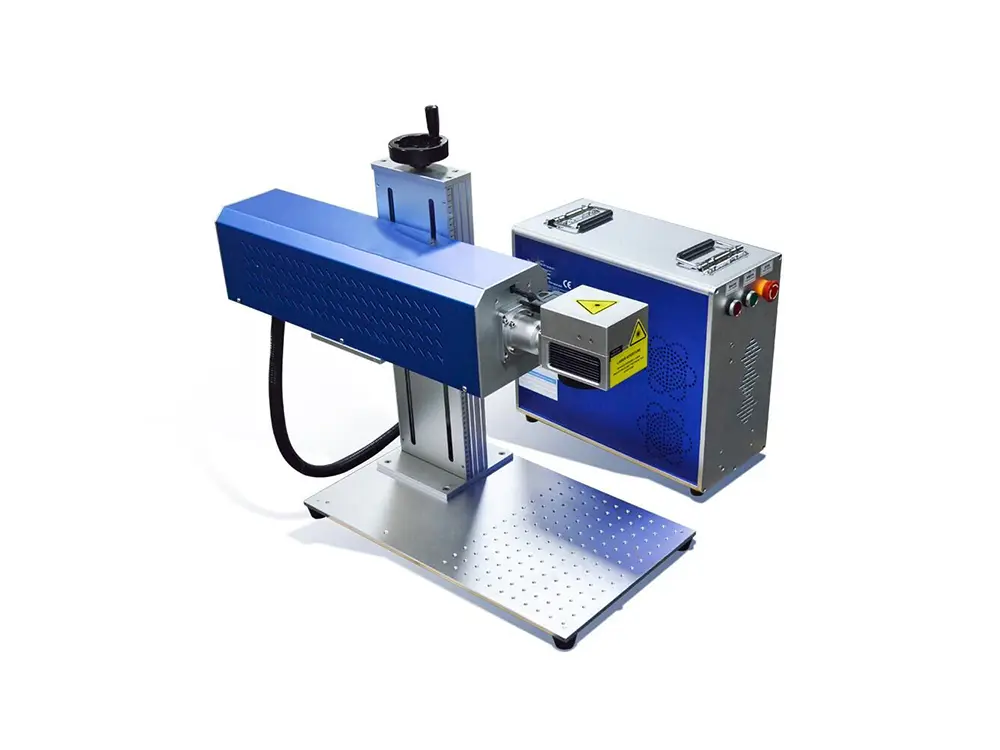











With its ability to deliver precise, high-strength welds, laser welding has emerged as a leading solution in industries like automotive, aerospace, electronics, and metal fabrication. Its ability to deliver concentrated energy into a small area enables deep, narrow welds at high speeds with minimal thermal distortion. But what exactly is laser welding, and what is the process of laser welding machines?
In this blog, we’ll explore the laser welding process in detail—its working principles, different methods, advantages, limitations, and industrial applications.
What Is Laser Welding?
Laser welding is a high-precision, non-contact joining process that uses a high-energy-density laser beam to locally heat materials, causing them to melt and rapidly solidify, resulting in a strong weld. This process is suitable for a wide range of metal materials.

What Is the Laser Welding Machine Process?
The laser welding machine process involves using a focused, high-energy laser beam to join two or more metal parts together. It is a non-contact process that delivers heat precisely to the joint area, allowing the materials to melt and fuse with minimal distortion. Here’s a step-by-step overview of how it works:
1. Preparation
The workpieces are cleaned and positioned accurately, often using fixtures or automation systems to ensure proper alignment.
2. Laser Beam Generation
The machine uses fiber laser as the light source, offering high power output and exceptional welding precision.
3. Beam Focusing and Delivery
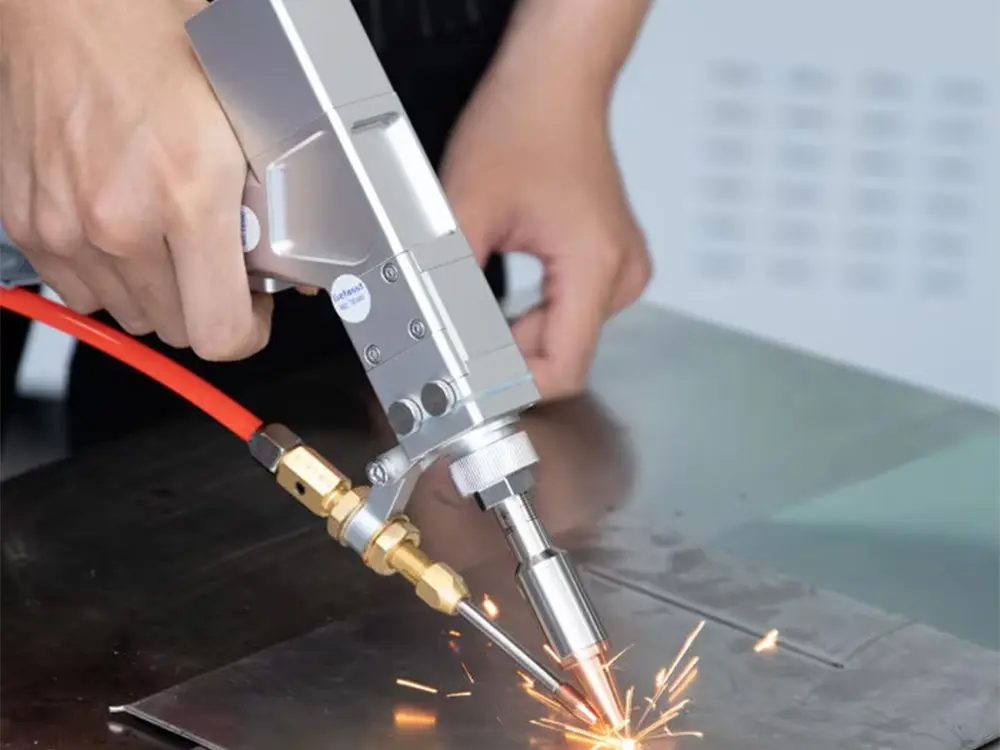
The laser beam is delivered to the weld joint through an optical system, often via a handheld laser gun or robotic arm for automated setups.
4. Material Melting and Fusion
The intense laser energy melts the material at the joint. When the laser moves forward, the molten pool quickly solidifies to form a strong, continuous weld.
5. Cooling and Finish
The weld cools rapidly, leaving a narrow, clean seam with minimal heat-affected zones and very little post-processing required.
8 Laser Welding Modes – Detailed Explanation
Laser welding offers a wide range of joint configurations to accommodate different shapes, thicknesses, and structural needs. Here’s an overview of the 8 common laser welding methods shown in the image:
1. Butt Welding
Description: Two workpieces are aligned in the same plane and welded along the seam where their edges meet.
Typical Use: Pipes, plates, and thin sheet metal.
Advantages: Clean appearance, minimal filler material, suitable for automation.
2. Lap Welding
Description: One piece overlaps another, and the weld is made at the edge of the overlapping area.
Typical Use: Automotive body panels, enclosures, battery tabs.
Advantages: Good strength, easy alignment, suitable for dissimilar thicknesses.
3. Overlap Welding
Description: Similar to lap welding, but typically involves deeper penetration or keyhole welding for strong joints through both layers.
Typical Use: Structural joints, aerospace components.
Advantages: Deep fusion, high mechanical strength, ideal for load-bearing parts.
4. Nail Welding
Description: Spot-like welds at defined intervals (also known as spot welding or tack welding).
Typical Use: Metal sheet assembly, small brackets, electrical components.
Advantages: Fast, localized heat input, minimal distortion.
5. Edge Welding
Description: Welding is performed along the edge of two adjacent metal sheets.
Typical Use: Thin-wall tubes, containers, sheet-to-sheet joints.
Advantages: Neat finish, requires minimal filler, good for cosmetic joints.
6. Tee Welding
Description: One piece is welded perpendicular to another, forming a “T” shape.
Typical Use: Frame structures, metal furniture, reinforcement joints.
Advantages: High-strength connection, often used with fillet welds.
7. Plug Welding
Description: A hole is made in the top sheet and filled with laser to fuse it with the bottom layer.
Typical Use: Substitutes for spot welding, especially when access is only possible from one side.
Advantages: Strong, discrete weld, excellent for layered joints.
8. Tailored Edge Welding
Description: Two sheets of different thicknesses or materials are joined along a precisely prepared edge.
Typical Use: Automotive tailored blanks, aerospace, and hybrid structures.
Advantages: Material savings, structural optimization, custom-designed strength zones.
Applications of Laser Welding Machines
Laser welding is used across numerous industries where accuracy, strength, and speed are critical:
- Automotive: Body panels, transmission components, exhaust systems.
- Aerospace: Turbine parts, fuel system components, structural frames.
- Electronics: Sensor casings, battery connections, contact pads.
- Jewelry and Watchmaking: Fine detailing, seamless repairs.
- Metal Fabrication: Sheet metal welding, enclosure assembly, steel structures.
What are the Advantages and Disadvantages of Laser Welding Machines?
1. Advantages of Laser Welding Machines
High Precision: Laser welding allows for extremely accurate control of the heat source, making it ideal for delicate or complex welds.
Minimal Heat-Affected Zone (HAZ): The laser focuses energy in a small area, resulting in less thermal distortion, reduced material stress, and better overall appearance.
High Welding Speed: Laser welding is faster than conventional methods, especially when automated, significantly improving production efficiency.
Strong and Clean Welds: Produces high-quality, deep-penetration welds with minimal porosity or spatter. Often no post-processing (eg: grinding, polishing) is needed.
Non-Contact Process: Since there’s no physical contact with the material, tool wear is eliminated, and delicate parts remain protected.
Automation-Friendly: Easily integrated into robotic arms or CNC systems for automated, high-volume production lines.
Supports a Wide Range of Materials: Suitable for welding stainless steel, carbon steel, aluminum, copper, titanium, and other metals.
Versatile Welding Modes: Can perform butt, lap, edge, plug, and tailored welds on parts of varying shapes and thickness.
2. Disadvantages of Laser Welding Machines
High Initial Investment: Laser welding equipment, especially high-power or automated systems, can be expensive to purchase and install.
Not Ideal for Thick Sections: While powerful, laser welding is less efficient for very thick materials unless pre-treated or used in hybrid welding setups.
Limited Tolerance to Gaps: Requires tight joint fit-up. Gaps or inconsistencies between parts can lead to poor welds.
Safety Concerns: Lasers can pose risks such as eye or skin damage if not properly enclosed or shielded. Requires strict safety protocols.
Reflective Materials Can Be Challenging: Highly reflective metals like copper and aluminum may reflect laser energy, requiring higher power.
Specialized Training Needed: Operators need training in laser safety, parameter settings, and machine operation for optimal and safe performance.
Conclusion
Laser welding machines are highly regarded for their exceptional precision, speed, and efficiency. Gaining a deep understanding of the laser welding process can help you make smarter and more effective decisions when integrating it into your production workflow.
If you would like to learn more about how laser welding can help your business, or would like to learn more about our range of laser welding machines, please feel free to contact us.