



















Handheld laser welding has become one of the most efficient and precise methods for joining metals in industries ranging from automotive and aerospace to electronics and heavy machinery. Among the many factors that determine the quality of a laser weld, the laser welding nozzle plays a critical role. It may look like a small accessory, but the nozzle directly influences gas shielding, weld penetration, seam quality, and even the lifespan of the machine itself.
In this article, we will explore what a laser welding nozzle is, why it matters, the different types available, and how to choose the right one for your application. By the end, you will understand how nozzle selection can improve your welding efficiency, reduce defects, and extend the life of your equipment.
What Is a Handheld Laser Welding Nozzle?
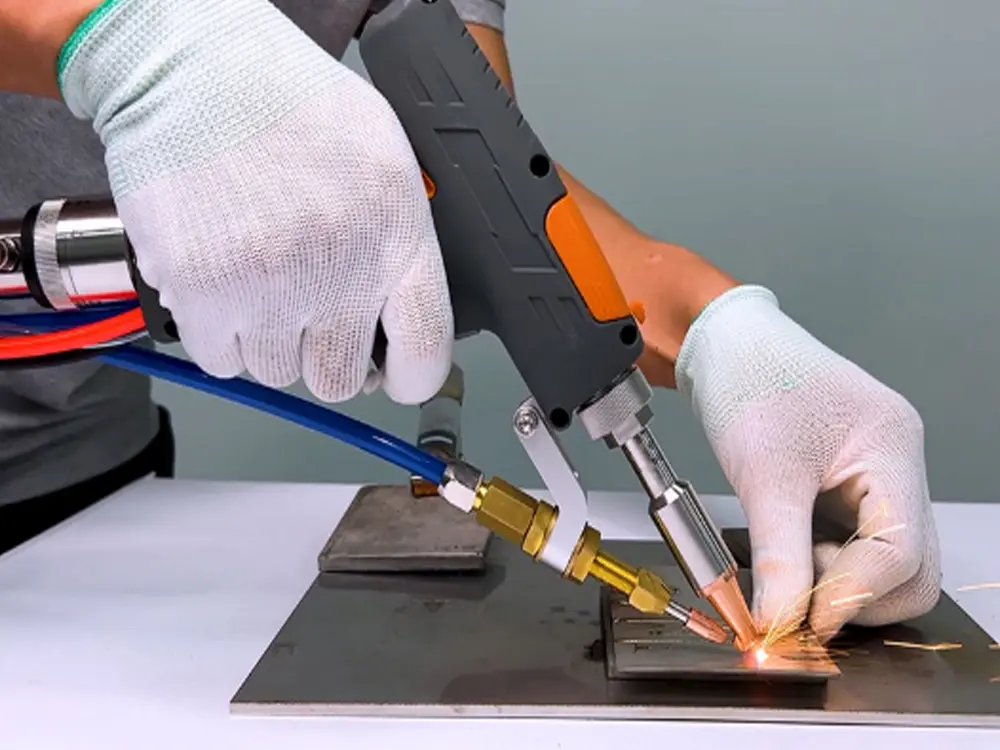
The laser welding nozzle is a component installed at the front end of a handheld laser welding gun. Its main function is to direct shielding gas (commonly argon, helium, or nitrogen) to the weld zone. Shielding gas prevents oxidation, protects the molten pool from atmospheric contamination, and ensures stable welding conditions.
Additionally, the nozzle affects how the laser beam is delivered to the workpiece. By controlling the distance, angle, and airflow, the nozzle influences weld penetration, bead shape, and spatter reduction.
In short, the nozzle is not just a consumable but a key factor in welding performance.
Why Is the Nozzle Important?
- Shielding Efficiency: Proper nozzle design ensures shielding gas fully covers the weld pool, reducing porosity and oxidation.
- Weld Quality: Nozzles influence penetration depth, bead shape, and overall surface finish.
- Spatter Protection: A well-designed nozzle minimizes spatter build-up and keeps the optics cleaner.
- Durability: Using the correct nozzle type reduces wear and extends the service life of both the nozzle and protective lenses.
- Adaptability: Different workpieces (thin sheet, thick plate, fillet joint, corner weld) require different nozzles for best results.
Types of Handheld Laser Welding Machine Nozzles
Nozzles can be classified by shape, application, and gas flow characteristics. Below are the most common types:
1. Conical Nozzles
Shape: Tapered tip with a narrow outlet.
Advantages: Provides concentrated gas flow and deep shielding coverage. Ideal for welding in narrow spaces or when precise gas flow is needed.
Applications: Thin sheet welding, spot welding, and precise welds where accuracy is critical.
2. Cylindrical (Straight) Nozzles
Shape: Straight tube design with a wider exit.
Advantages: Offers broader gas coverage and reduces turbulence.
Applications: General-purpose welding, especially suitable for flat butt joints and long seam welds.
3. Double-Layer Nozzles
Shape: Two-layered design with a controlled inner and outer gas flow.
Advantages: Improves shielding gas efficiency and prevents contamination from surrounding air.
Applications: High-precision welding, aerospace components, stainless steel welding where oxidation must be minimized.
4. Angled Nozzles
Shape: Bent or angled tip for directing gas flow sideways.
Advantages: Allows access to hard-to-reach weld seams, such as corners or edges.
Applications: Fillet welds, corner joints, and areas where a straight nozzle cannot reach.
5. Multi-Hole Nozzles
Shape: Multiple small gas outlets around the nozzle head.
Advantages: Distributes shielding gas evenly, reduces turbulence, and ensures a smooth flow around the weld.
Applications: Large surface welding, thick metal plates, and applications requiring uniform bead quality.
6. Customized Nozzles
Many manufacturers provide customized nozzle shapes and sizes depending on specific workpiece geometry.
Special materials like copper alloys with anti-spatter coatings can be applied for durability.
Materials Used in Nozzles

Most nozzles are made from copper or copper alloys because of their excellent heat resistance and electrical conductivity. Some may have ceramic coatings or chrome plating to reduce spatter adhesion.
Choosing the right material affects not only nozzle life but also gas flow stability. For heavy-duty or high-frequency welding, durable coated nozzles are often the best investment.
How to Choose the Right Nozzle
When selecting a handheld laser welding machine nozzle, consider the following factors:
- Workpiece Geometry: Is it flat, curved, or corner-shaped? Choose conical or angled nozzles for complex joints.
- Material Type: Stainless steel, aluminum, or carbon steel may require different gas shielding.
- Welding Position: Overhead, horizontal, or vertical positions can influence gas shielding effectiveness.
- Gas Type: The nozzle must match the shielding gas characteristics.
- Laser Power: Higher power requires nozzles that can withstand greater heat and spatter.
Maintenance Tips for Handheld Laser Welding Nozzles
1. Regular Cleaning: Remove spatter deposits using appropriate brushes or cleaners.
2. Check Alignment: Ensure the nozzle is centered with the laser beam for consistent welds.
3. Replace Damaged Nozzles: Deformed or eroded nozzles reduce shielding efficiency.
4. Inspect Gas Flow: Use a flowmeter to confirm correct shielding gas delivery.
5. Spare Inventory: Always keep replacement nozzles on hand to avoid downtime.
Conclusion
The laser welding nozzle may be small, but it has a huge impact on weld quality, efficiency, and equipment longevity. Each nozzle type serves a specific purpose, and the right choice depends on the workpiece geometry, material, welding environment, and quality requirements.
By understanding nozzle types and maintaining them properly, manufacturers can significantly improve productivity and reduce welding defects. For businesses investing in laser welding machines, giving proper attention to nozzle selection is just as important as choosing the machine itself.
