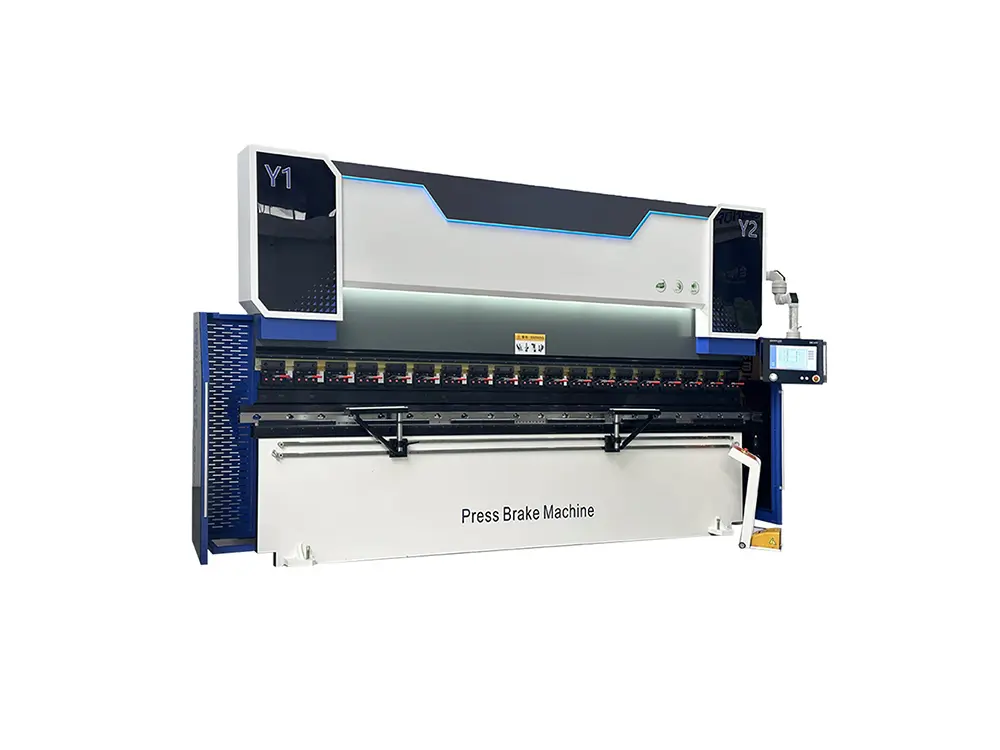












The hydraulic press brake machine is an essential piece of equipment in metal fabrication workshop. Whether you are producing custom sheet metal components, industrial parts, or large machinery, a hydraulic press brake machine enables you to bend and form metal with high precision and consistent quality.
In today’s market, there are many models, configurations, and control systems for hydraulic press brake machines, making it challenging to select the most suitable one for your workshop. Choosing an inappropriate machine can result in poor bending accuracy, lower productivity, and increased long-term operating costs.
This guide will help you understand the key factors to consider when selecting a hydraulic press brake machine, including tonnage, bending length, control system, brand quality, and after-sales support, so you can confidently choose the right machine for your workshop specific needs.
How a Hydraulic Press Brake Machine Works?
Before choosing the right model, it’s important to understand how a hydraulic press brake operates.
The press brake uses a hydraulic system to drive a ram (or slide) downward, pressing the metal sheet between a punch and a die to form a precise angle. The bending process relies on the combination of pressure, tooling shape, and back gauge positioning.
Types of Press Brake Machines:
1. Conventional Hydraulic Press Brake Machine: Uses hydraulic cylinders to generate pressure. It’s reliable, powerful, and ideal for heavy-duty metal forming.
2. Hybrid Servo Hydraulic Press Brake Machine: Combines servo motors with hydraulic systems for improved energy efficiency, precision, and lower noise.
3. Electric Press Brake Machine: Uses an all-electric drive system with no hydraulic oil, offering high speed and accuracy for thinner materials and light-duty production.
Each type has its own advantages. For most metalworking workshops, a hydraulic or hybrid servo press brake provides the best balance between cost, power, and performance.
Key Factors When Selecting a Hydraulic Press Brake Machine
Choosing the right hydraulic press brake machine requires evaluating multiple parameters that impact performance and efficiency.

1. Bending Force (Tonnage)
The tonnage of a press brake machine determines the maximum pressure it can apply during bending. It should be chosen based on the type of metal, its thickness, and the length of the bend. A machine with insufficient tonnage may struggle to bend the material correctly, while an oversized machine can increase costs unnecessarily. It is generally advisable to select a machine with 20 to 30 percent more capacity than the maximum requirement to ensure safety and reliability.
| Pressure | Length | Carbon steel | Stainless steel |
| 100T | 2500mm | 5.00mm | 2.50mm |
| 100T | 3200mm | 4.00mm | 2.00mm |
| 125T | 2500mm | 6.25mm | 3.13mm |
| 125T | 3200mm | 4.88mm | 2.44mm |
| 160T | 3200mm | 6.00mm | 3.00mm |
| 160T | 4000mm | 5.00mm | 2.50mm |
| 200T | 2500mm | 10.0mm | 5.00mm |
| 200T | 3200mm | 8.00mm | 4.00mm |
| 250T | 3200mm | 10.0mm | 5.00mm |
2. Bending Length
The bending length determines the maximum width of the metal plate you can process.
Common press brake lengths include 1.6m, 2.5m, 3.2m, 4m, and 6m.
- Small workshops handling short parts can opt for compact models (1.6m–3.2m).
- Large fabricators producing long panels or enclosures may need 4m or longer beds.
Make sure your workshop has enough space for both the machine and material handling area.
3. CNC Control System
The control system is the “brain” of your press brake. It affects accuracy, productivity, and ease of use.
Common Systems:
- Delem (Netherlands): Popular and highly reliable; used worldwide for CNC press brakes.
- ESA (Italy): Offers intuitive touch-screen operation and strong 3D simulation features.
- Cybelec (Switzerland): Known for stability and advanced software integration.
Control Modes:
- Manual/NC: Suitable for basic bending operations.
- CNC: Provides automatic back gauge control, angle programming, and real-time feedback for precision bending.
If you want high productivity and consistent accuracy, a CNC-controlled hydraulic press brake is the best choice.
4. Brand and Build Quality
The quality of your press brake depends heavily on the manufacturer’s engineering and materials.
Key factors to look for:
- Rigid welded steel frame for vibration resistance.
- High-precision hydraulic components and valves.
- Durable back gauge system with stable repeatability.
- Reliable electrical components and safety features.
Wintek Laser is one of the trusted names in the global metalworking industry. With years of experience in metal cutting and forming equipment, Wintek offers high-precision press brakes designed for stability, energy efficiency, and long-term performance.
5. Back Gauge and Tooling Options
A well-designed back gauge ensures precise positioning and repeatability for every bend.
- Single-Axis (X): For basic bending tasks.
- Multi-Axis (X, R, Z1, Z2): Enables automatic positioning, ideal for complex parts and high-volume production.
Tooling Options:
- Standard punch and die: For general sheet metal bending.
- Segmented tooling: For forming small or complex parts.
- Quick-change tooling: Reduces setup time and improves efficiency.
Investing in high-quality tooling pays off with better accuracy and less wear.
6. Accuracy and Repeatability
Modern hydraulic press brakes include systems that enhance bending accuracy:
- Hydraulic crowning or compensation to prevent deflection.
- Laser angle measuring for real-time precision control.
- Servo hydraulic systems for consistent motion control.
Precision ensures consistent product quality, especially when producing multiple batches of the same component.
7. Energy Efficiency and Maintenance
Traditional hydraulic systems consume energy continuously, even during idle time. Modern servo-hydraulic systems save energy by running pumps only when needed, reducing both noise and power consumption.
Maintenance Tips:
- Regularly check hydraulic oil level and replace it annually.
- Inspect seals and hoses to prevent leaks.
- Calibrate back gauge and ram positions for consistent accuracy.
Choosing an energy-efficient system lowers operational costs and supports a greener production environment.
Matching the Hydraulic Press Brake Machine to Your Production Needs
| Workshop Type | Production Volume | Recommended Machine |
| Small Job Shop | Custom parts, short runs | 40–80 ton, 1.2–2.5m CNC press brake |
| Medium Fabricator | Furniture, panels, metal doors | 100–160 ton, 3–4m hybrid hydraulic model |
| Heavy Industry | Machinery, construction parts | 200–400 ton, 4–6m CNC hydraulic press brake |
If your workshop produces a wide variety of metal parts, choose a CNC model with flexible tooling to handle different shapes and materials efficiently.
Budget Considerations and Cost Performance
When comparing machines, consider not only the purchase price but also the total cost of ownership.
Cost components include:
- Machine body and frame
- Control system
- Tooling set
- Installation and training
- Long-term maintenance
Choosing a reputable brand like Wintek may involve a higher initial investment but ensures lower operational costs, better precision, and long-term reliability.
Installation, Training, and After-Sales Support
Proper installation and operator training are essential for optimal performance. A professional setup ensures correct alignment and calibration, while training helps operators use the hydraulic press brake machine safely and efficiently.
Reliable after-sales support is equally important. Wintek offers global support, including online training videos, manuals, and remote troubleshooting. On-site service can also be arranged to ensure smooth machine operation and minimal downtime.
Why Choose Wintek Hydraulic Press Brake Machines
Wintek Laser hydraulic press brake machines are designed for precision, durability, and efficiency. Key advantages include:
- Rigid welded frame for stable bending.
- CNC control systems for accurate operations.
- Servo-hydraulic energy-saving technology.
- Multi-axis back gauge and quick-change tooling options.
- Global after-sales support and training.
Wintek Laser can customize solutions to match your workshop requirements, ensuring high-quality bends and long-term productivity.
Conclusion
Choosing the right hydraulic press brake involves evaluating technical requirements, production goals, and long-term operational factors. By understanding key parameters like tonnage, bending length, control system, and brand quality, you can make a confident investment that enhances productivity and ensures precision for years to come.
A reliable manufacturer such as Wintek not only provides advanced equipment but also offers comprehensive support, including installation, training, and maintenance services, to ensure your workshop remains productive and competitive.
Ready to upgrade your workshop with a high-precision hydraulic press brake machine? Contact Wintek Laser today to receive professional guidance and a customized solution that meets your production needs. Visit www.winteklaser.com or speak with our experts to find the perfect hydraulic press brake machine for your business.