
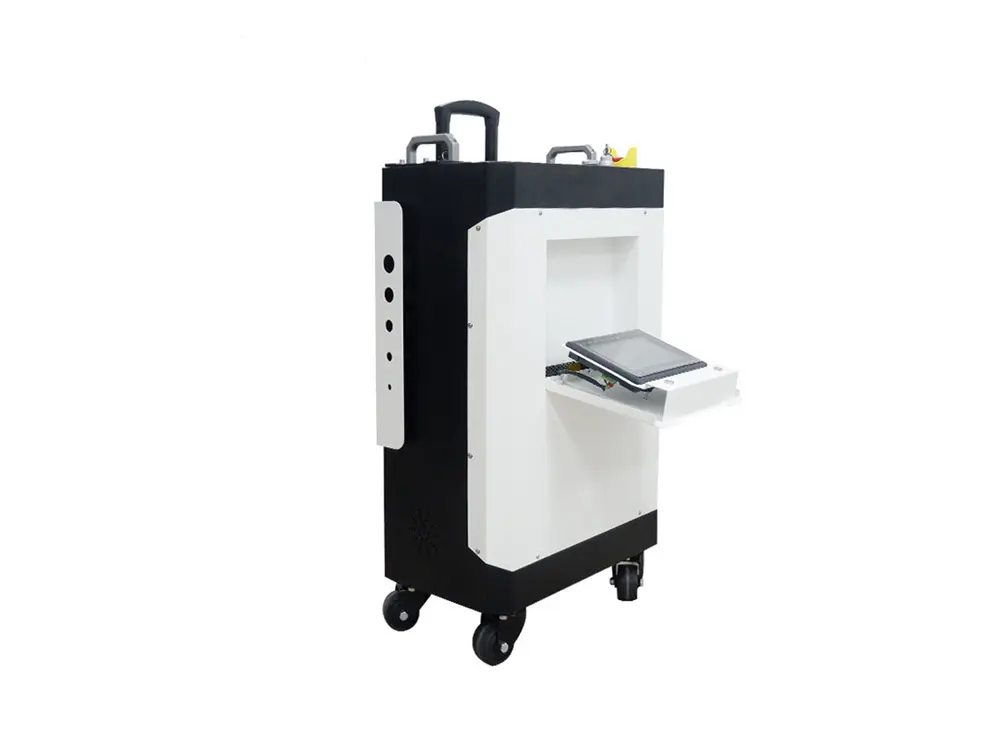
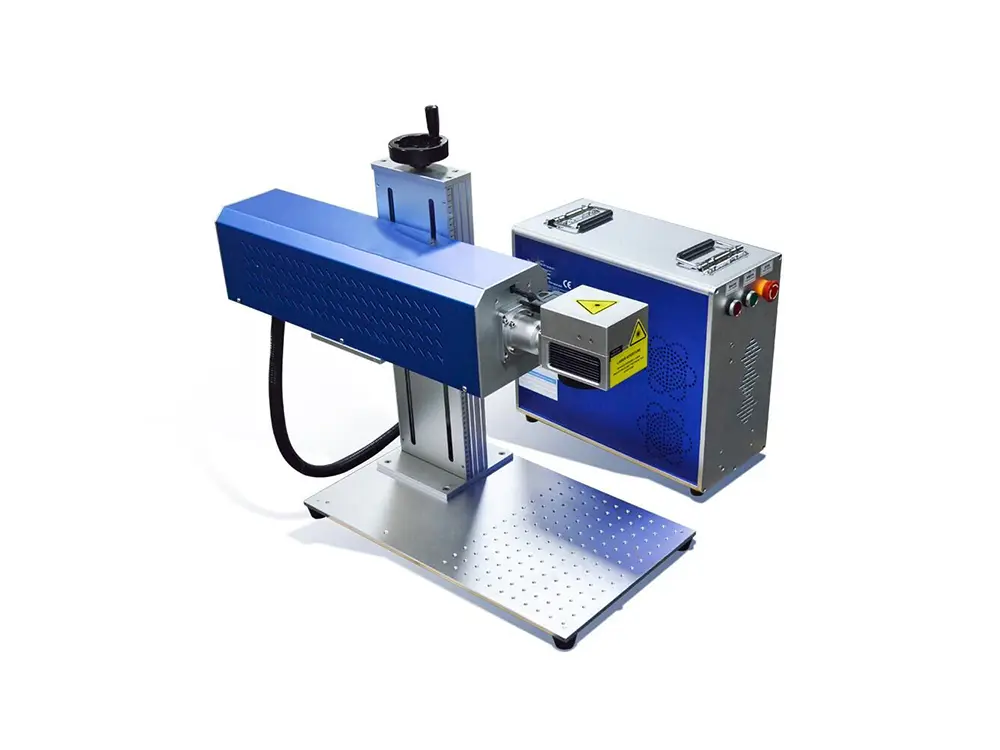











Choosing the right welding method can significantly impact production quality, efficiency, and costs. Among the many welding technologies available today, Laser Welding and MIG (Metal Inert Gas) Welding are two widely used methods in both industrial and small-scale applications. In this article, we’ll compare two methods in terms of how they work, their pros and cons, typical uses, and how to decide which is right for your needs.
ⅠUnderstanding the Basics
What is Laser Welding?
Laser welding uses a high-powered laser beam to melt and fuse materials. The laser source is focused precisely on the joint, creating a narrow, deep weld with minimal heat input and distortion. Fiber lasers are commonly used in industrial laser welding due to their high efficiency and excellent beam quality.
What is MIG Welding?
MIG welding, or Gas Metal Arc Welding (GMAW), uses a consumable wire electrode that continuously feeds through a welding gun while being shielded by an inert gas, typically argon or a mix of argon and CO2. The electric arc generated between the wire and the workpiece melts both materials, forming the weld pool.
Ⅱ Key Differences Between Laser and MIG Welding

1. Heat Input and Precision
Laser Welding: Offers low heat input and high precision, ideal for thin materials and applications requiring minimal distortion.
MIG Welding: Higher heat input leads to greater distortion, especially in thinner metals.
2. Welding Speed
Laser Welding: Significantly faster, especially in automation and high-volume production lines.
MIG Welding: Slower due to the manual feeding process and preparation required.
3. Material Thickness
Laser Welding: Performs best with thin to medium-thickness materials.
MIG Welding: More suitable for medium to thick materials due to deeper penetration.
4. Joint Preparation and Tolerance
Laser Welding: Requires precise joint fit-up with minimal gaps.
MIG Welding: More forgiving of joint gaps and fit-up tolerances.
5. Visual Appearance and Finish
Laser Welding: Produces clean, aesthetically pleasing welds with little to no spatter.
MIG Welding: Often requires post-processing like grinding and cleaning due to spatter and slag.
6. Automation and Integration
Laser Welding: Easily integrated into robotic systems and CNC lines for high-speed automated production.
MIG Welding: Also automatable but generally slower and less precise.
7. Consumables and Maintenance
Laser Welding: No consumable electrodes; lower long-term operating costs but higher initial investment.
MIG Welding: Requires continuous wire feed, gas supply, and regular maintenance of the torch and tips.
Ⅲ Laser Welding VS MIG Welding Applications
Laser Welding is commonly used in:
- Aerospace and automotive manufacturing
- Medical device fabrication
- Electronics and micro-welding
- Battery and e-mobility component assembly
MIG Welding is commonly used in:
- Construction and structural steel work
- Shipbuilding and heavy machinery
- Home and DIY projects
- General fabrication and repair work
Ⅳ Laser Welding VS MIG Welding Cost Comparison
Initial Investment: Laser welding systems are more expensive due to laser sources, optics, and automation capabilities.
Operating Cost: Laser systems typically have lower consumable costs and faster cycle times, offering better long-term ROI.
MIG Welding: Lower upfront cost, higher ongoing costs due to consumables and manual labor.
Ⅴ Which Should You Choose?
The decision between laser welding and MIG welding depends on your specific application needs:
Choose laser welding if you require high-speed precision, minimal distortion, automation, and high-quality finish.
Choose MIG welding for heavy-duty work, thicker materials, or when working with variable fit-ups and lower upfront budget.
Ⅵ Common FAQs About Laser Welding and MIG Welding
Q1: Which is stronger, laser welding or MIG welding?
Laser welding often produces stronger and more precise welds due to deeper penetration and minimal defects, especially on thinner materials. However, for thicker sections, MIG welding can be more robust if properly applied.
Q2: Can laser welding replace MIG welding in all applications?
Not always. While laser welding offers superior precision and speed, MIG welding remains more suitable for thick materials, outdoor work, or scenarios with poor joint fit-up.
Q3: Is laser welding more expensive than MIG welding?
Yes in terms of initial investment, but over time, laser welding can be more cost-effective due to lower consumable usage, faster cycle times, and automation potential.
Q4: Which welding method is easier to learn?
MIG welding is easier for beginners due to its manual nature and forgiving process. Laser welding often requires advanced training and is mostly used in automated setups.
Q5: Can both laser and MIG welding be automated?
Yes. Laser welding is more common in high-speed automated lines, but MIG welding can also be automated for large-scale production tasks.
Q6: What materials can laser and MIG welding handle?
Both can weld various metals like steel, stainless steel, and aluminum. Laser welding is preferred for delicate or small parts, while MIG excels in heavier fabrication.
Ⅶ Conclusion
Laser welding and MIG welding each have their place in modern manufacturing. As technology continues to evolve, more industries are adopting laser welding for its efficiency and precision, especially in automated environments. However, MIG welding remains a reliable, versatile, and accessible solution for many welding needs. If you’re considering upgrading your welding capabilities, contact wintek today to explore the best solutions tailored to your business.