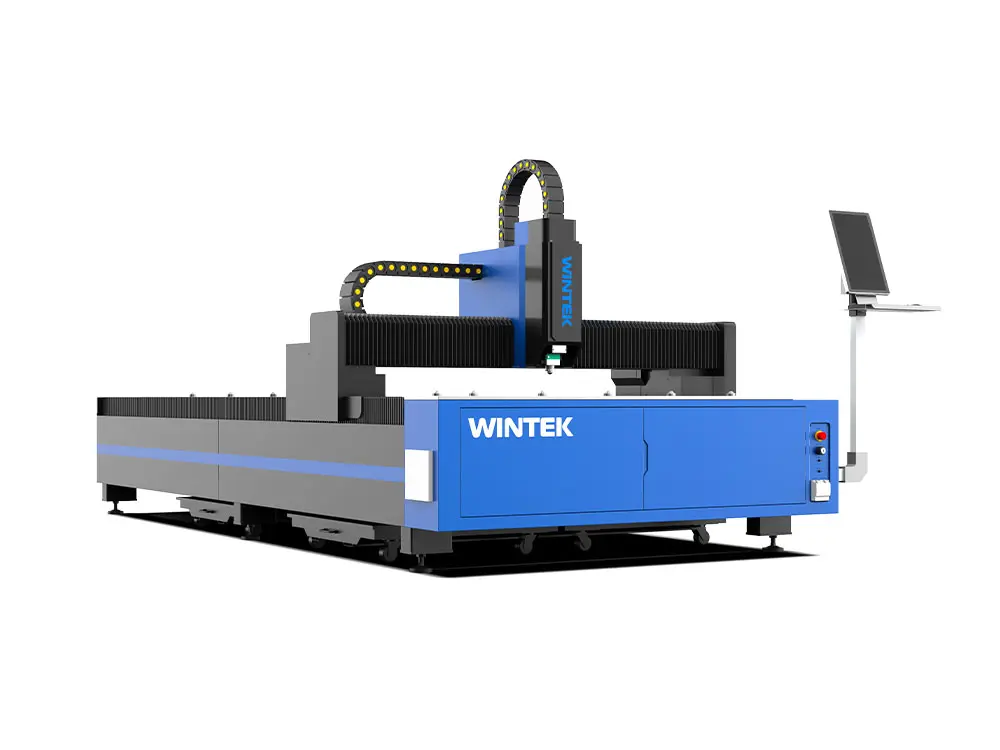
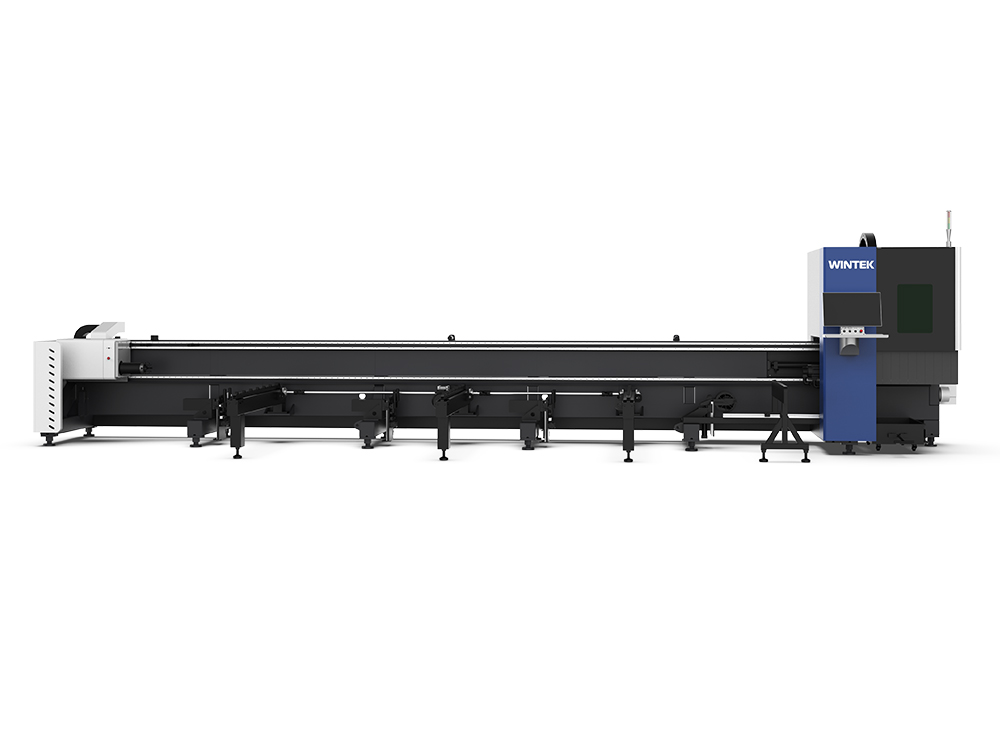
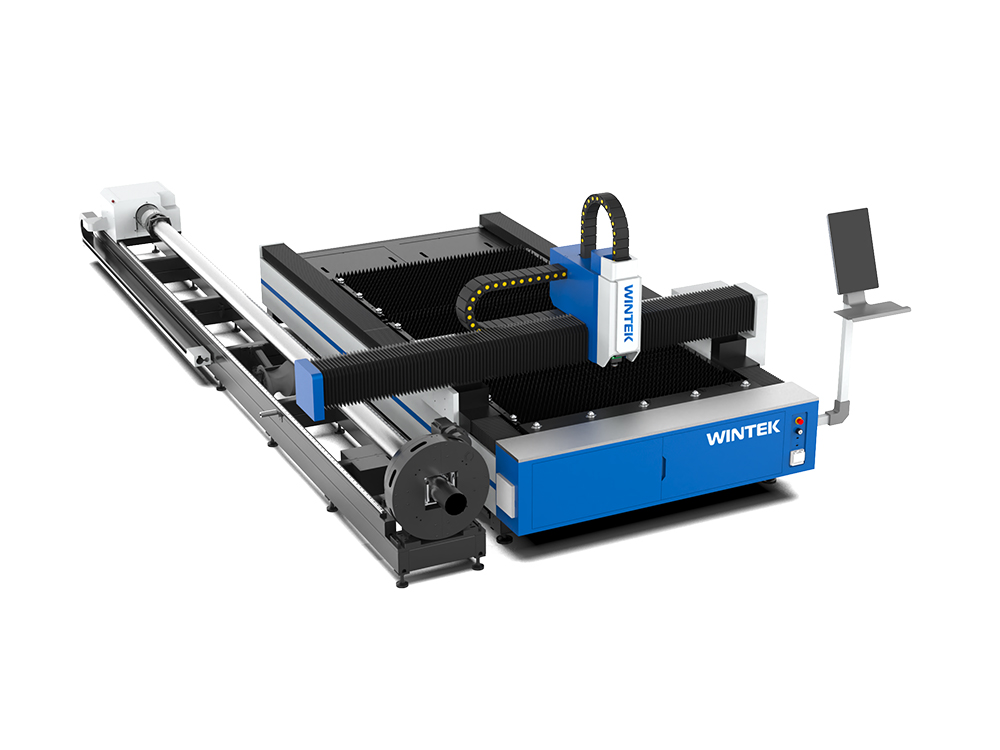












As the demand for high-speed, high-precision manufacturing continues to grow, fly cutting technology has emerged as one of the most efficient and advanced innovations in laser cutting machines. However, many people may ask: What exactly is fly cutting in laser cutting machines?
Fly cutting allows lasers to process thin metal sheets at extremely high speeds without pausing or slowing down between individual cuts. Unlike the traditional “stop-and-go” cutting method, fly cutting enables the laser head to move continuously, completing multiple cuts in a single sweep.
This technology not only significantly boosts production efficiency but also improves cutting quality while reducing mechanical wear on the equipment. In this article, we will provide a comprehensive overview of fly cutting technology.
What is Fly Cutting Technology?
Fly cutting technology is an advanced cutting method used in laser cutting machines to achieve faster and smoother processing, especially for thin sheet metals. It allows the laser head to move continuously across the material while cutting multiple shapes or lines in a single motion, without the need to stop between each contour.
In this mode, the laser and the motion control system work in perfect coordination. The laser beam remains active as the head travels along the planned path, completing several cuts in one continuous movement. This eliminates the repetitive acceleration and deceleration typical of conventional cutting, resulting in higher productivity and more stable performance.
Fly cutting is particularly effective for repetitive or small geometric patterns, such as grids, holes, and decorative outlines. By maintaining a constant movement, the system reduces mechanical wear, minimizes heat accumulation, and shortens the overall processing time.
In modern laser systems, fly cutting has become a key feature that enables manufacturers to meet growing demands for speed, precision, and efficiency in metal fabrication.
How Does Fly Cutting Work?
Fly cutting operates on the principle of continuous laser head motion combined with precise path control. In conventional cutting, the laser head needs to accelerate, stop to complete a contour, and then move to the next one. This repeated starting and stopping takes time and increases mechanical wear. In fly cutting, however, the laser head never stops. It maintains a constant travel speed while performing multiple cuts within one continuous trajectory.
The process begins with the control system generating an optimized cutting path. The laser head then follows this path at a uniform velocity while the laser output is precisely synchronized with its movement. Instead of processing each shape separately, the machine completes all intersecting or repetitive geometries in a single sweep. This coordination between motion control and laser output is what enables fly cutting to achieve both high speed and accuracy.
During operation, advanced CNC software ensures that the cutting head’s position, speed, and laser power remain perfectly matched. The system automatically adjusts parameters such as acceleration, beam focus, and energy density according to the complexity of the path. As a result, the laser maintains stable performance even when transitioning between curves, lines, or small details.
Essentially, fly cutting transforms the cutting process from a step-by-step operation into a fluid, uninterrupted motion. By eliminating unnecessary stops, it minimizes thermal buildup, reduces vibration, and ensures consistent edge quality across the entire workpiece. This technology is particularly effective for thin metals and high-speed batch production, where precision and efficiency must go hand in hand.
Advantages of Fly Cutting Technology
Fly cutting technology brings a range of advantages that make it a preferred choice for modern laser cutting operations, especially in industries that require high speed, accuracy, and cost efficiency. By allowing continuous laser head movement and optimizing cutting paths, it delivers benefits that go beyond simple productivity gains.
1. Higher Cutting Speed and Efficiency
The most significant advantage of fly cutting is its exceptional speed. Since the laser head does not stop between individual cuts, production time is greatly reduced. Continuous motion shortens the idle time of the machine, enabling it to complete repetitive or patterned cuts in a fraction of the time required by conventional methods. This makes fly cutting ideal for large-volume manufacturing and high-throughput production lines.
2. Improved Cutting Quality
With consistent motion and precise path control, fly cutting ensures smooth, uniform edges with minimal burrs. The stability of the cutting process reduces vibration and heat fluctuation, resulting in cleaner lines and more consistent dimensions. Even when processing complex or small geometries, the cut quality remains stable from start to finish.
3. Reduced Mechanical Wear and Maintenance
Traditional cutting methods involve constant acceleration and deceleration, which increases wear on motors, guides, and transmission components. Fly cutting minimizes these mechanical stresses because the laser head moves at a steady speed. As a result, machine components last longer, maintenance costs are lower, and operational stability is improved.
4. Lower Thermal Impact on Materials
Continuous cutting movement allows heat to disperse more evenly across the surface, preventing excessive thermal accumulation. This minimizes deformation, discoloration, and material stress, which is especially important when cutting thin metals or heat-sensitive materials. The result is a cleaner cut with minimal post-processing required.
5. Greater Production Consistency
Fly cutting’s reliance on software-based path control ensures that every part in a batch is cut with the same precision. Once the optimal cutting parameters are set, the system can replicate them accurately across hundreds or thousands of parts. This level of repeatability makes it a powerful tool for automated, large-scale manufacturing.
In summary, fly cutting technology combines efficiency, precision, and reliability in one process. It optimizes laser motion, reduces wear, improves cut quality, and supports consistent, high-speed production. For manufacturers seeking faster turnaround and superior results, fly cutting represents one of the most valuable innovations in modern laser cutting systems.
Limitations and Challenges of Fly Cutting Technology
While fly cutting technology offers remarkable advantages in speed and efficiency, it also has certain limitations that must be considered when selecting cutting methods or planning production. Understanding these challenges helps manufacturers apply the technology more effectively and avoid potential quality or process issues.
1. Limited to Thin Materials
Fly cutting performs best on thin metal sheets, typically under a few millimeters in thickness. When processing thicker materials, the laser beam needs more dwell time to fully penetrate the surface. Because the laser head keeps moving continuously during fly cutting, it becomes difficult to achieve complete cuts on thicker plates, which may lead to incomplete penetration or irregular edges.
2. Reduced Accuracy on Complex Shapes
The continuous motion of the laser head is ideal for repetitive or simple geometries, but when cutting highly complex or irregular contours, maintaining precision can be challenging. Rapid direction changes or intricate corner details may require the head to slow down or switch back to standard cutting mode to preserve accuracy.
3. Higher Requirements for Motion Control and Synchronization
Fly cutting depends heavily on precise coordination between the laser beam and motion control system. Any slight mismatch in timing, acceleration, or energy output can lead to inconsistent cut depths or poor edge quality. As a result, machines performing fly cutting require advanced servo systems, real-time feedback sensors, and well-optimized control software.
4. Limited Use for Certain Materials
Not all materials are suitable for fly cutting. Highly reflective metals like copper or brass can cause unstable energy absorption at high speeds, which may reduce cutting efficiency or increase the risk of surface defects. For these materials, traditional cutting methods with controlled speed adjustments may produce better results.
5. Requires Skilled Operation and Setup
To achieve optimal results, fly cutting demands careful parameter configuration, including laser power, focus position, and travel speed. Inadequate setup can easily lead to inconsistent quality or waste. Therefore, experienced operators and proper calibration are essential for stable, high-quality production.
In conclusion, while fly cutting technology offers clear advantages in terms of speed, efficiency, and cost-effectiveness, it is not suitable for all cutting tasks. Understanding its operational boundaries and investing in proper control systems are key to leveraging its full potential while maintaining precision and reliability in production.
Conclusion
Fly cutting technology represents a major advancement in the field of laser cutting, combining high speed, precision, and operational stability in one efficient process. By allowing the laser head to move continuously without interruption, it minimizes downtime, improves edge quality, and significantly boosts productivity, especially in the processing of thin metal sheets.
Although this technique has limitations when dealing with thicker materials or complex contours, its advantages in efficiency, consistency, and reduced mechanical wear make it an indispensable tool in modern manufacturing. As laser technology continues to evolve, fly cutting will likely become even more refined, offering smarter control systems, higher accuracy, and broader material compatibility.
For manufacturers seeking to enhance production capacity and maintain superior cutting quality, adopting fly cutting technology is not just a technical upgrade but a strategic step toward more intelligent and efficient metal processing.