



















In recent years, laser cleaning technology has become one of the most revolutionary innovations in industrial surface treatment. Unlike traditional cleaning methods that rely on abrasives, chemicals, or high-pressure washing, laser cleaning offers a non-contact, eco-friendly, and highly precise way to remove rust, paint, grease, and contaminants from various materials.
Among different laser cleaning types, the pulse laser cleaner machine has emerged as the most advanced and versatile option. It combines the power of laser ablation with controllable pulse energy to achieve precise cleaning results without damaging the base material.
In this article, we’ll explore what is a pulse laser cleaner machine, how it works, its main components, benefits, and applications across industries.
What Is a Pulse Laser Cleaner Machine?
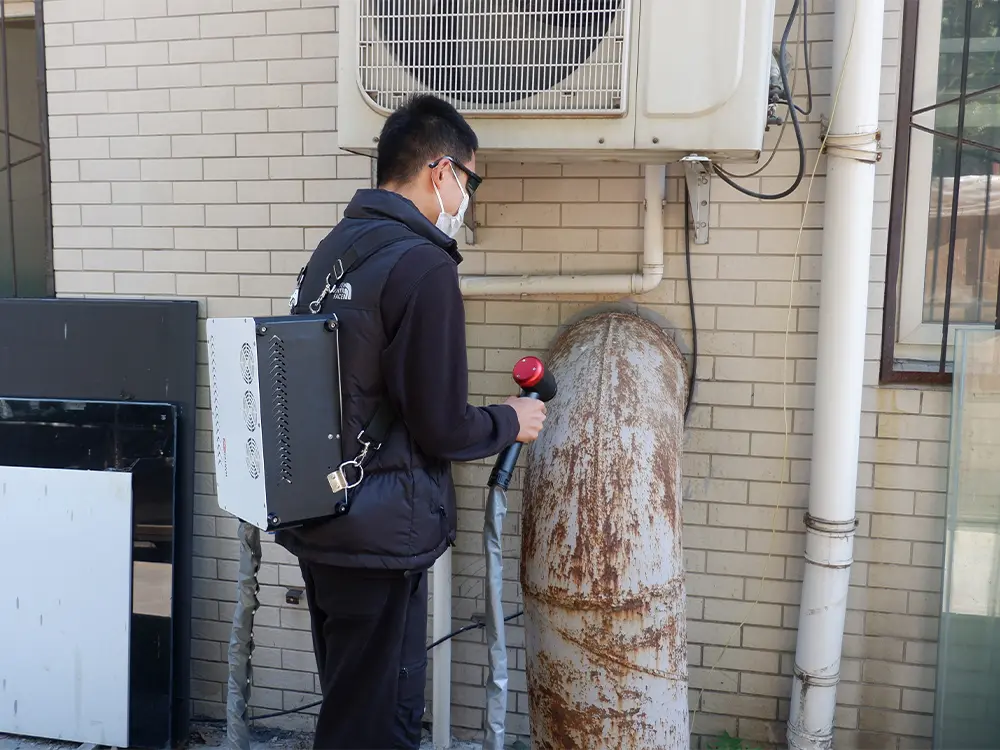
The pulse laser cleaner machine is an advanced surface treatment tool designed to remove rust, paint, grease, and other contaminants using precisely controlled bursts of laser energy. Unlike traditional cleaning methods that rely on chemicals or abrasives, this technology uses rapid laser pulses to heat and separate unwanted layers from the substrate.
Each pulse delivers a short, powerful burst of energy lasting only nanoseconds, effectively lifting surface impurities while keeping the base material intact. The result is a clean, undamaged surface that’s ready for coating, welding, or inspection.
Due to its accuracy, eco-friendliness, and minimal maintenance, the pulse laser cleaner machine is widely applied in industries such as automotive repair, aerospace maintenance, shipbuilding, and precision manufacturing.
Key Components of a Pulse Laser Cleaner Machine
1. Laser Source
The laser source is the heart of the pulse laser cleaner machine. It generates high-energy laser pulses that remove contaminants from metal and other surfaces. The wavelength and pulse characteristics determine how effectively the surface is cleaned. A stable and reliable laser source ensures consistent cleaning results and long service life.
2. Optical Fiber
The optical fiber transmits the laser beam from the source to the cleaning head with minimal energy loss. Its flexibility allows operators to move freely and reach difficult areas. High-quality optical fibers maintain beam stability even during long working hours. They are crucial for ensuring safe, efficient, and uniform energy delivery.
3. Cleaning Head
The cleaning head focuses and directs the laser beam precisely onto the target surface. It is designed for comfortable handheld operation with lightweight materials. Adjustable optics allow users to change the focus size and distance for different cleaning tasks. Some models also include built-in sensors to monitor cleaning conditions in real time.
4. Control System
The control system serves as the brain of the machine, managing all operational parameters. Operators can adjust laser power, frequency, and pulse width through a digital interface or touchscreen. Advanced systems allow for mode switching, automation, and parameter storage. This ensures repeatable performance and easy adaptation to various cleaning requirements.
5. Cooling System
The cooling system keeps the laser source and internal components at a safe operating temperature. Depending on the model, it may use air or water circulation for heat dissipation. Efficient cooling helps prevent overheating and extends the equipment’s lifespan. A stable temperature ensures continuous and reliable operation in demanding environments.
6. Power Supply Unit
The power supply delivers the necessary electrical energy to drive the laser and electronic systems. It converts input power into stable voltage and current for pulse generation. A high-quality power supply guarantees steady output and energy efficiency. It also includes protection circuits to prevent overloads or short circuits.
7. Protective Housing and Safety Sensors
The protective housing shields the internal components from dust, vibration, and external damage. Integrated safety sensors monitor factors like temperature, laser emission, and cover position. These sensors automatically shut down the laser if unsafe conditions are detected. Together, they ensure operator safety and machine reliability during operation.
Types of Pulse Laser Cleaner Machines
Pulse laser cleaner machines are typically categorized based on their power output and intended applications:
1. Low Power (WTC-50W / WTC-100W)
These machines are ideal for precision cleaning and small components. They effectively remove rust, paint, and coatings from delicate surfaces without causing damage. Common applications include electronics, molds, and small metal parts.
2. Medium Power (WTC-200W / WTC-300W)
Medium-power pulse laser cleaners offer a balance between speed and precision. They are suitable for removing moderate rust, oil, and oxide layers. These machines are widely used in automotive, maintenance, and general industrial applications.
3. High Power (WTC-500W / WTC-1000W)
High-power pulse laser cleaner machines are designed for heavy-duty industrial tasks. They can remove thick coatings and heavy rust layers efficiently. Common applications include shipyards, pipelines, large machinery, and other demanding industrial environments.
Advantages of Pulse Laser Cleaner Machines
Pulse laser cleaner machines are preferred for many reasons. Let’s explore the key advantages:
- Non-Contact and Damage-Free: The laser does not physically touch the surface, which prevents abrasion or deformation and makes it ideal for delicate and high-value materials.
- Eco-Friendly and Chemical-Free: No chemicals, solvents, or consumables are required. The process produces minimal waste and eliminates secondary pollution.
- High Precision and Control: Pulse lasers can be fine-tuned for selective cleaning, removing only the contaminated layer while preserving the substrate.
- Cost-Effective Operation: Although the initial investment may be higher, the system has low operating costs, requires no consumables, has a long lifespan, and needs minimal maintenance.
- Versatile for Multiple Materials: The machine works effectively on a wide range of materials including steel, aluminum, copper, titanium, brass, stone, ceramics, wood, and composites.
- Portable and Easy to Use: Compact and lightweight designs allow cleaning of large or hard-to-reach areas directly on-site.
Pulse Laser Cleaner Machine Common Applications
Rust and Oxide Removal:
Pulse laser cleaners are widely used to remove rust from metal surfaces, restoring them to their original shine without abrasive blasting.
Paint and Coating Removal:
Perfect for stripping paint or coatings from automotive parts, aircraft components, or molds.
Weld Pre-Treatment and Post-Cleaning:
Before welding, laser cleaning removes oxides and oils; afterward, it cleans spatter and discoloration from seams.
Mold Cleaning:
Used extensively in plastic, rubber, and tire manufacturing industries for non-damaging mold cleaning.
Surface Preparation:
Laser cleaning improves surface adhesion for coating, bonding, or painting processes.
Restoration and Conservation:
Pulse lasers are gentle enough for restoring cultural relics, artworks, and stone sculptures without damage.
How to Use a Pulse Laser Cleaner Machine
Operating a pulse laser cleaning machine is straightforward, but following proper steps ensures safety and efficiency.
Step 1: Power On and Setup
Connect the machine to power. Check cooling systems and safety interlocks.
Step 2: Adjust Parameters
Set laser power, frequency, and pulse width. Select appropriate scanning pattern.
Step 3: Safety Gear
Wear laser protective glasses and gloves. Ensure proper ventilation or fume extraction.
Step 4: Begin Cleaning
Hold the cleaning head 5–10 cm from the surface. Move it evenly across the area for uniform cleaning.
Step 5: Inspection
Inspect surface quality. Adjust parameters if needed for optimal results.
Conclusion
The pulse laser cleaner machine represents a new era of industrial surface cleaning, combining precision, efficiency, and environmental responsibility. Unlike traditional methods that rely on chemicals or abrasives, advanced laser technology ensures a cleaner process that protects both the operator and the material.
By delivering rapid and precisely controlled laser pulses, Wintek pulse laser cleaners effectively remove rust, paint, oil, and oxides while maintaining the original quality of the surface. They are suitable for a wide range of applications, from delicate mold cleaning to large-scale industrial maintenance.
For manufacturers seeking to upgrade their production capabilities, choosing a Wintek pulse laser cleaner machine is an investment in smarter, greener, and more sustainable manufacturing.
