










Laser technology has transformed modern manufacturing by providing precise, fast, and reliable solutions for metal processing. From cutting and welding to surface cleaning, lasers are now essential tools for industries seeking high-quality results and efficient production. As manufacturers aim to reduce costs, improve workflow, and maintain superior product quality, the demand for versatile, multi-functional laser machines is growing rapidly.
Two of the most impactful applications are laser cleaning and laser welding. Laser cleaning removes rust, paint, oxides, and other surface contaminants without chemicals or abrasive methods, preparing metals for further processing. Laser welding creates strong, precise joints by fusing metals with concentrated laser energy. Both processes rely on laser technology, which raises an important question: can a single machine combine cleaning and welding functions effectively?
Understanding Laser Welding
Laser welding is a process in which a high-intensity laser beam melts and fuses metal components together. The energy from the laser allows for deep penetration and a minimal heat-affected zone. This results in precise, clean, and durable welds. Laser welding can be applied to a variety of metals, including stainless steel, aluminum, carbon steel, and titanium.
Key features of laser welding include:
- High precision: The focused beam allows micrometer-level accuracy in joint formation.
- Versatility: Suitable for different types and thicknesses of metals.
- Non-contact operation: Reduces the risk of contamination and tool degradation.
- Clean welds: Minimal spatter and reduced post-processing requirements.
Laser welding has become particularly important in industries where reliability and consistency are critical, such as automotive manufacturing, aerospace, electronics, and precision metal fabrication. The precision of laser welding also allows manufacturers to minimize material waste, reduce energy consumption, and improve overall efficiency.
Understanding Laser Cleaning
Laser cleaning is a highly precise surface treatment process designed to remove contaminants from metal surfaces without causing damage to the underlying material. It effectively eliminates impurities such as rust, paint, oxides, oil, and grease. Unlike traditional cleaning methods, laser cleaning does not require chemicals, water, or abrasive tools, making it environmentally friendly and highly repeatable.
Key features of laser cleaning include:
- Non-contact surface treatment: Protects the integrity of the underlying material.
- Chemical-free operation: Reduces environmental hazards and waste management requirements.
- Precision cleaning: Targets specific areas or components without affecting surrounding surfaces.
- Surface preparation: Improves adhesion for subsequent processes such as welding, coating, or painting.
Laser cleaning has found applications in industries ranging from automotive and aerospace to mold maintenance, heritage restoration, and electronics manufacturing. It is particularly valued for its ability to clean delicate or high-value components without causing mechanical or chemical damage.
Similarities and Differences Between Laser Welding and Cleaning
While laser welding and laser cleaning serve different purposes, they share several technological foundations. Both rely on:
- Core Principle: Both processes use laser as the energy source, applying a high-energy-density laser beam to the material surface. Laser welding melts the material to form a weld seam, while laser cleaning ablates or removes surface contaminants. Fundamentally, both rely on the interaction between the laser and the material to achieve processing.
- Non-Contact Operation: No physical contact with the workpiece is required, avoiding potential mechanical damage common in traditional cleaning or welding. This is especially suitable for complex shapes, delicate, or high-precision components.
- Flexibility and Portability: The handheld design allows operators to easily adjust angles and positions in different scenarios. It is ideal for on-site maintenance, small parts processing, or hard-to-reach areas, enabling quick changes in the working area.
- Environmental Advantages: Compared to traditional cleaning methods (such as chemical cleaning or sandblasting) or welding (such as TIG or MIG), laser processing does not use chemical solvents or abrasives, generates minimal waste, and has a lower impact on the environment and human health.
- Equipment Integration: Some advanced machines combine welding and cleaning functions, allowing multiple applications in one device by simply switching modes or adjusting parameters.
However, there are also clear differences:
- Purpose: Laser welding is used to fuse two or more metal pieces together, whereas laser cleaning is designed to remove contaminants or coatings from a surface.
- Energy intensity: Welding requires much higher power density to melt and join metals, while cleaning uses lower energy to ablate surface layers without affecting the substrate.
- Focal precision: Welding demands a tightly focused beam to form a deep, narrow molten pool, whereas cleaning typically uses a defocused or scanning beam to cover larger surface areas.
- Process control: Welding parameters such as penetration depth, shielding gas, and joint geometry are critical, while cleaning focuses on scan speed, pulse frequency, and energy per pulse.
Integrating laser welding and cleaning into a single machine is both practical and efficient. Modern systems can easily perform both functions, seamlessly switching between cleaning and welding modes with simple software settings or parameter adjustments.
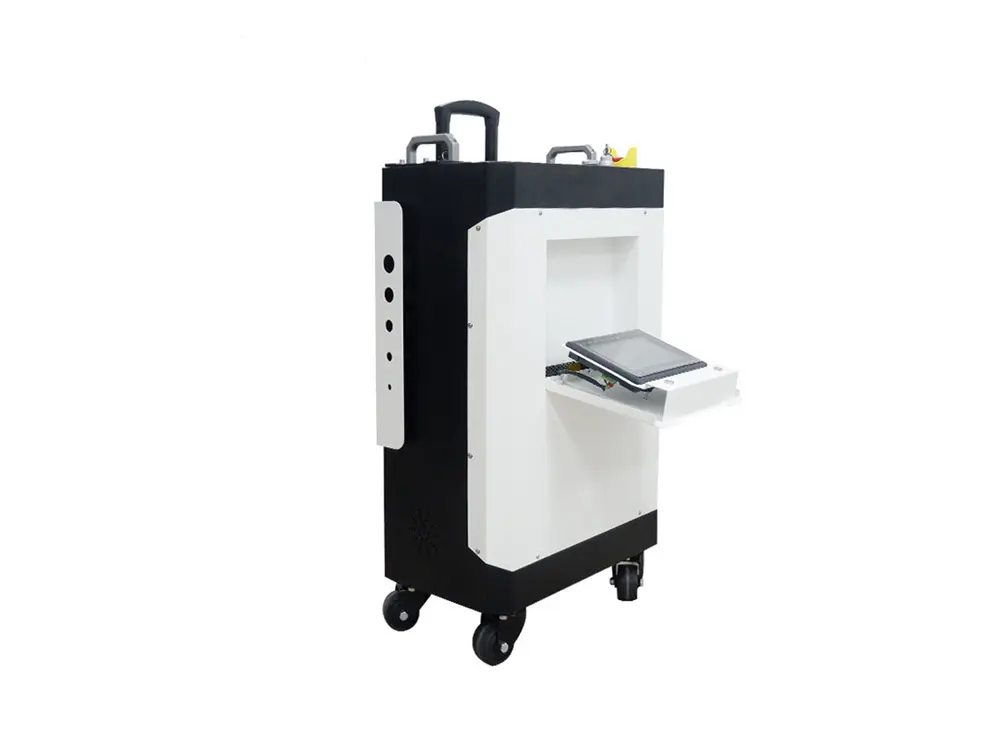
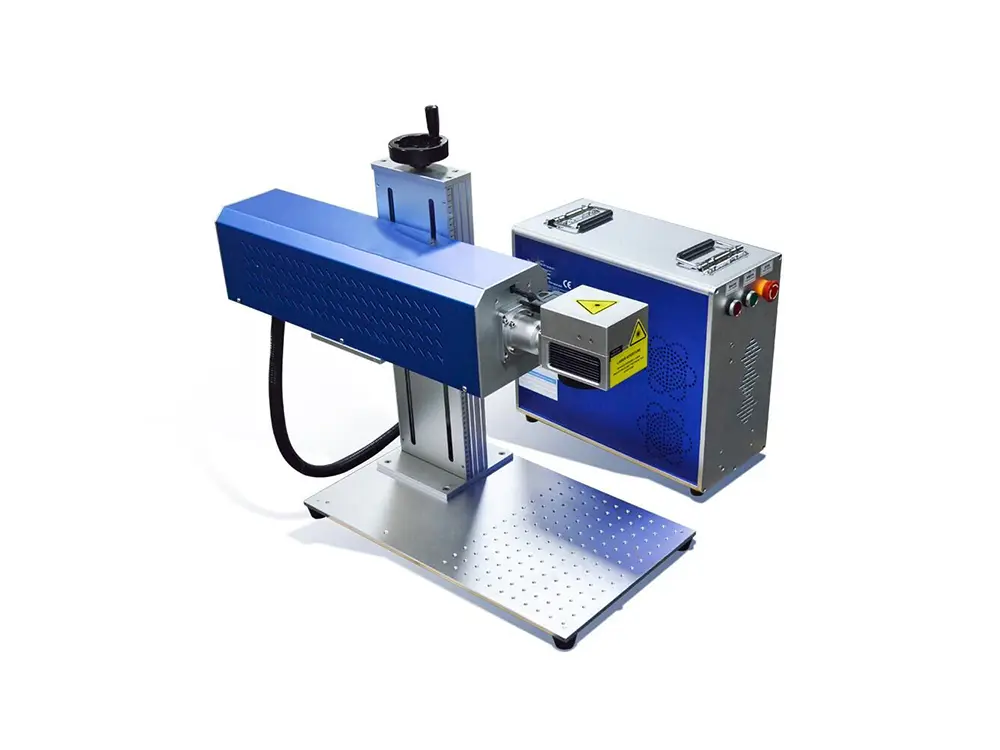
Wintek 3 in 1 Laser Welding & Cleaning & Cutting Machine
The Wintek 3 in 1 handheld laser welding machine represents a new generation of multifunctional laser equipment designed for flexible, high-efficiency metal processing. By integrating three distinct laser technologies into one intelligent system, it enables manufacturers to perform welding, surface cleaning, and metal cutting without switching machines or reconfiguring complex setups.
1. Modular Design Concept
The system adopts a modular structure, allowing operators to easily switch between welding, cleaning, and cutting modes through a user-friendly interface. This design not only simplifies operation but also greatly reduces equipment investment and workshop space requirements. One machine can replace multiple traditional tools, improving workflow continuity and productivity.
2. Versatile Laser Source
Equipped with a high-performance continuous fiber laser source, the system delivers stable and powerful energy suitable for multiple metalworking applications. The continuous laser ensures deep and consistent penetration for welding, smooth and accurate cutting, and efficient surface cleaning without damaging the base material. By precisely adjusting power, focus, and scanning speed, operators can achieve high-quality results across all three functions while maintaining excellent energy stability and reliability.
3. Continuous Laser Cleaning Capability
Unlike traditional pulsed cleaning systems, the Wintek 3 in 1 handheld laser welding machine offers continuous laser cleaning for faster and more uniform surface treatment. It efficiently removes paint, rust, grease, or oxide layers from metal surfaces without causing thermal damage or abrasion. This function is particularly effective for pre-weld preparation, ensuring cleaner joints and higher welding strength.
4. Advanced Optical and Cooling Systems
The optical system of the Wintek 3 in 1 handheld laser welding machine is designed with precision to ensure stable and efficient performance across all operating modes. Its adjustable focusing module enables a wide and even beam distribution for cleaning applications, as well as a concentrated and precise spot for welding and cutting tasks.
The machine features a dual cooling setup that keeps both the laser source and the handheld head at a stable temperature during use. This design keeps the machine running smoothly and safely, even during long hours of welding or cleaning. It also helps prevent overheating, protects key components, and ensures stable performance in heavy-duty industrial use.
5. Intelligent Control Interface
Intelligent software controls system, adjusting laser power, beam focus, and scanning parameters once the desired mode (welding, cleaning, or cutting) is selected. Built-in sensors provide real-time feedback on temperature, power, and beam alignment, maintaining consistent results and minimizing the risk of errors.
Advantages of an Integrated Machine
Integrated laser cleaning and welding machines offer several advantages for manufacturers:
- Cost Efficiency: Replaces multiple machines with one, reducing equipment and maintenance costs.
- Space Saving: Occupies less workshop area than separate devices.
- Workflow Continuity: Allows seamless transition from surface cleaning to welding without moving parts.
- Improved Weld Quality: Cleaned surfaces result in stronger, more reliable welds.
- Labor Reduction: A single operator can manage both processes, reducing labor costs.
- Flexibility: Modular and handheld designs enable use in both production lines and on-site maintenance.
These advantages make integrated systems particularly attractive for industries that require high efficiency, precision, and flexibility.
Conclusion
Integrating laser cleaning and laser welding into a single machine offers a powerful solution for modern metalworking. By combining surface preparation and precise welding in one system, operators can streamline workflows, reduce equipment costs, and save valuable time without compromising quality. This integration allows for greater flexibility, enabling manufacturers to tackle a wider range of applications with consistent, high-quality results.
As technology advances, all-in-one laser machines are becoming increasingly practical and accessible. Their ability to handle multiple tasks efficiently makes them an ideal choice for industries seeking smarter, more versatile manufacturing solutions. Embracing this integration not only boosts productivity but also positions businesses to stay competitive in a fast-evolving industrial landscape.