



















Rust remains one of the most persistent and costly challenges in metal processing, equipment maintenance, shipbuilding, automotive manufacturing, energy infrastructure, and other heavy industries. If corrosion is not removed in time, it gradually weakens structural integrity, degrades surface quality, shortens equipment service life, and significantly increases long-term maintenance and repair costs. Although traditional rust removal methods such as sandblasting, chemical pickling, and grinding are still widely used, they suffer from major drawbacks, including high consumable expenses, intensive labor requirements, damage to the base material, excessive dust generation, and serious environmental pollution. For buyers seeking stable quality, factory-direct pricing, and long-term technical support, choosing the right wholesale supplier is just as important as choosing the right machine.
In recent years, fiber laser cleaning machines have emerged as the most advanced, efficient, and environmentally friendly solution for industrial rust removal. As global demand continues to rise, more buyers are entering the market in search of wholesale fiber laser cleaning machines for rust removal, whether for resale, production line upgrades, or large-scale industrial deployment. This comprehensive buyer’s guide explains how fiber laser rust removal technology works, technical specifications, power selection guidelines, pricing factors, typical application scenarios, and how to choose a reliable wholesale supplier.
What Is a Fiber Laser Cleaning Machine
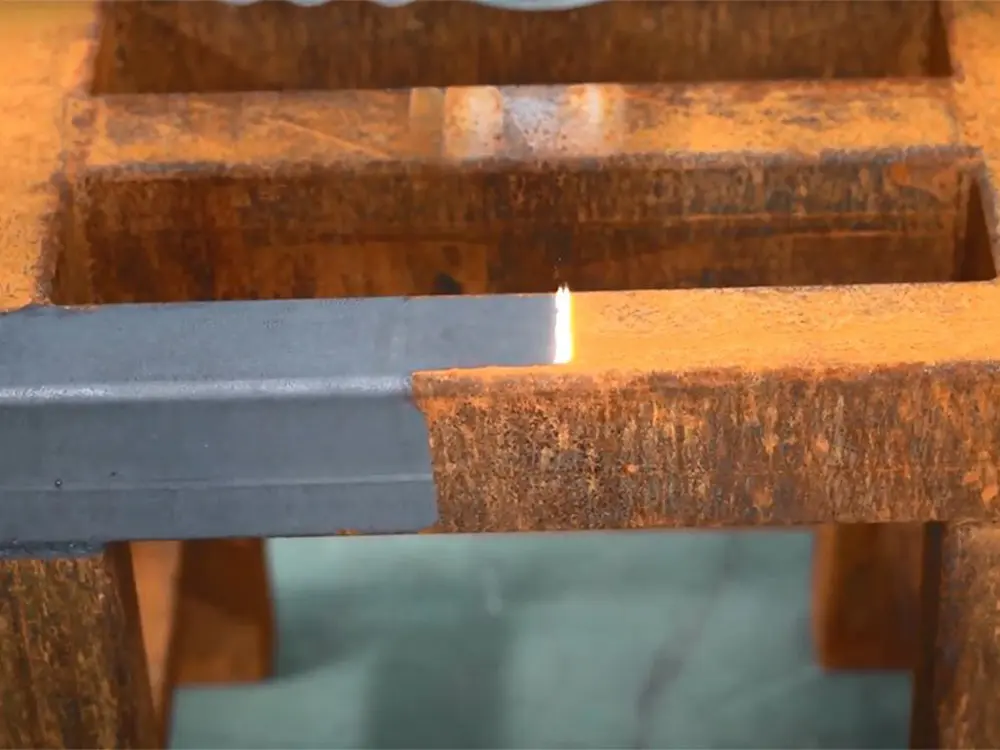
The fiber laser cleaning machine uses a high-energy laser beam delivered through a fiber optic cable to remove contaminants from the surface of a material. When the laser beam strikes rust, oxide layers, oil, paint, or coatings, the contaminants rapidly absorb the laser energy, vaporize, or are ejected from the surface by micro-explosions, while the base metal remains undamaged.
Unlike traditional mechanical or chemical methods, laser cleaning is a non-contact, non-abrasive, and chemical-free process. It allows precise control over cleaning depth and area, making it ideal for both heavy rust removal and delicate surface treatment.
Why Fiber Laser Cleaning Is Ideal for Rust Removal
Fiber laser technology offers several advantages that make it especially suitable for industrial rust removal:
High Precision: Laser cleaning selectively removes rust without damaging the underlying metal surface, preserving dimensional accuracy and surface integrity.
Non-Contact Process: No grinding, impact, or physical abrasion occurs, eliminating tool wear and mechanical stress.
Environmentally Friendly: No chemicals, no consumables, no wastewater, and minimal secondary pollution. Only a small amount of dust or fumes is produced.
High Efficiency: Laser cleaning works rapidly, especially on large metal surfaces or continuous production lines.
Low Operating Costs: No recurring costs for chemicals or abrasives. Long service life of fiber laser sources (often 100,000 hours).
Wide Material Compatibility: Works well on carbon steel, stainless steel, aluminum, copper, brass, iron, and many alloys.
Pulsed vs Continuous Laser Cleaning Machines
In the wholesale market, fiber laser cleaning machines are primarily offered in two configurations, based on the type of laser: pulsed and continuous wave (CW).
1. Pulsed Fiber Laser Cleaning Machines
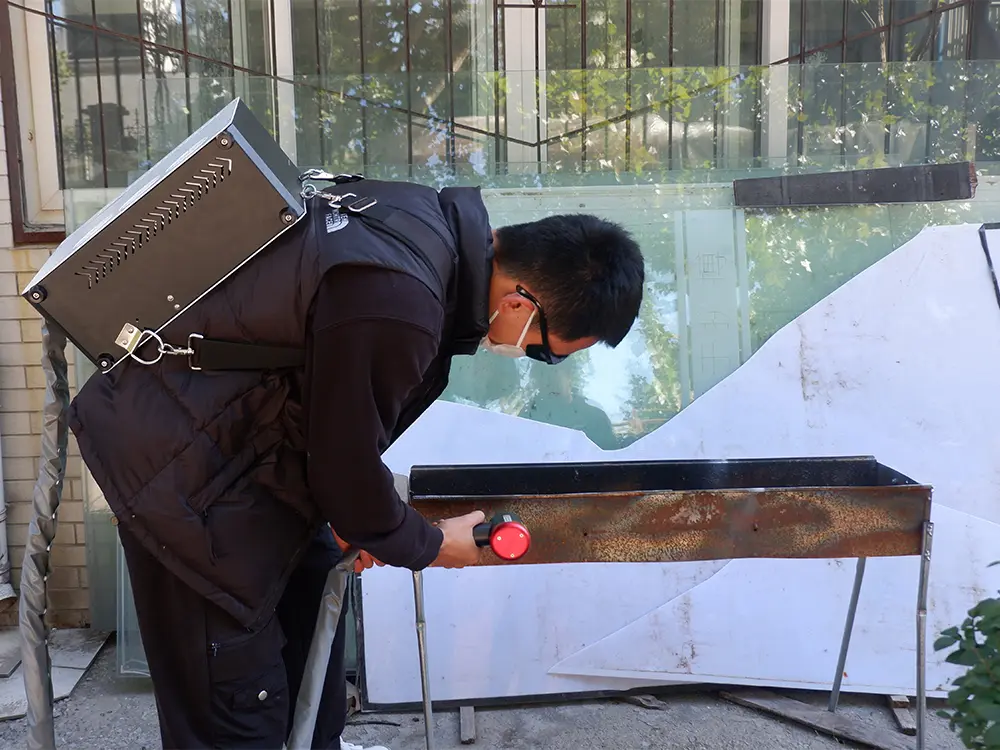
Pulsed fiber laser cleaning machines operate by emitting high-energy laser pulses within extremely short time intervals. This pulsed mode delivers concentrated energy to the surface contamination layer while keeping overall heat input to a minimum. As a result, pulsed laser systems provide exceptional control over the cleaning depth and surface interaction, making them ideal for applications where precision and surface protection are critical.
Because of their low thermal impact, pulsed laser cleaners can effectively remove light to medium rust, oxidation, paint, oil, and surface coatings without causing thermal deformation, discoloration, or microstructural changes to the base material. This makes them especially suitable for cleaning thin metal sheets, precision components, high-value molds, tooling surfaces, electronic parts, and delicate mechanical assemblies.
Best Suited For:
- Precision rust and oxide removal.
- Thin metal sheets and lightweight components.
- Mold and die cleaning.
- Precision tools and mechanical parts.
- Paint and coating removal with minimal substrate impact.
Key Advantages:
- Extremely low thermal input, preventing heat damage.
- Excellent surface finish after cleaning.
- High cleaning accuracy and controllability.
- Ideal for delicate and high-value components.
- Reduced risk of base metal oxidation or deformation.
Limitations:
- Slower cleaning speed compared with CW systems.
- Lower efficiency for thick or heavy rust layers.
- Higher cost per watt, especially in medium-to-high power ranges.
- Less suitable for large-area, continuous heavy-duty cleaning.
2. Continuous Fiber Laser Cleaning Machines

Continuous fiber laser cleaning machines deliver a constant, uninterrupted laser beam with high average output power. This continuous energy output provides strong ablation force, allowing CW lasers to remove heavy rust, thick oxide layers, mill scale, and stubborn surface contamination at extremely high speeds.
Due to their powerful and continuous output, CW laser cleaning systems are widely used in large-scale industrial environments, including shipbuilding, steel structure fabrication, bridge maintenance, automotive frame cleaning, pipeline maintenance, and heavy machinery refurbishment. These machines are particularly well suited for operations that require high productivity, deep cleaning capability, and continuous long-hour operation.
Best Suited For:
- Heavy rust and thick oxide scale removal.
- Large steel plates, beams, and structural components.
- Ship hulls, bridges, pipelines, and storage tanks.
- Automotive frames and large mechanical parts.
- High-throughput and continuous industrial production lines.
Key Advantages:
- Extremely fast cleaning speed for large surfaces.
- Strong penetration capability for thick contamination layers.
- High productivity and stable continuous operation.
- Ideal for large-area and heavy-duty industrial applications.
Limitations:
- Higher overall heat input compared with pulsed systems.
- Greater risk of thermal discoloration on thin or sensitive materials.
- Less suitable for ultra-thin metal sheets or delicate parts.
- Higher power consumption under continuous operation.
Power Selection Guide for Rust Removal
When purchasing a fiber laser cleaning machine, choosing the appropriate laser power is crucial. Different power levels are suitable for different rust removal tasks and industrial needs.
100W 200W 300W Fiber Laser Cleaning Machine: This power range is mainly used for light surface rust removal, oxidation films, and precision cleaning applications such as molds, tools, small metal components, and thin metal sheets. It features extremely low thermal impact, excellent surface protection, and high controllability, making it suitable for laboratories, electronics manufacturing, and fine mechanical industries.
500W 1000W Fiber Laser Cleaning Machine: Designed for moderate rust removal on automotive components, general machinery parts, and fabricated metal products, this power range offers a practical balance between cleaning speed, surface quality, and equipment investment. It is widely used in repair shops, OEM manufacturing, and small to mid-sized metal processing workshops.
1500W 2000W Fiber Laser Cleaning Machine: This range is ideal for heavy rust removal on steel plates, structural frames, ship components, and large mechanical parts. It provides high cleaning efficiency, strong penetration capability, and stable long-hour industrial performance, making it one of the most popular power configurations among wholesale buyers.
3000W Fiber Laser Cleaning Machine: Ultra-high-power systems are designed for large-scale industrial rust removal on thick steel structures such as pipelines, bridges, ship hulls, storage tanks, and heavy engineering equipment. These machines deliver extremely fast cleaning speed and maximum productivity. For wholesale buyers and distributors, the 1500W–3000W range currently represents the most balanced choice in terms of market demand, performance, and profit margin, especially in automotive repair, steel fabrication, and shipyard maintenance sectors.
Cooling System: Air-Cooled vs Water-Cooled
Air-cooled fiber laser cleaning machines use built-in fans and air circulation to dissipate heat during operation and are typically applied in low- to mid-power systems below 500W. Their main advantages include a compact structure, lighter weight, easy installation, and low maintenance, since no external chiller is required. Air-cooled units are well-suited for portable handheld cleaners, light rust removal, precision cleaning, and occasional operation, especially in small workshops, labs, and mobile on-site applications. Due to their limited cooling capacity, they are not recommended for long-hour continuous operation or high-power industrial cleaning.
Water-cooled fiber laser cleaning machines employ an external industrial chiller to precisely regulate the operating temperature of the laser source and optical system, ensuring stable, continuous performance for high-power equipment in the 1000W to 3000W range. They provide superior heat dissipation, higher output stability, longer continuous working time, and better protection of the laser source, which is why they are the standard choice for heavy industrial rust removal, shipbuilding, steel structure fabrication, and pipeline maintenance.
Key Technical Parameters to Evaluate When Buying Wholesale
When comparing fiber laser cleaning machines from different manufacturers, pay attention to:
- Laser source brand (Raycus, MAX, IPG, JPT)
- Output power stability
- Beam quality
- Scanning width (100–300mm common)
- Cooling method
- Electrical requirements (single-phase vs three-phase)
- Control interface and software
- Safety protections (interlocks, emergency stop)
- Optical lens protection system
- Fume extraction compatibility
- Machine frame and cabinet quality
Wholesale Fiber Laser Cleaning Machine Price
The wholesale price of fiber laser cleaning machines mainly depends on laser type, output power, cooling system, core components, and automation level. A 100W pulsed model usually costs USD 3550 to 5650 and suits light rust removal and laboratory use. A 200W pulsed system typically ranges from USD 4200 to 6500 and offers higher efficiency for mold and tool cleaning. A 300W pulsed machine is usually priced between USD 5000 and 6800 and serves precision manufacturing and high-value surface cleaning.
For higher efficiency pulsed cleaning, a 500W pulsed fiber laser cleaning machine generally costs USD 12,500 to 13,800 and suits moderate rust removal. A 1000W pulsed laser system typically ranges from USD 21,500 to 23,600 and serves automotive, aerospace, and industrial refurbishment applications.
In continuous-wave systems, a 1500W CW fiber laser cleaning machine usually costs USD 2750 to 3000 and delivers fast heavy rust removal. A 3000W CW fiber laser cleaning machine typically ranges from USD 4800 to 5200 and suits shipyards, pipelines, and steel structures.
All prices are reference only and vary by customization, OEM branding, laser source brand, certifications, spare parts, and service level.
How to Choose a Reliable Wholesale Fiber Laser Cleaning Machine Supplier
The professional wholesale supplier should be able to provide stable and proven laser sources from top global brands, along with complete factory inspection reports and real machine test videos to verify performance. The supplier should also offer internationally recognized certifications such as CE and FDA, detailed technical documentation, and operator training support to ensure safe and efficient use. In addition, a solid warranty period of at least one to two years, overseas after-sales service or remote technical support, stable spare parts supply, and flexible customization services are all critical indicators of a trustworthy long-term partner.
On the other hand, buyers should be cautious of suppliers that cannot verify the authenticity of their laser sources, provide vague or inconsistent technical specifications, offer no clear after-sales service commitment, or refuse to conduct live machine inspections. These warning signs often indicate high operational risks and potential quality issues, which may lead to serious losses in cost, downtime, and customer satisfaction after purchase.
Conclusion
As global manufacturing moves toward higher efficiency and cleaner production, fiber laser cleaning is becoming the mainstream rust removal solution worldwide. Compared with traditional methods, it offers superior precision, better surface protection, and lower long-term operating costs. It also meets increasingly strict environmental requirements.
For wholesale buyers and distributors, choosing the right machine goes far beyond power level or price alone. Buyers must evaluate laser type, system configuration, cooling method, and core component quality. Certification compliance, factory capability, and after-sales support are equally important. By working with a reliable factory-level supplier like Wintek Laser, buyers can ensure stable quality and long service life. At the same time, they can build stronger competitiveness in their local markets. In the fast-growing laser cleaning industry, the right purchase decision today supports long-term business success.
