
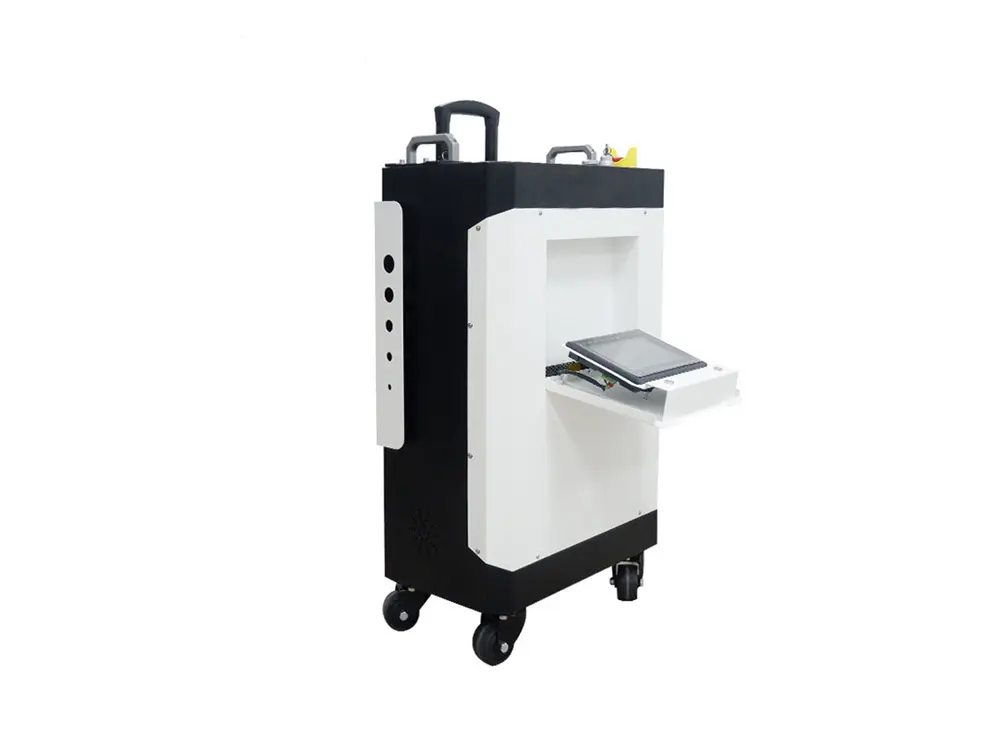
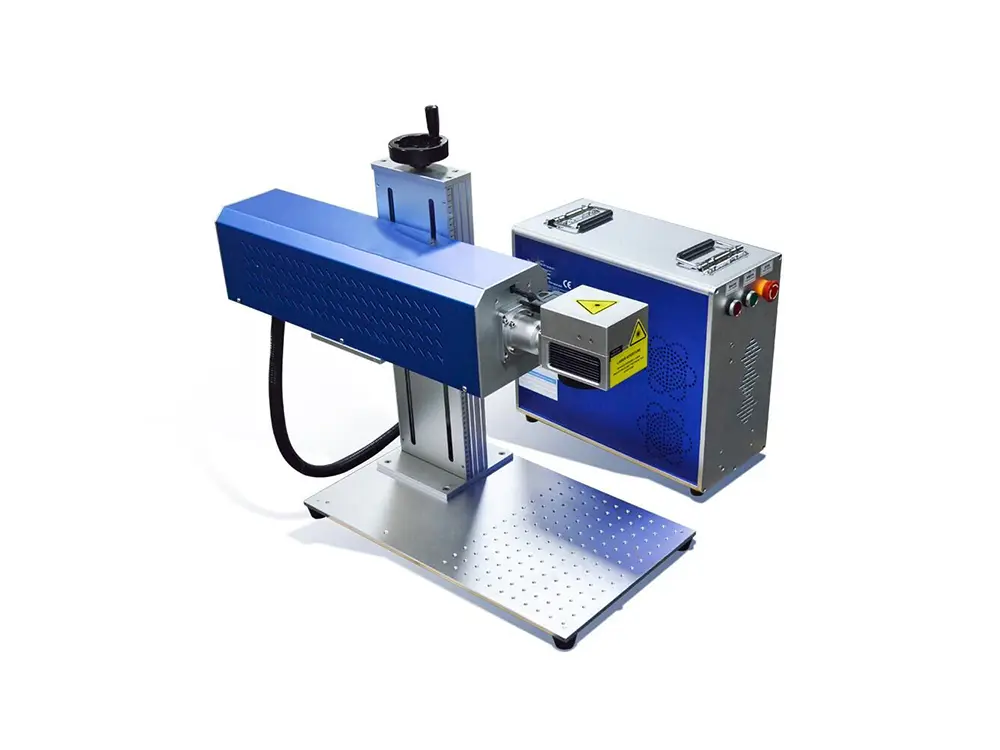







Laser marking technology has become an essential tool for modern manufacturing, offering precise, permanent, and eco-friendly marking solutions. From electronics and automotive to jewelry, medical devices, and packaging, industries around the world rely on laser marking machines to achieve high-quality and reliable product identification. However, with different types of laser marking technologies available, businesses often ask: Should I choose a fiber laser marking machine or a CO₂ laser marking machine?
This blog will provide a detailed comparison between fiber laser and CO₂ laser marking machines. We will look at their working principles, material compatibility, performance, applications, costs, and future trends. In addition, we will highlight the 20W fiber laser marking machine price in 2025, a popular entry-level option for many small businesses.

How Fiber Laser Marking Machines Work
Fiber laser marking machines use optical fibers doped with rare-earth elements as the gain medium. They typically operate at a wavelength of 1064 nm, which is highly effective for marking metals and some plastics. A pump diode excites the fiber, producing a focused laser beam that is guided to the marking head through flexible fiber cables.
Key Features of Fiber Lasers:
- High Precision: Fiber lasers create extremely fine and detailed markings.
- Speed: They operate at high marking speeds, suitable for mass production.
- Durability: A fiber laser source can last over 100,000 hours of operation.
- Low Maintenance: No need for frequent replacements or calibrations.
Fiber laser marking machines are ideal for industries such as electronics, automotive, aerospace, tools manufacturing, and metal processing, where durability and traceability are critical.
How CO₂ Laser Marking Machines Work
CO₂ laser marking machines use a gas mixture (primarily carbon dioxide) as the laser medium. They typically emit light at a wavelength of 10.6 μm, which is strongly absorbed by organic materials. Unlike fiber lasers, CO₂ lasers are better suited for marking non-metallic surfaces.
Key Features of CO₂ Lasers:
- Material Compatibility: Ideal for wood, leather, paper, glass, ceramics, and acrylic.
- Smooth Marking: Produces clean, permanent, and aesthetically pleasing marks.
- Large Area Marking: Capable of covering bigger workpieces.
- Entry Cost: Generally less expensive than fiber lasers initially.
CO₂ lasers are widely used in packaging, arts and crafts, signage, textiles, and leather industries.
Fiber Laser vs CO₂ Laser: Key Differences
When comparing fiber laser and CO₂ laser marking machines, several critical distinctions emerge:
1. Wavelength & Principle
Fiber Laser: 1064 nm, suitable for metals.
CO₂ Laser: 10.6 μm, better for organic and non-metallic materials.
2. Material Suitability
Fiber Laser: Metals (stainless steel, aluminum, brass, copper, titanium) and some plastics.
CO₂ Laser: Wood, paper, leather, glass, acrylic, ceramics.
3. Marking Speed & Precision
Fiber Laser: Faster, more precise, suitable for high-volume production.
CO₂ Laser: Slower on metals, but efficient on non-metals.
4. Machine Size & Maintenance
Fiber Laser: Compact, long lifespan, nearly maintenance-free.
CO₂ Laser: Larger, requires periodic tube replacement and maintenance.
5. Operating Costs & Lifespan
Fiber Laser: Higher initial investment but lower long-term cost.
CO₂ Laser: Lower entry cost but higher maintenance expenses.
6. Applications
Fiber Laser: Automotive, aerospace, electronics, jewelry, medical devices.
CO₂ Laser: Packaging, wood crafts, textiles, signage, ceramics.
Application Scenarios
Choosing between fiber and CO₂ depends on the materials and industries you work with:
Fiber Laser Applications:
Engraving serial numbers on automotive parts.
Marking QR codes on electronic components.
Creating permanent logos on stainless steel tools.
CO₂ Laser Applications:
Engraving wooden crafts and furniture.
Marking logos on leather products.
Coding packaging labels and barcodes on paper.
Cost and Investment Considerations
When investing in a laser marking machine, cost is a major factor:
Fiber Laser Marking Machines:
Higher upfront investment.
Longer service life (up to 100,000 hours).
Minimal maintenance, making them cost-effective long term.
CO₂ Laser Marking Machines:
Lower initial purchase price.
Frequent maintenance required (laser tube replacement, optical alignment).
Overall lifetime cost can be higher.
20W Fiber Laser Marking Machine Price 2025
One of the most popular entry-level options is the 20W fiber laser marking machine, widely used by startups, small workshops, and businesses entering laser marking for the first time.
Why Choose 20W Fiber Laser?
- Affordable for small and medium businesses.
- Capable of high-precision marking on metals and some plastics.
- Easy to operate, making it beginner-friendly.
Price Range in 2025:
Chinese Manufacturers: $1,200 – $4,000 USD. European/US Brands: $3,500 – $6,000 USD.
Price Factors:
- Brand reputation.
- Configuration (lens type, rotary devices, software).
- Warranty and after-sales support.
- Optional accessories like fume extractors and protective enclosures.
Although 20W fiber lasers are cost-effective, if you require deeper engraving, higher speed, or marking on larger surfaces, you may need to consider 30W, 50W, or even 100W fiber laser machines.
Which One Should You Choose?
If your business mainly involves metals and industrial-grade marking, a fiber laser marking machine is the right choice.
If you focus on wood, leather, packaging, or non-metallic products, then a CO₂ laser marking machine will serve you better.
If you are on a budget and want a versatile machine for small-scale production, the 20W fiber laser marking machine is a smart investment in 2025.
Conclusion
Both fiber and CO₂ laser marking machines provide unique benefits depending on your material requirements and business goals. Fiber lasers dominate in the metalworking industry due to their precision, durability, and cost-effectiveness, while CO₂ lasers excel in non-metallic applications such as wood, paper, and packaging.
For startups and SMEs, the 20W fiber laser marking machine offers an affordable entry point, with prices in 2025 starting as low as $1,200 USD for Chinese models.
If you are considering upgrading your marketing capabilities, carefully assess your material needs, production volume, and budget. The right investment today can bring long-term returns and position your business for future growth.